<?xml version="1.0" encoding="utf-8" ?>
<?xml-stylesheet type="text/xsl" href="https://chan.usc.edu/general/rss-feed-xsl"?>
<feed xmlns="http://www.w3.org/2005/Atom" xml:lang="en">

    <title type="text"><![CDATA[MSOP News]]></title>
    <subtitle type="text"><![CDATA[News from USC's Musculoskeletal Sonography and Occupational Performance Laboratory]]></subtitle>
    <link rel="alternate" type="text/html" href="https://chan.usc.edu/msop/news" />
    <link rel="self" type="application/atom+xml" href="https://chan.usc.edu/msop/msop-atom" />
    <updated>2024-06-30T23:30:15Z</updated>
    <rights>Copyright (c) 2024, USC Chan Division of Occupational Science and Occupational Therapy</rights>
    <generator uri="https://expressionengine.com/">ExpressionEngine</generator>
    <id>tag:https:,2024:06:30</id>

   <entry>
      <title><![CDATA[MSOP Lab Director Roll Inducted into AOTF Academy of Research]]></title>
      <link rel="alternate" type="text/html" href="https://chan.usc.edu/msop/news/msop-lab-director-roll-inducted-into-aotf-academy-of-research" />
      <id>tag:https:,2021:/chan.usc.edu/msop/news/45.7869</id>
      <published>2021-04-14T17:14:00Z</published>
      <updated>2021-04-19T18:59:59Z</updated>
      <author>
            <name>Shawn Roll</name>
            <email>sroll@chan.usc.edu</email>
            
      </author>

      <content type="html"><![CDATA[
        <div class="contentimage floatleft30">
<p><a href="https://chan.usc.edu/uploads/msop/Roll_AOTF_AoR.jpg" title="Dr. Roll Inducted into AOTF Academy of Research. Photo by: Carell Augustus Photography"><img src="https://chan.usc.edu/uploads/msop/Roll_AOTF_AoR.jpg" alt="Dr. Roll Inducted into AOTF Academy of Research" /></a></p><p class="caption">Photo by: <a href="https://carellaugustus.com">Carell Augustus</a></p>
</div>

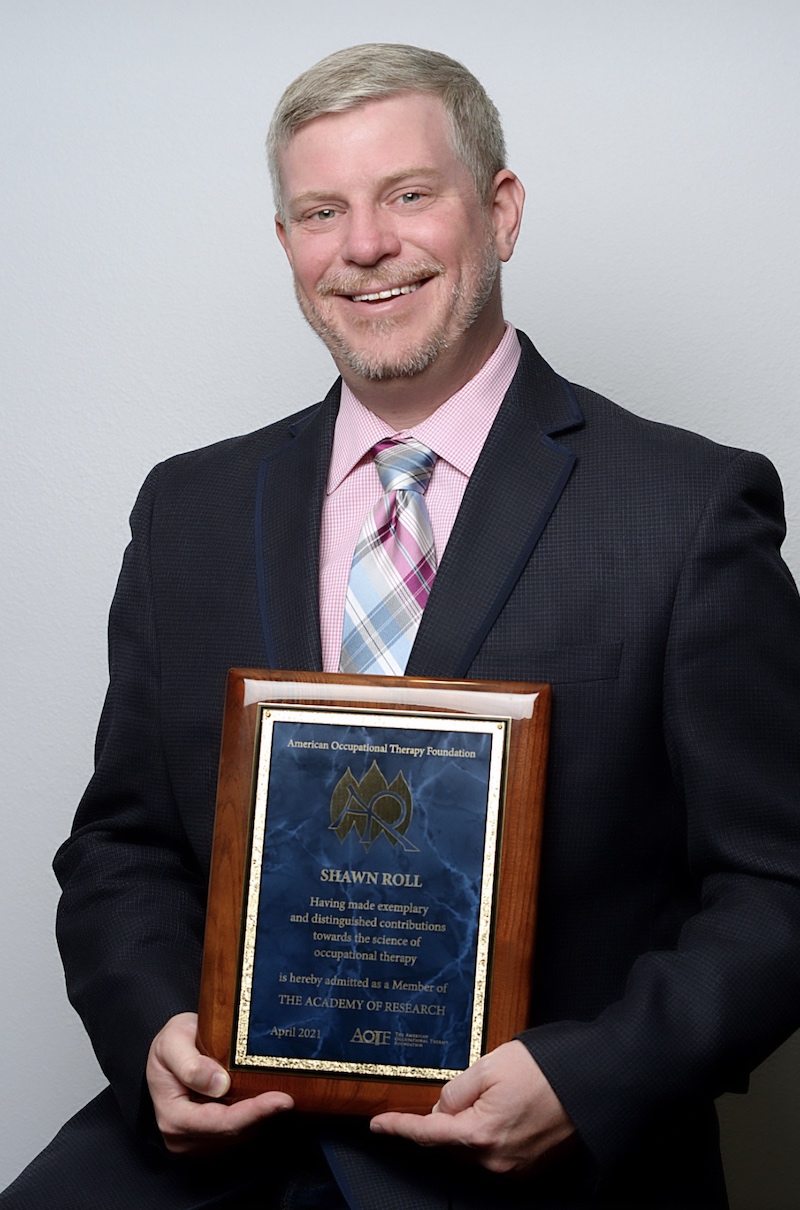
<p><a href="/people/faculty/Shawn_Roll">Dr. Shawn Roll</a>, MSOP Lab Director, was inducted into the American Occupational Therapy Foundation&#8217;s Academy of Research. This honorary academy was established in 1983 to recognize individuals who have made exemplary, distinguished, and sustained contributions toward the science of occupational therapy. At the time of his induction, Dr. Roll joins a select group of only 75 other researchers to join this prestigious group. You can read a brief interview about his contributions on the <a href="https://www.aotf.org/About-AOTF/Awards-and-Honors/Academy-of-Research-in-OT" target="_blank">AOTF AOR Website</a>. Watch <a href="https://www.youtube.com/embed/RxhcgJ_M0xA" target="_blank">Dr. Roll&#8217;s overview presentation</a> of his career to date at the AOTF Research Excellence Symposium on the <a href="https://www.youtube.com/channel/UCSjR0W24UbsuLtzWUwn3q8w" target="_blank">MSOP YouTube Channel</a>.</p>
      ]]></content>
    </entry>   <entry>
      <title><![CDATA[New High-Impact Publication: MSOP identifies factors impacting health and well-being while working from home during COVID-19]]></title>
      <link rel="alternate" type="text/html" href="https://chan.usc.edu/msop/news/new-high-impact-publication-msop-identifies-factors-impacting-health-and-well-being-while-to-working-from-home-during-covid-19" />
      <id>tag:https:,2021:/chan.usc.edu/msop/news/45.7871</id>
      <published>2021-03-15T20:04:00Z</published>
      <updated>2024-06-30T00:30:17Z</updated>
      <author>
            <name>Shawn Roll</name>
            <email>sroll@chan.usc.edu</email>
            
      </author>

      <content type="html"><![CDATA[
        <div class="contentimage">
<p><a href="https://doi.org/10.1097/JOM.0000000000002097" target="_blank"><img src="https://chan.usc.edu/uploads/msop/JOEM_WFH_Title.jpg" alt="Impacts of Working From Home During COVID-19 Pandemic on Physical and Mental Well-Being of Office Workstation Users" /></a></p>
</div>

<p>MSOP&#8217;s recent publication in the <em>Journal of Occupational and Environmental Medicine</em> has been making a strong impact through media releases and reaching the top 1% of all articles published in this high-impact journal. The manuscript describes results of a nationwide survey of nearly 1,000 office workers who transitioned to working from home during COVID-19, finding that nearly two-thirds reported having one or more new physical health issues and nearly three-fourths experienced at least one new mental health issue. The most significant predictors of poorer health were decreased physical activity, increased junk food intake, lack of communication with coworkers, and having a toddler at home. Female respondents and respondents with an annual income of less than 100k reported more health issues compared to male respondents and respondents with higher incomes. Numerous additional factors including other dependents in the home and the physical work environment in the home impacted worker health status. <a href="https://doi.org/10.1097/JOM.0000000000002097" target="_blank">Read the full text&nbsp;⟩</a></p>
      ]]></content>
    </entry>   <entry>
      <title><![CDATA[Introducing AI in Office Workspaces — Yoko Fukumura’s First Publication!]]></title>
      <link rel="alternate" type="text/html" href="https://chan.usc.edu/msop/news/introducing-ai-in-office-workspaces-yoko-fukumuras-first-publication" />
      <id>tag:https:,2021:/chan.usc.edu/msop/news/45.7870</id>
      <published>2021-02-10T20:06:00Z</published>
      <updated>2024-06-30T00:27:10Z</updated>
      <author>
            <name>Shawn Roll</name>
            <email>sroll@chan.usc.edu</email>
            
      </author>

      <content type="html"><![CDATA[
        <div class="contentimage">
<p><a href="https://doi.org/10.3390/ijerph18041690" target="_blank"><img src="https://chan.usc.edu/uploads/msop/IJERPH_AI_workstations_title.jpg" alt="Worker Perspectives on Incorporating Artificial Intelligence into Office Workspaces: Implications for the Future of Office Work" /></a></p>
</div>

<p>The new MSOP publication, published in the <em>International Journal of Environmental Research and Public Health</em>, describes office worker perspectives on incorporating <a href="/msop/research/active/worker-wellness">artificial intelligence (AI) into office workspaces</a>. The study explored workers’ views on including AI in their office workspace to monitor and adapt the environment for comfort and health, as well as to monitor user behaviors and posture to provide feedback to improve health and well-being. Six focus group interviews with a total of 45 participants were conducted. Among findings related to privacy concerns and impacts on work performance and productivity, this manuscript reports on generally positive responses of the focus group participants framed by the complex and diverse individual needs of office workers that AI systems should aim to accommodate. <a href="https://doi.org/10.3390/ijerph18041690" target="_blank">Read the full text&nbsp;⟩</a></p>
      ]]></content>
    </entry>   <entry>
      <title><![CDATA[Yiyang Fang’s first publication: Characterization of tasks and time efficiency of dental hygiene students during clinical training]]></title>
      <link rel="alternate" type="text/html" href="https://chan.usc.edu/msop/news/characterization-of-tasks-and-time-efficiency-of-dental-hygiene-students-during-clinical-training" />
      <id>tag:https:,2020:/chan.usc.edu/msop/news/45.7541</id>
      <published>2020-10-05T16:19:00Z</published>
      <updated>2023-08-21T01:21:28Z</updated>
      <author>
            <name>Webmaster</name>
            <email>paul.bailey@chan.usc.edu</email>
            
      </author>

      <content type="html"><![CDATA[
        <p>The new MSOP publication, published in the <em>Journal of Dental Hygiene</em>, describes the task and time efficiency of dental hygiene students during clinical training. Patient appointments conducted by dental hygiene students have three times the duration of a typical dental hygiene care session, indicating a disconnect between educational training and clinical practice. Dental hygiene educational programs might consider techniques including stricter time constraints and the use of video recording, in order to improve time efficiency. <a href="https://jdh.adha.org/content/94/5/30" target="_blank">Read the full text&nbsp;⟩</a></p>
      ]]></content>
    </entry>   <entry>
      <title><![CDATA[New MSOP Study: Preliminary Evidence for Mind-Body Techniques in Hand Therapy]]></title>
      <link rel="alternate" type="text/html" href="https://chan.usc.edu/msop/news/new-msop-study-preliminary-evidence-for-mind-body-techniques-in-hand-therapy" />
      <id>tag:https:,2020:/chan.usc.edu/msop/news/45.7513</id>
      <published>2020-09-14T20:39:00Z</published>
      <updated>2023-08-21T01:23:32Z</updated>
      <author>
            <name>Webmaster</name>
            <email>paul.bailey@chan.usc.edu</email>
            
      </author>

      <content type="html"><![CDATA[
        <p>A newly published MSOP lab study demonstrates the utility of <a href="http://chan.usc.edu/msop/research/active/mbht">mind-body techniques as preparatory activities for hand therapy patients</a>. Specifically, when provided with a brief mindfulness-based intervention at the outset of a hand therapy visit, patients reported a significant decrease in anxiety that was maintained throughout the therapy session. Moreover, when experiencing either a mindful body scan or sonographic biofeedback at the outset of a hand therapy visit, patients demonstrated a greater decrease in stress biomarkers (i.e., salivary cortisol) across the therapy session.&nbsp; Decreasing anxiety and stress may be exceptionally useful for preparing patients to more fully engage in their hand therapy sessions and reducing stress-related hormones can promote healing.&nbsp; This preliminary study serves as an early proof-of-concept and establishes feasibility for further investigation of integrating mind-body techniques into hand therapy across a full episode of care. <a href="https://doi.org/10.1177/1758998320930752" target="_blank">Read the full study&nbsp;⟩</a></p>


      ]]></content>
    </entry>   <entry>
      <title><![CDATA[Sandy Takata Publishes New Manuscript Referencing Values of Median Median Nerve Cross-Sectional Area]]></title>
      <link rel="alternate" type="text/html" href="https://chan.usc.edu/msop/news/sandy-takata-publishes-new-manuscript-referencing-values-of-median-median-nerve-cross-sectional-area" />
      <id>tag:https:,2019:/chan.usc.edu/msop/news/45.6154</id>
      <published>2019-01-04T18:39:00Z</published>
      <updated>2023-08-21T01:17:37Z</updated>
      <author>
            <name>Webmaster</name>
            <email>paul.bailey@chan.usc.edu</email>
            
      </author>

      <content type="html"><![CDATA[
        <p>Congratulations once again to MSOP’s PhD student Sandy Takata on her latest manuscript publication in BioMed Central that describes how sonographic reference values of median nerve cross-sectional areas can be utilized to diagnose median nerve pathology. A comprehensive set of normative reference values of median nerve cross-sectional area have the potential to provide a basis upon which further studies can investigate preclinical stages of median nerve pathology. Additionally, these values can act as a resource for identifying meaningful clinical differences in tissue morphology. <a href="https://doi.org/10.1186/s13643-018-0929-9" target="_blank">Read the full text&nbsp;⟩</a></p>


      ]]></content>
    </entry>   <entry>
      <title><![CDATA[Visitors From China]]></title>
      <link rel="alternate" type="text/html" href="https://chan.usc.edu/msop/news/visitors-from-china" />
      <id>tag:https:,2018:/chan.usc.edu/msop/news/45.6170</id>
      <published>2018-12-19T21:26:00Z</published>
      <updated>2024-06-30T23:30:15Z</updated>
      <author>
            <name>Webmaster</name>
            <email>paul.bailey@chan.usc.edu</email>
            
      </author>

      <content type="html"><![CDATA[
        <div class="contentimage">
<p><a href="https://chan.usc.edu/uploads/msop/China_MSOP.JPG"><img src="https://chan.usc.edu/uploads/msop/China_MSOP.JPG" alt="Group photo of visitors from China" /></a></p>
</div>

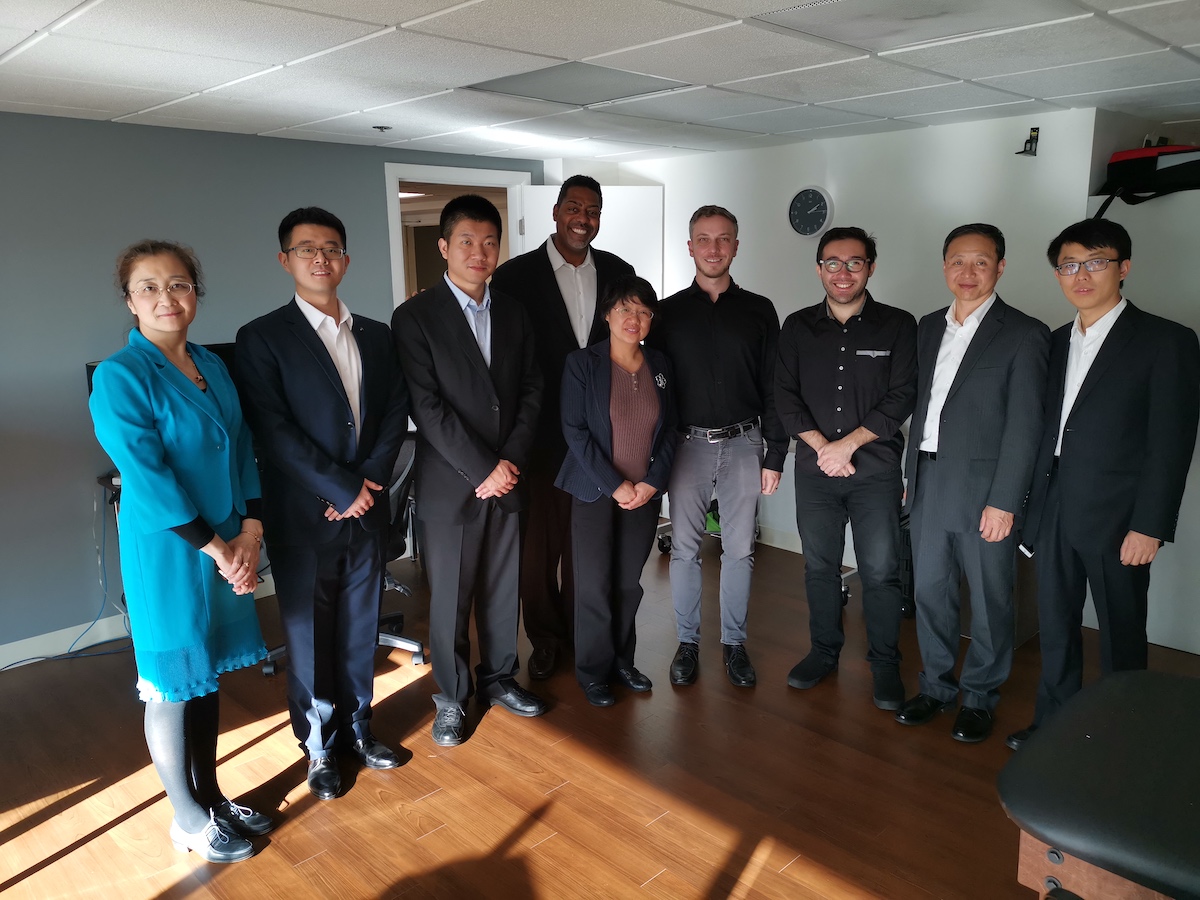
<p>On December 19, 2018 we were visited by members of the China Disabled Federation. Dongmei Li — Vice Director, Department of Education and Employment, Vice Director, Associate Researcher, China Rehabilitation Research Center; Tanling Wang — Associate Investigator, Social Service Section; Zixing Wang — Project leader, innovation and development department, university planning, construction and development center, Ministry of Education, P.R. China; Shuaihua Lin — Senior Staff, Educational Section, Department of Education and Employment; and Hong Zhang — Prof. of Translation/Interpretation (English); Project leader of International Communication, General Office were all on hand to learn and acquire greater knowledge of our research here at USC. Led by Associate Professor of Clinical Occupational Therapy Daniel Park and Assistant Professor of Occupational Therapy China Initiative Coordinator Adley Chan, our visitors were well versed in the occupational sciences and many of the funded research project here at USC. Dongmei Li even commented on how preventative research dealing with the focus on the median nerve cross sectional area was very important work!</p>
      ]]></content>
    </entry>   <entry>
      <title><![CDATA[Takata Authors New Publication on Identifying Aberrant Muscles in the Carpal Tunnel]]></title>
      <link rel="alternate" type="text/html" href="https://chan.usc.edu/msop/news/takata-aberrant-muscle-publication" />
      <id>tag:https:,2018:/chan.usc.edu/msop/news/45.6058</id>
      <published>2018-10-30T19:16:00Z</published>
      <updated>2024-06-23T01:09:26Z</updated>
      <author>
            <name>Shawn Roll</name>
            <email>sroll@chan.usc.edu</email>
            
      </author>

      <content type="html"><![CDATA[
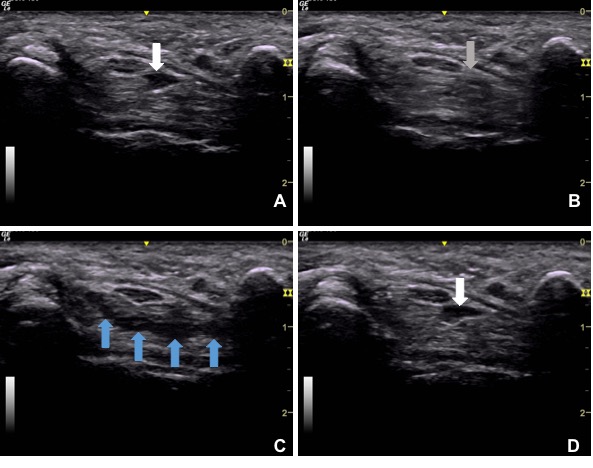
        <p>Congratulations to MSOP&#8217;s PhD student Sandy Takata on her newest publication in the Journal of Diagnostic Medical Sonography that describes how sonography can assist in identifying long flexor and lumbrical muscle bellies within the carpal tunnel. Proper identification of these structures and evaluation their relative impact on the median nerve may be important to understanding nerve compression or entrapment for prevention and treatment of carpal tunnel syndrome. <a href="https://doi.org/10.1177/8756479318807469" target="_blank">Read the full text&nbsp;⟩</a> </p>

<div class="contentimage">
<p><img src="https://chan.usc.edu/uploads/msop/Figure_4.jpg" alt="Dynamic sonographic imaging of aberrant muscles in the carpal tunnel" /></p>
</div>

<p><strong>Image Above</strong>: Serial sonographic images of the left carpal tunnel at the level of the pisiform. The participant was asked to open her hand with extended fingers (A), slowly flex her fingers to make a fist (B), hold the fist position for one second (C), and extend the fingers once again (D). As the participant makes a fist, the long flexor muscle belly (white arrow in A) retracts proximally into the forearm and is replaced by the flexor tendon (gray arrow in B). When the fingers are fully flexed, the lumbricals enter the carpal tunnel (blue arrows in C). Once the fingers return to extension, the long flexor muscle belly is seen in the tunnel once again (white arrow in D).</p>
      ]]></content>
    </entry>   <entry>
      <title><![CDATA[Standing Room Only at ASHT 2018 Presentation]]></title>
      <link rel="alternate" type="text/html" href="https://chan.usc.edu/msop/news/standing-room-only-at-asht-2018-presentation" />
      <id>tag:https:,2018:/chan.usc.edu/msop/news/45.6061</id>
      <published>2018-09-21T17:05:00Z</published>
      <updated>2024-06-23T01:08:21Z</updated>
      <author>
            <name>Shawn Roll</name>
            <email>sroll@chan.usc.edu</email>
            
      </author>

      <content type="html"><![CDATA[
        <div class="contentimage floatright40">
<p><img src="https://chan.usc.edu/uploads/msop/ASHT_2018_Audience_Web.jpeg" alt="Standing room only audience for the MSOP Lab's presentation at the 2018 ASHT Conference" /></p>
</div>

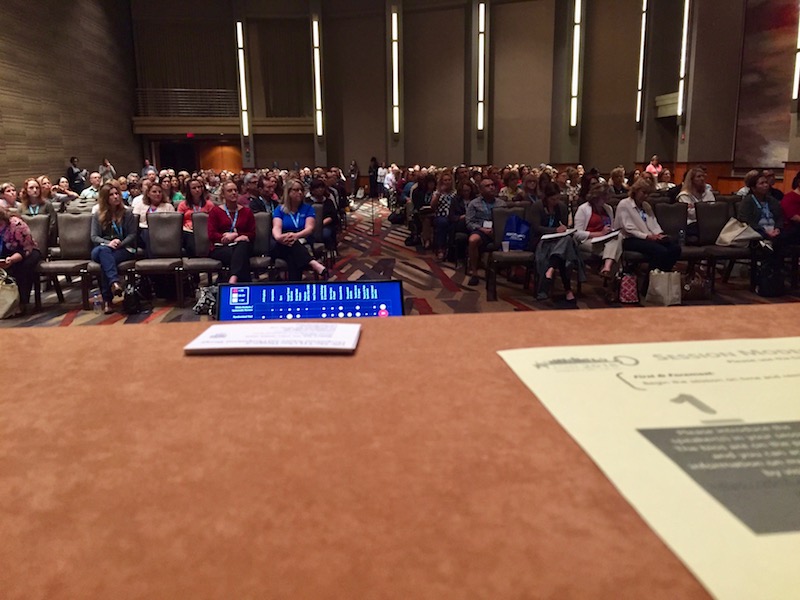
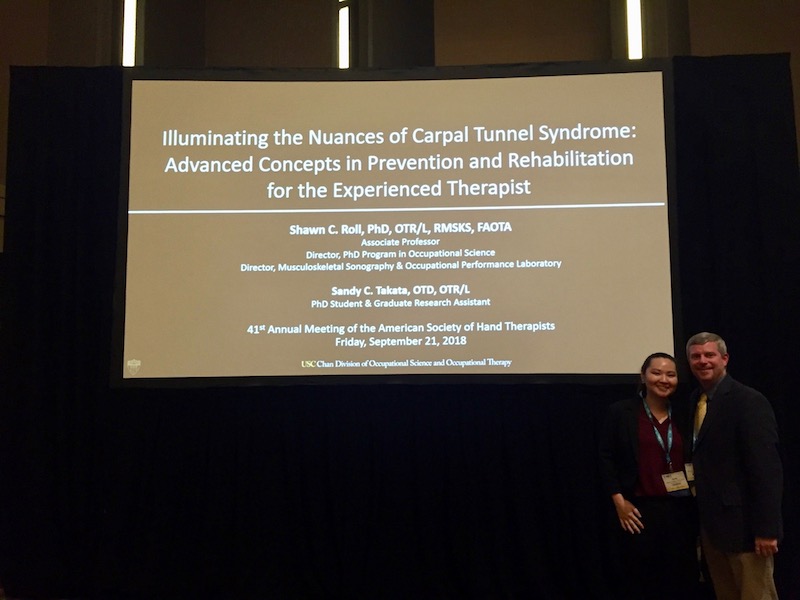
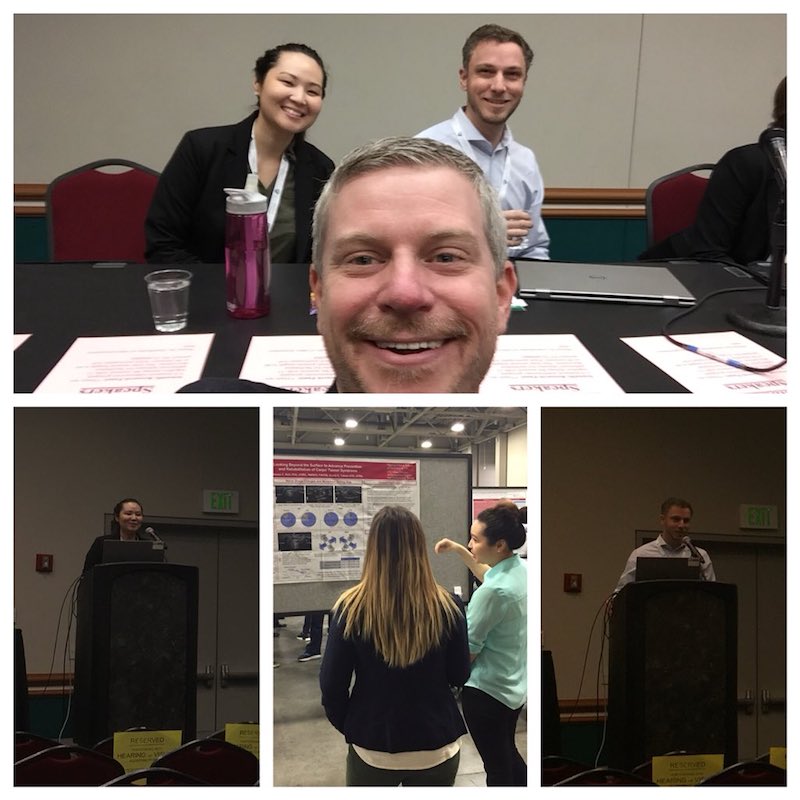
<p>Shawn Roll and Sandy Takata provided a successful and VERY well received presentation to a standing-room only audience at the 2018 conference of the American Society of Hand Therapists. The team presented on the use of sonographic imaging to better understand individual anatomical differences and the relative movements of structures within the carpal tunnel during functional hand use. Did you know that in some people you can actually pinpoint the exact movement, motion, or activity causes compression or entrapment of the median nerve?! Using musculoskeletal sonography to illuminate individual anatomical variants and risk factors for nerve compression is a perfect example of a precision medicine approach that assists therapists in targeting interventions to prevent, manage, or rehabilitate carpal tunnel syndrome.&nbsp; Read more about this and other active projects on our <a href="/msop/research">research page</a>.</p>

<div class="contentimage">
<p><img src="https://chan.usc.edu/uploads/msop/ASHT_2018_1_Web.jpeg" alt="Sandy Takata and Shawn Roll at the 2018 ASHT Conference" /></p>
</div>
      ]]></content>
    </entry>   <entry>
      <title><![CDATA[MSOP Welcomes New Undergraduate Research Assistants]]></title>
      <link rel="alternate" type="text/html" href="https://chan.usc.edu/msop/news/msop-welcomes-new-undergraduate-research-assitants" />
      <id>tag:https:,2018:/chan.usc.edu/msop/news/45.6059</id>
      <published>2018-09-01T19:40:00Z</published>
      <updated>2019-04-16T08:30:51Z</updated>
      <author>
            <name>Shawn Roll</name>
            <email>sroll@chan.usc.edu</email>
            
      </author>

      <content type="html"><![CDATA[
        <div class="contentimage floatleft30">
<p><img src="https://chan.usc.edu/uploads/msop/kayla-gan-annie-lee-headshot.jpg" alt="2018-19 URAP Students" /></p>
</div>

<p>Kayla Gan and Annie Lee, students enrolled in Chan Division B.S. in Occupational Science program, have joined the lab for the 2018-19 academic year as part of the USC Undergraduate Research Associates Program (URAP).&nbsp; With funding from the USC Office of Undergraduate Education, the goal of this program is to support engagement of undergraduate students in collaborative research experiences with faculty.&nbsp; The students selected for this program will be directly engaged in MSOP research evaluating the use of sonographic imaging for early identification of median nerve pathology.&nbsp; Specifically, the research associates will be evaluating dynamic sonographic images to categorize movements and changes to the structure of the median nerve while individuals open and close their hands.&nbsp; These students will gain first hand experience and learn more about musculoskeletal anatomy, sonographic imaging, and the dynamic interactions that may be linked to the development of median nerve pathology.</p>
      ]]></content>
    </entry>   <entry>
      <title><![CDATA[NSF Grant Awarded to Explore Artificial Intelligence in the Workplace]]></title>
      <link rel="alternate" type="text/html" href="https://chan.usc.edu/msop/news/nsf-grant-awarded-to-explore-artificial-intelligence-in-the-workplace" />
      <id>tag:https:,2018:/chan.usc.edu/msop/news/45.6036</id>
      <published>2018-08-15T21:38:00Z</published>
      <updated>2023-08-21T01:24:38Z</updated>
      <author>
            <name>Shawn Roll</name>
            <email>sroll@chan.usc.edu</email>
            
      </author>

      <content type="html"><![CDATA[
        <p>MSOP Lab Director, Shawn Roll, is a Co-PI of a newly funded <a href="/msop/research/active/worker-wellness">research grant</a> from the National Science Foundation. Dr. Roll will be collaborating with Drs. Burcin Becerik and Gale Lucas to explore the use of an intelligent workstation (i.e., desk) in promoting health, wellness, and productivity for office workers. Together, the team envisions the emergence of a genuine partnership and coevolution of workers and their workstations. The grant aims to design an intelligent workstation that learns worker preferences and patterns, and then will coevolve with the human through an ongoing, bidirectional process of sensing, feedback and learning to adjust postural, thermal and visual conditions at the workstation and moderate poor behaviors.&nbsp; </p>

<p>In the U.S., there are 81 million office workers who spend 75% or more of their day working at a desk. Unfortunately, increased daily sitting time is linked to significant health conditions, including cardiovascular diseases and diabetes. Multiple other health-related issues arise in these workers due to poor ergonomic habits. Health conditions are further exacerbated by building-level control of environmental conditions, such a lighting and temperature. The team hopes that establishing symbiosis between the workstation and the worker will lead to improved environmental conditions and worker behaviors. <a href="https://www.nsf.gov/awardsearch/showAward?AWD_ID=1763134&amp;HistoricalAwards=false" target="_blank">Read more about the project&nbsp;⟩</a></p>
      ]]></content>
    </entry>   <entry>
      <title><![CDATA[MSOP Lab Provides Five Presentations at AOTA]]></title>
      <link rel="alternate" type="text/html" href="https://chan.usc.edu/msop/news/msop-lab-provides-five-presentations-at-aota" />
      <id>tag:https:,2018:/chan.usc.edu/msop/news/45.6063</id>
      <published>2018-05-21T17:36:00Z</published>
      <updated>2024-06-23T01:13:36Z</updated>
      <author>
            <name>Shawn Roll</name>
            <email>sroll@chan.usc.edu</email>
            
      </author>

      <content type="html"><![CDATA[
        <div class="contentimage">
<p><img src="https://chan.usc.edu/uploads/msop/AOTA_2018_Web.jpeg" alt="MSOP team presenting at 2018 AOTA Conference" /></p>
</div class>

<p>The MSOP Lab team provided at total of five scientific presentations at this year&#8217;s American Occupational Therapy Association conference in Salt Lake City. Sandy Takata, Mark Hardison, and Shawn Roll presented findings and updates on various research projects that are underway in the lab, including information on <a href="/msop/research/active/mbht">integrating mind-body techniques into hand therapy</a>, developing a video observation technique to identify <a href="/msop/research/active/dh">risk for musculoskeletal disorders in dental hygienists</a>, and evaluating anatomical structures within the carpal tunnel using sonography.</p>
      ]]></content>
    </entry>   <entry>
      <title><![CDATA[Mark Hardison Receives Research Grant]]></title>
      <link rel="alternate" type="text/html" href="https://chan.usc.edu/msop/news/mark-hardison-receives-research-grant" />
      <id>tag:https:,2017:/chan.usc.edu/msop/news/45.4268</id>
      <published>2017-10-20T23:05:00Z</published>
      <updated>2020-09-25T09:49:44Z</updated>
      <author>
            <name>Shawn Roll</name>
            <email>sroll@chan.usc.edu</email>
            
      </author>

      <content type="html"><![CDATA[
        <p>Congratulations to PhD Candidate and MSOP Lab Member, <strong>Mark Hardison</strong>, who recently received a $3,000 research grant from the California Foundation for Occupational Therapy.&nbsp; This grant, titled &#8220;Integrating Mindfulness-Based Interventions with Outpatient Rehabilitation in Hand Therapy,&#8221; will support Mark&#8217;s dissertation, which aims to better understand the psychosocial needs of individuals receiving hand therapy and will evaluate the integration of mindfulness-based activities as part of the recovery process.&nbsp; Specifically, Mark is examining client experiences and the effects on care do to the use of brief, guided mindfulness meditations on a weekly basis immediately prior to participating in therapy sessions combined with resources to support continued use of mindfulness practices outside of the clinic. This preliminary work is an important foundational step toward understanding how to best integrate mindfulness-based interventions into hand therapy to maximize the recovery process following a musculoskeletal injury.&nbsp; Congratulations, Mark!</p>
      ]]></content>
    </entry>   <entry>
      <title><![CDATA[Poster Receives First Place at SDMS Conference]]></title>
      <link rel="alternate" type="text/html" href="https://chan.usc.edu/msop/news/poster-receives-first-place" />
      <id>tag:https:,2017:/chan.usc.edu/msop/news/45.4270</id>
      <published>2017-10-14T16:54:00Z</published>
      <updated>2024-06-23T01:08:54Z</updated>
      <author>
            <name>Shawn Roll</name>
            <email>sroll@chan.usc.edu</email>
            
      </author>

      <content type="html"><![CDATA[
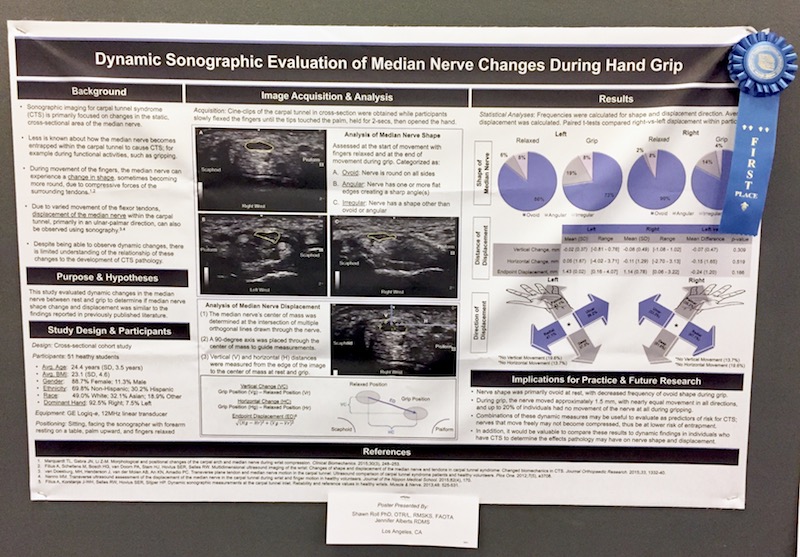
        <p>Our team has begun evaluating the dynamic movement of the median nerve in the carpal tunnel during active finger motion involved in gripping. With the support of Ariana Cristino, an undergraduate volunteer, we established reliability for our analysis protocol and gathered preliminary findings in 51 of our 159 participants. These findings for changes in the shape of the nerve, as well as the direction and amount of movement of the nerve during grip were presented in a poster at the 2017 Annual Conference of the Society of Diagnostic Medical Sonography. The poster (photo below), presented by Dr. Roll and Jennifer Alberts, RDMS, received first place in the sonographer poster competition. </p>

<div class="contentimage">
<p><img src="https://chan.usc.edu/uploads/msop/SDMS_2017_Poster_-_Small.jpeg" alt="2017 SDMS First Place Poster" /></p>
</div>

<p>The protocol developed for this preliminary analysis is now being deployed across our full data-set to identify metrics that can be used as potential risk factors in our longitudinal modeling of the development of carpal tunnel syndrome.</p>
      ]]></content>
    </entry>   <entry>
      <title><![CDATA[Introducing Hand Therapists to Sonographic Imaging]]></title>
      <link rel="alternate" type="text/html" href="https://chan.usc.edu/msop/news/introducing-hand-therapists-to-sonographic-imaging" />
      <id>tag:https:,2017:/chan.usc.edu/msop/news/45.4267</id>
      <published>2017-10-12T21:59:00Z</published>
      <updated>2024-06-23T01:06:14Z</updated>
      <author>
            <name>Shawn Roll</name>
            <email>sroll@chan.usc.edu</email>
            
      </author>

      <content type="html"><![CDATA[
        <div class="contentimage">
<p><img src="https://chan.usc.edu/uploads/msop/ASHT_Group_Photo.jpg" alt="MSOP Presenters at ASHT 2017 Conference" /></p>
</div>

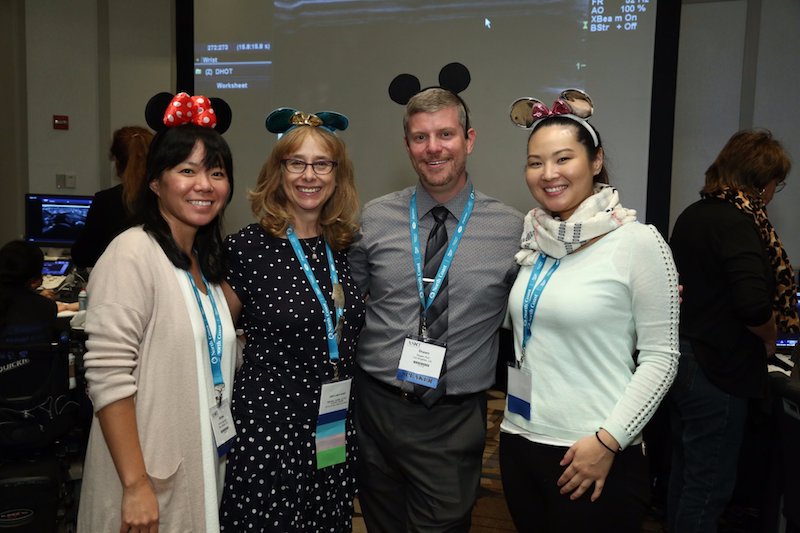
<p>Along with USC Keck Hospital Hand Therapists Aimee Aguillon and Janice Rocker, Dr. Roll and PhD Student Sandy Takata (pictured above l-r) provided a pre-conference institute at the 2017 annual conference of the <a href="https://www.asht.org/" target="_blank">American Society of Hand Therapists</a> in Anaheim, CA — all the while sporting Micky &amp; Minnie Mouse ears!&nbsp; At this four-hour, hands-on workshop, hand therapists were introduced to the use of musculoskeletal sonography and its many applications for enhancing assessment and intervention for hand therapy clients. Attendees received multiple hours of hands-on practice, learning how to use sonography and exploring the many structures in the hands that can be seen. The attendees even got a chance to see some of their own pathologies using the imaging!</p>

<p>Click on the links below for a few short clips of the hands-on sessions:</p>

<p><a href="https://youtu.be/Z82BSgzR4F8" target="_blank">ASHT Hands-On Sonography — Dr. Roll&nbsp;⟩</a></p>

<p><a href="https://youtu.be/w_ULyJOSwH4" target="_blank">ASHT Hands-On Sonography — Janice Rocker, OTD, CHT&nbsp;⟩</a></p>
      ]]></content>
    </entry>

</feed>