







Latest in Lifestyle Redesign®
September 2025
LR IRL — Lifestyle Redesign in Real Life
Pacing with Pain

In her late 20’s, Mary’s fibromyalgia pain in her hands, wrists, and elbows had been bearable, however, by her early 30’s the pain had begun to impact her work, leading Mary to take a leave of absence. She was now several weeks away from having to return to work as an editorial manager and graphic designer, however, the pain had not subsided. This prompted Mary’s primary care provider to refer her to Lifestyle Redesign for pain management, where she met her occupational therapist, Dr. Lindsey Shomer.
During the initial evaluation, Mary collaborated with Lindsey to unpack the nuances of her pain. Lindsey learned that Mary had been living with this pain for about six years, but only in the last two did it begin to have significant functional impacts as a result of the repetitive strain of typing and mousing, along with high levels of stress and anxiety. Mary shared that, at this point in time, her pain was best managed by resting without moving her limbs. This meant that she was unable to work for even a short period of time, had challenges completing home management tasks and cooking for herself, and she had stopped playing the piano, an occupation that was once very meaningful. Together, they mapped out Mary’s goals for treatment, prioritizing return to work, pain management, activity pacing, anxiety management, and time management to develop routines that would create a greater sense of lifestyle balance.
To set the foundation for the lifestyle modifications that lay ahead, Lindsey began with educating Mary about pain. With the understanding of the pathophysiology of pain, triggers, and alleviating factors, Mary was ready to trial a tracking tool that would support her in documenting early warning signs of her pain, building awareness of her body’s signals and her baseline tolerance for activity. This enabled Lindsey to begin leading Mary through the collaborative process of requesting necessary and reasonable work accommodations. It became clear early on that ergonomic equipment, specifically a foot mouse, would be essential to Mary’s ability to return to work; fortunately, Mary’s employers agreed and provided her the equipment. Gradually, the combination of decreased strain on her upper extremities and establishing a rest break schedule supported Mary in increasing her activity tolerance from 30 minutes to 60 minutes before needing a break. This approach also gave way for reintegration of an ergonomic keyboard, regular mouse, and a keyboard tray to support neutral wrist position while typing.
Their treatment sessions progressed from the workplace into the home, with an emphasis on proper positioning and activity pacing. As important as it was for Mary to reduce repetitive strain and maintain neutral positions during home management tasks or even while playing piano, it became clear that Mary’s biggest challenge was pacing herself during and in between activities, before symptoms worsened. After providing education about the benefits of activity pacing, Lindsey guided Mary in outlining when each of the strategies Mary already used would be most beneficial. They collaborated to designate which breaks would be used for hand therapy exercises (something Mary had done in the past), icing, heat, and self-regulation strategies. This helped to ease Mary’s mind since she now had a routine to follow, and allowed space for Lindsey to encourage exploration of additional anxiety management strategies, as well as time management strategies to reduce anxiety during the workday.
By the end of their time together, Mary’s day-to-day looked completely different than when she first met Lindsey: she now had a very regulating morning routine that involved walking, meditating, and preparing a high-quality breakfast, followed by a workday with use of ergonomic equipment and purposeful rest breaks. Mary had returned to weekly church services, re-engaged in social activities utilizing the self-advocacy skills learned in OT, and begun playing the piano again. This progress was further supported by Mary’s self-reported improvements in her occupational performance and satisfaction, as well as her pain self-efficacy.
In reflecting on her time with Mary, Lindsey highlighted that while Mary had a history of trying out different strategies and was very motivated to make changes, it was overwhelming to know how to use the strategies effectively, despite having various tools in her toolbox. Lindsey expanded further:
“We were able to look at each of [Mary’s] coping strategies, determine what was most effective for her, and structure these into her routines in a way that was accessible rather than overwhelming. As she adhered to the routine, utilized the tools in an effective way, and experienced the benefit of it, that all made her feel more in control of her pain.”
— Lindsey Shomer, OTD, OTR/L, CEAS, LRC
Research Spotlight
The Effect of Occupational Engagement on Lifestyle in Adults Living with Chronic Pain: A Systematic Review and Meta-analysis

Chronic pain is a leading cause of disability and can be associated with a decrease in quality of life, due to the impacts on activity levels, sleep quality, and mental health. Researchers conducted a systematic review to better understand the role of occupational therapy (OT) in chronic pain treatment, and whether treatment focused on occupational engagement can improve modifiable lifestyle factors.
The study included randomized controlled trials (RCTs) that included occupational engagement interventions and assessed modifiable risk factors. Meta-analysis data was found to be most robust for physical activity and sleep quality; data showed a moderate improvement in physical activity engagement following behavioral interventions, and a small improvement in sleep quality. The authors acknowledge that the limited number of RCTs contributed to low certainty in the study’s results, and advocate for future research to better understand the long-term effects of treatment focused on occupational engagement with the chronic pain population.
Upcoming Opportunities
Motivational Interviewing and Lifestyle Redesign®
Free Webinar | Thursday, October 23, 2025
Date: Thursday, October 23, 2025
Time: 12–1pm Pacific Time
Location: Zoom
Audience: This is an introductory level activity designed for OT practitioners, however, all levels of experience and disciplines are welcome.
Cost: This webinar is free to attend; registration is required to join.
Discover how Motivational Interviewing (MI) can enhance your Lifestyle Redesign practice. This engaging webinar will explore how MI aligns with and strengthens the Lifestyle Redesign core technique of autonomy-enhancing communication. Review strategies to foster collaboration, evoke clients’ own motivations, and empower them to set meaningful goals and implement sustainable strategies for change.
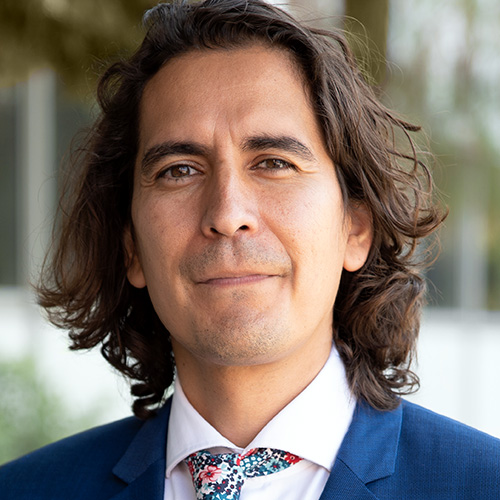
About the Speaker: Jesús Díaz OTD, OTR/L, LRC
Empowering Change: A Training for Occupational Therapy Practitioners in Motivational Interviewing
Interactive Course | December 5, 2025 through December 7, 2025

Strengthen your therapeutic communication with motivational interviewing (MI)! Join this interactive, online training to learn and practice MI principles. While this course is designed to be applied to OT practice, the content covered can be applicable to any population- all disciplines are welcome.
This is a 12-hour course held across 3 days (4 hours per day). Participants are expected to fully participate for the entire course.
Dates/Times (Pacific Time):
- Friday, December 5, 2025, 1–5pm
- Saturday, December 6, 2025, 8am–12pm
- Sunday, December 7, 2025, 8am–12pm
Location: Zoom
Cost: US$250
AOTA Members and USC Chan Alumni: $225
CEUs: 12 contact hours (1.2 CEU)
Note: This course satisfies the 12-hour MI training requirement for Certification in Lifestyle Redesign.
Call for Presentations!

Are you a Lifestyle Redesign Certified (LRC) OTP or a Certification Candidate presenting presenting at an upcoming conference on Lifestyle Redesign, lifestyle management, chronic condition management, or other related topic? We would like to highlight upcoming presentations in future newsletters, so that other members of this community can learn from you!
Community of Practice - Coming Soon

This Lifestyle Redesign Community of Practice (CoP) has been created to foster connection, knowledge sharing, and collaborative problem-solving. The virtual group will be led by Dr. Virginia “Ginny” Green, a Lifestyle Redesign Certified practitioner (LRC), and will be open to those who have earned, or are in the process of earning, Certification in Lifestyle Redesign.
Course Series participants, Certification Candidates, and LRCs will receive a separate communication about this opportunity.
Job Opportunity: Hyperion Chiropractic & Acupuncture
“We’re seeking a licensed Occupational Therapist who is enthusiastic about patient care, thrives in a collaborative setting, and values professional growth through education and mentorship. We are a long established practice offering chiropractic care, acupuncture, massage, hypnotherapy, and Naturopathic care. This role presents an exciting opportunity to join a clinic with a stellar reputation and a commitment to providing comprehensive, integrative care to our diverse patient base. This is also an excellent opportunity for newer practitioners to establish their patient base and lay foundations for their own practice. Should there be interest in participating with insurance, this is an option to pursue as well.”
Course Series Corner
Scholarship Applications Open Soon!

In an effort to support the investment made by OTPs who complete the entire Course Series and are ready to begin accruing practice hours for Certification in Lifestyle Redesign, the Lifestyle Redesign Mentored Practicum Scholarship will cover a portion of the Mentored Practicum course cost.
- Applications Open: Sept. 19, 2025
- Applications Close: Oct. 17, 2025
- Decisions Announced: Oct. 31, 2025
OTPs who intend to take the Mentored Practicum course in Summer 2026 are encouraged to apply during this scholarship cycle. An email announcement with will be sent out on Sept. 19th with the link to the application.
Scheduled Course Series Track

For those who appreciate a structured pace, this track offers the (3) Core Courses, annually, with…
- Set start and end dates:
- Core Course 1: Sept. 8 - Oct. 24, 2025
- Core Course 2: Nov. 10, 2025 - Mar. 20, 2026
- Core Course 3: Apr. 6 - May 1, 2026
- Bundle the Core Courses for a discounted rate
- Access to 1:1 meeting opportunities with course instructor for individualized problem-solving and support.
- Opportunities to attend multiple optional synchronous discussion sessions to connect with other course participants.
- Learning activity feedback that is individualized to each learner.
(NEW) On-Demand Course Series Track

We have heard your feedback and are excited to offer On-Demand versions of the (3) Core Courses and (5) Special Topics courses, beginning October 15, 2025! In this flexible track…
- Courses can be accessed within 5 business days of registration and should be completed in the window of time allotted (varies per course; see course descriptions)
- The window of time to complete a course would begin the day after course access is granted
- Meet with the course instructor via monthly Lifestyle Redesign Clinical Office Hours
- Learning activity feedback will represent general themes observed across learners
Note: This track does not include the Mentored Practicum course
Certification Section
Certification Info Sessions

Join us for an upcoming certification information session, learn about the Lifestyle Redesign certification process and get your questions answered! Info sessions are live, online events, hosted via Zoom.
- Friday, September 19, 2025 @ 11am Pacific Time
- Tuesday, October 7, 2025 @ 10am Pacific Time
- Friday, November 14, 2025 @ 1pm Pacific Time
Upcoming Certification Exam Window

Have you completed your education and experience requirements for initial Lifestyle Redesign Certification? If so, take the final step towards certification and apply for exam eligibility! The exam is offered in an online, proctored format on a biannual basis.
The next Certification Exam will be offered October 1, 2025 through November 15, 2025. If you intend to take the exam this cycle, start the process today!

Social
LinkedIn