



Student Blog
Fieldwork
First Day of Fieldwork ⟩
September 24, 2012, by Amber
Fieldwork What are OS/OT?
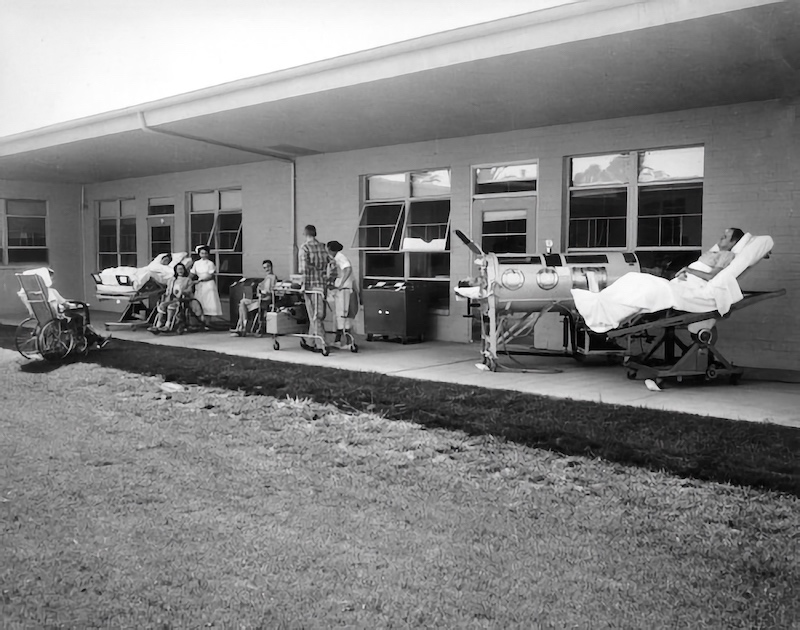
Last week I began my level one fieldwork experience at Rancho Los Amigos National Rehabilitation Center. Each semester, our courses are focused on a particular practice area of occupational therapy: adult physical rehabilitation, pediatrics, or mental health. To compliment this coursework, we have the opportunity to spend one day per week at a fieldwork site in that practice area. This semester I am in the adult physical rehabilitation immersion, and was lucky enough to be placed at the top rehabilitation hospital in the Western United States. Rancho Los Amigos is situated on a beautiful campus in Downey, and has a long history. In 1888, it was known as the Los Angeles County “Poor Farm.” In the 1950s, it was a respiratory center for polio patients. Today, the hospital helps patients with disabilities regain skills and learn techniques to accomplish basic activities of daily living, and return to work or school if possible.
I was placed in an outpatient unit that specializes in treating people who have sustained spinal cord injuries. My role was to observe an occupational therapist, and potentially do some hands-on interaction with the patients. The first patient of the day was a middle-aged man who had been injured in a fall at work. He used a wheelchair and had extreme weakness in his upper body. It was his third visit with the occupational therapist, and we worked on activities to strengthen his upper extremities. He really pushed himself, and it was wonderful to see the slow progress he was making. Later that day, I got to observe and use the driving rehabilitation equipment, and spend the afternoon in the stroke rehabilitation unit. I am very excited to continue my fieldwork and learning experience at Rancho Los Amigos.
Rancho Los Amigos National Rehabilitation Center
⋯
First day at Fieldwork ⟩
September 21, 2012, by Alisa
Fieldwork
This week I started my level I fieldwork in mental health. I am placed at Project 180, a forensic treatment agency, in downtown Los Angeles. Clients have a mental illness as well as a substance abuse issue. Programs include the re-entry program, where clients join Project 180 after serving their time in jail or the diversion program, where clients join Project 180 instead of going to jail. The 12-18 month programs are structured in phases, culminating with a graduation ceremony at the end. There have been instances where Project 180 staffs have worked directly with clients in jail. I was able to observe three group sessions: mental health, job skills, and thinking errors. It was eye-opening to be able to hear a lot of members share their stories openly. To actually be able to hear someone who has had first-hand experiences of what it’s like living with a mental illness was a very humbling experience. It made me realize to be thankful for what I have in my life and the support system and to have an attitude of gratitude wherever I go. I appreciate how committed the staffs at Project 180 are to their clients and to each other. I look forward to more group sessions with the clients and individual sessions, too. I learn a lot from just listening to them. So far, it’s been a wonderful experience, and I’ve also made a canine companion at fieldwork, too! Meet Indiana Jones.

Indiana Jones
⋯
Level I Fieldworks ⟩
April 24, 2011, by Amanda
Fieldwork
Experience everything OT!
Throughout your first year, you will have various opportunities to go out into the occupational therapy field — FIELDWORK! The word “fieldwork” sometimes throws people off, as it in part sounds like you are an archeologist going to excavate. When I explain what fieldwork is to those outside of our academic community, I describe it as an internship, specifically a clinical internship. In OT school you have two types of fieldworks, Level I and Level II. I will begin here to explain what Level I fieldworks entail.
Level I fieldworks are relatively brief and allow for greater exposure to the many practice areas and settings of occupational therapy. As I had volunteered and worked primarily in pediatric settings before beginning the program at USC, I decided to use Level I fieldworks as an opportunity to see what else was possible to do with a Master’s in OT. In my first year we had these Level I’s structured in two ways: the dose model and the immersion model. For my dose model, I went once a week (on Thursdays I had the day off from class) to an upper extremity and hand rehabilitation outpatient clinic. At this site I primarily observed, but the OT who I was placed with allowed for hands-on opportunities when the client was okay with it. This included anything from feeling tightness of muscles, ligaments, and joints after the healing of bones, seeing the different procedures after carpal tunnel release surgery, and talking to the clients about their experiences.
My first immersion model experience of level I fieldwork was spending everyday of one week in the field of psychosocial practice at a school for adolescents that are considered “at-risk.” This site aims to lead the teens to becoming healthy, independent, and productive members of the community. Occupational therapy played a role in re-engaging the students in healthy behaviors and social interactions and preferred occupations. This was my first time seeing OT in mental health practice and the OT I was with allowed me to plan and lead therapeutic group activities as well as helped me develop my documentation skills.
My second immersion model experience was in physical rehabilitation at a large hospital system. This time, the experience was structured so I went everyday for two weeks. Again, never having seen OT in the various levels of care, I really benefitted from this experience. Throughout my two weeks, I moved from acute care, to inpatient care, to transitional rehabilitation services, to outpatient care. It was amazing to see the breadth of OT skills depending on where a patient is in their recovery. I especially enjoyed the transitional rehabilitation services as it was based in a residential setting. This home was remodeled to house all aspects of rehabilitation. There was a conventional gym for therapeutic exercises, but OTs used the kitchen, community garden, study room, bathroom and places throughout the community for their interventions. I absolutely fell in love with the structure of therapy at this level of care for all the possibilities of OT and the emphasis on returning to the community.
If you are starting to worry about how all of this gets arranged — don’t! We have two fieldwork coordinators that are experts in placing students. My part in all this was for each of these 3 fieldwork opportunities I had to rank the practice area I wanted to see and then list the geographic locations in Los Angeles that were the best for me. The fieldwork coordinators took care of contacting the sites and securing placements for students. The time off from class during the semester is specifically scheduled for fieldwork, so you get to go to the sites and experience OT!
⋯
What makes USC’s program unique? ⟩
November 8, 2010, by Helen
Community Fieldwork Getting Involved International What are OS/OT?
The professors at USC support your learning in every way possible.
In the past couple weeks, I have held information sessions at UC San Diego, UC Davis, Sacramento State, and UC Berkeley. I am constantly being asked why I chose USC’s program and what makes USC’s program unique. From holding these information sessions and meeting so many ambitious and passionate future applicants I have had the opportunity to reflect more on the profession of Occupational Therapy. I have also had time to reflect on how attending USC’s program has influenced my professional future and outlook about the profession. The faculty at USC has such immense confidence in their students and provide the support for their students to not only be great clinicians, but to be leaders in their profession. This investment in the students is what has made my learning experience as a graduate student so unique.
In the last year, I have been provided with the opportunity to attend Lobby Day in Sacramento, advocating for Universal Health Care. Additionally, I was given the opportunity to do an international fieldwork in Ghana. I have also had the opportunity to attend OTAC conference in Pasadena, AOTA conference in Florida, as well as the student conclave in Kentucky. Attending these events, networking with current practitioners and leaders in the field, and learning what direction research is moving towards, have intertwined to inspire me about my profession. I am so proud to be an Occupational Therapy student at USC and am so grateful for being able to attend a university where the faculty truly supports your learning. The professors and faculty hold a holistic view of their students, emphasizing that it is not only valuable to be an excellent student doing well academically, but it is equally valuable to gain practice experience, leadership experience, research experience, and to be knowledgeable about the theory behind practice. By valuing all these learning components, I have a strong sense of the history of my profession, where we stand currently in our health care system, and what needs to be done in the future. The field of Occupational Science was founded at USC, Jane Ayres was a professor at USC researching Sensory Integration techniques, Lifestyle Redesign was established at USC, and our dean Florence Clark is the president of the AOTA. So to answer the question of why I chose USC and why I feel USC is ranked so highly for our OT program, I feel that it is because all these elements combine to create passionate practitioners who think broadly about the field of Occupational Therapy.
⋯
A Summer of Surprises ⟩
October 23, 2010, by Austen
Fieldwork What are OS/OT?
I was initially uneasy with my first summer fieldwork placement at an inpatient acute rehabilitation floor of a large hospital. I had no idea what to expect as I had no prior fieldwork experience in that setting. I was worried about not liking physical disabilities, not being good at it, and being overwhelmed in a hospital setting.
The inpatient rehab unit I was on was super intense as I had expected, and there were so many things to remember. I worked 4 days a week 10 hour days, arriving in time to see my first patient at 7am, and leaving around 5pm. By the time I got home, I was exhausted from mental, physical, and emotional overload. It was an 18 bed unit, with a large OT and PT gym area, fully equipped kitchen, and lots of activities resources to choose from. I observed the first couple weeks, then started brainstorming treatment ideas, eventually taking on one patient of my own. About half way through the 12 week internship I started treating an entire caseload of 5-6 patients in a day. I was treating on my own, with my clinical instructor either in another room with her own patient or down the hall at our desk. I had an amazing clinical instructor. She was supportive, encouraging, helpful, thorough, patient, and challenging and we got along great. She knew when to push me, she knew when to step in. She was an incredible teacher. I really lucked out.
In the observation phase, I remember watching my clinical instructor help a 380 pound woman diagnosed with “failure to thrive” to the commode, assist with perineal care as the patient was not able to reach, and also bathe every crease of the patient’s body to ensure thorough washing. I was worried about the day I would have to do that myself and I was quick to think a hospital is not a place I want to work later on. Essentially, I was scared to do something I had never done before. Not only was I hesitant about some of the responsibilities of the OT in an acute rehab setting early on, but I was critical of the overall hospital setting as I assumed more hands-on experience. It was pretty stressful and overwhelming from what I experienced, and it was really fast-paced. I was constantly moving, always on my feet, always thinking on the go. I worked up a sweat all day as I was constantly transferring patients, running around collecting items, running errands, etc. I would go home and collapse after a day at work. There was no leftover energy to do much of anything else.
Then the third to last week of fieldwork arrived. At that time I was treating my own caseload, completing all documentation, and feeling comfortable with my routine. A 10-hour day was still physically and mentally taxing on me, but it was doable. I found a schedule that worked for me, I found a way to manage my patients, I found a way to be organized. And I was having fun! It was at that moment that I could not only look at the checklist of things I had to complete, but I could enjoy being with my patients. I found a way to balance being the health care professional and the cheerleader, the coach and the friend. Something clicked. The last couple weeks were the best ones, because I felt like I knew what I was doing and I saw the difference I was making. My patients would go home saying “Thanks a million,” “I could not have done this without you,” and “I really appreciate all of your help.” That makes it all worth it.
Despite my initial trepidation, working in acute rehab was an amazing experience and I learned a number of lessons. It may seem cliche, but I learned to not always rely on first impressions. After the incident with that obese woman, I dreaded going into that hospital for the first couple weeks, worried about the first day I would have to get my hands dirty. However, once I stepped in and started treating, I never flinched again. I realized that my first impression that working in a hospital was not for me was too quick of a judgement. I sit in the classroom now wishing I was back on that acute rehab unit. My summer experience was way better than I ever thought it would be. I also learned to keep an open mind. Before I started, I told myself I was not going to like it and I was going to be bad at it. Much to my surprise, I loved my fieldwork there, and happened to do a great job! So, just because you think you may not like something or may be bad at it, give it a try anyway and you may surprise yourself like I did.
⋯
Social
Facebook Instagram LinkedIn TikTok YouTube