



Student Blog
Kat
Cheers to Trusting the Process till the End! ⟩
May 5, 2020, by Kat
Exactly two years ago, I was notified I was accepted into the entry level masters program here at USC. It was not your typical acceptance though. I was waitlisted. I did not get to attend the Accepted Student Reception. I did not have much time before I had to give my two weeks notice for my full time job. During my time on the waitlist, I was stressed. Every morning I would wake up hoping to receive an email with good news. After I had received the email stating I was on the waitlist in February, I tried to stay positive. The Admissions team notified me that they do indeed use the waitlist and admit students. This gave me some hope, but as February, March, and April ended I was becoming pessimistic. But I told myself, “if it is meant for me, it will be.” I just had to trust the process.
As you can see . . . I was accepted!! Now came the next hurdle. I can relate to Kaho’s Blog Post about not feeling like I belonged in the program when I first started. I was battling between having just left a full time job, taking out loans to attend school, and finding it a bit difficult to find my own community within the program. I was not sure if I had made a mistake in coming to USC. I was starting to question how I would make it through my masters and finish it. I had to rely on my hard work and resilience. I just had to trust the process.
After opening myself up to my peers, seeking guidance from professors, and making myself known (see my previous post), I started to feel more at home. So much so that school became my second home. Acquaintances became classmates. Classmates became friends. And my friends are now my family. I could not have made it through my masters program without the support I received both in and outside of the classroom from my school friends and family. They have helped keep me accountable, flexible, and focused. They encouraged me, validated me, and reminded me why I started this journey. This is how I was able to make it through the #1 OT program in the nation! 50% hard work, 50% support. I doubted my ability to be successful at USC. But I found my community to help me make it through. I just had to trust the process.
This past semester was not the last semester of graduate school that I was anticipating. Some of my Externship opportunities were cancelled and others became remote. The last 6 weeks of class were online. And second year students recently found out that our second level 2 fieldwork will also be remote. Although this is disappointing and I am still in the process of grieving this loss of an in person fieldwork opportunity, I am once again trying to stay positive. These things have been out of everyone’s control. But the professors, staff, and fieldwork team have all been so supportive during this difficult time for students. I am not sure what this summer will bring. I will just have to continue trusting the process.
Class of 2020, we have come too far to give up. We are so close to the finish line. We need to continue relying on each other for encouragement. We need to keep pushing each other to be the best we can be. And most of all, we need to trust the process. Our hard work has brought us this far and it will continue to open doors for us.
Congratulations class of 2020! It was a pleasure being a student ambassador.
Fight On!!
⋯
Make Yourself Known ⟩
April 21, 2020, by Kat
It is important to make yourself known during your graduate studies. I found myself struggling with this when I first started the entry level masters program. As time went on, I realized I was cutting myself short and not optimizing my learning or taking advantage of the knowledge the expert professors had. I had to challenge myself to speak up in class and to seek help during office hours. I had to insert myself in class discussions to truly experience and benefit from the team based learning that is embedded in many if not all of the classes throughout the program.
I recently asked a few professors and previous fieldwork clinical instructors (CI’s) to write letters of recommendations for me for different positions that I am applying for. In reflecting on this process of asking for letters of recommendation as well as professors and CI’s actually being able to write them for me, I realized that I had been working on this process of being known for a while now. I was able to email a request along with my resume, and professors and CI’s were able to do me the huge favor of helping me with this. How? Because I made myself known.
This process involved my time and effort both inside and outside of the classroom. Inside of the classroom I came prepared by having done my readings and being ready to discuss. I also brought up relevant questions which connected the class content to the populations I am interested in working with. Outside of the classroom I sought extra help and clarification with difficult concepts. Outside of the classroom I was involved in things such as being a student ambassador and attending DAE meetings.
Making yourself known does not only benefit you when you need letters of recommendations. It is also important because once you graduate and enter the workforce, your professors may become your colleagues. Building professional relationships with them can open doors for you and can provide valuable mentorship as well.
All of this is to say:
- Participate in class
- Ask questions
- Go to office hours
- Seek mentorships
It Matters!
⋯
February is Over, Black History is not! ⟩
March 27, 2020, by Kat
“Black history is American history” — Morgan Freeman
February is over. But that does not mean that we as a country should stop celebrating Black history and Black culture. During February, many events took place on campus at USC to celebrate Black History Month. Clubs such as the BGSN, the CBCSA, and the BSA held a variety of festivals, hosted guest speakers, and career networking opportunities in the spirit of Black History Month.
One specific event that I participated in was the Black Pharmacy Society’s “The Black Experience in Healthcare: Challenges and Opportunities”. This event was a panel composed of current Black students from various disciplines that spoke on their experience of being a student of color at USC. I am honored to say that I was on this panel. The fields of occupational therapy, physical therapy, physician assistants, medicine, pharmacy, and dentistry were all well represented. Meaningful conversation surrounding imposter syndrome, the importance of mentorship and representation were a few of the topics discussed. Seeing people who look like you in different fields is very important. For those that may not know, imposter syndrome is “the feeling that you haven’t earned your success, you simply got lucky, and you’re a fraud or ‘imposter’ around people who actually earned it and know what they’re doing” (cited from empowerwork).
Imposter syndrome was discussed from the perspective that sometimes Black students feel as though they are imposters in their respective fields due to the lack of representation within their fields. These students feel as though they are not and will not be able to compete with their counterpart peers. These feelings can be overwhelming, isolating, and can have rippling effects to the success of Black students, or any student experiencing imposter syndrome.
However, I believe Maya Angelou’s quote, “the more you know of your history, the more liberated you are,” calls students, in this case specifically Black students, to look to history for empowerment. Students may be the first in their family to go to college, graduate school, or may be the only Black student in class. But let’s take a look at history:
- Madam C. J. Walker was the first female millionaire. She was Black.
- Dr. Daniel Hale Williams was the first to complete a successful open heart surgery in America. He was Black.
- Katherine Johnson was the first female to receive credit as an author for a NASA research paper. She was Black.
These are only a few of the firsts in America that belong to the Black community. I do not mention these first to compare the Black community to other communities. I state these facts to empower all minority students to stand together, be great, and keep breaking barriers. Be the first. Be the best. Black history should serve as an inspiration to us all.
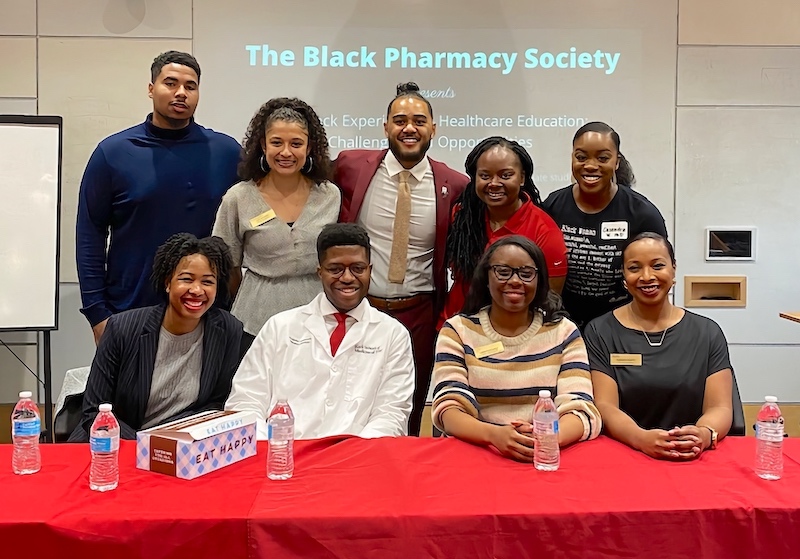
Pictured are the panelists from the Black Pharmacy Society event. (All individuals pictured agreed to be shown with this article.)
⋯
I was running (Forrest Gump voice*) ⟩
February 7, 2020, by Kat
50 minutes of running? Wild right?! Just 3 months ago, I would have laughed that I could have ran for this long. Balancing school, work, a social life, and self-care can be mad difficult at times. There is always readings to do, emails to send, and people to text. But I have recently found that running helps clear my mind. Running helps keep me sane and active. I feel accomplished when I make time to run because I feel like I am managing my time well, I feel more confident in my ability to take care of my body, and I feel empowered when I do something for ME! Before starting my running journey, I had no idea how much stress I carried in my body, both mentally and physically. On my runs, especially the long runs, it is just me, my thoughts, and my music. Eminem said it best, “You better lose yourself in the music, the moment, you better never let it go”. I do get lost in the music and the moment during my runs. Everyone needs a way to release and relieve stress. Running is my way. Staying organized, working ahead on assignments, and prioritizing my responsibilities helps me take care of me. When I run, it means I am taking care of all of these things. It is easy to get lost in the sauce of grad school. Don’t be afraid to try out new activities and explore what helps keep your well-being balanced. I had no interest in running growing up. Now I am up to 5 mile runs and love it. Almost to Forrest Gump status. Time to catch these miles!
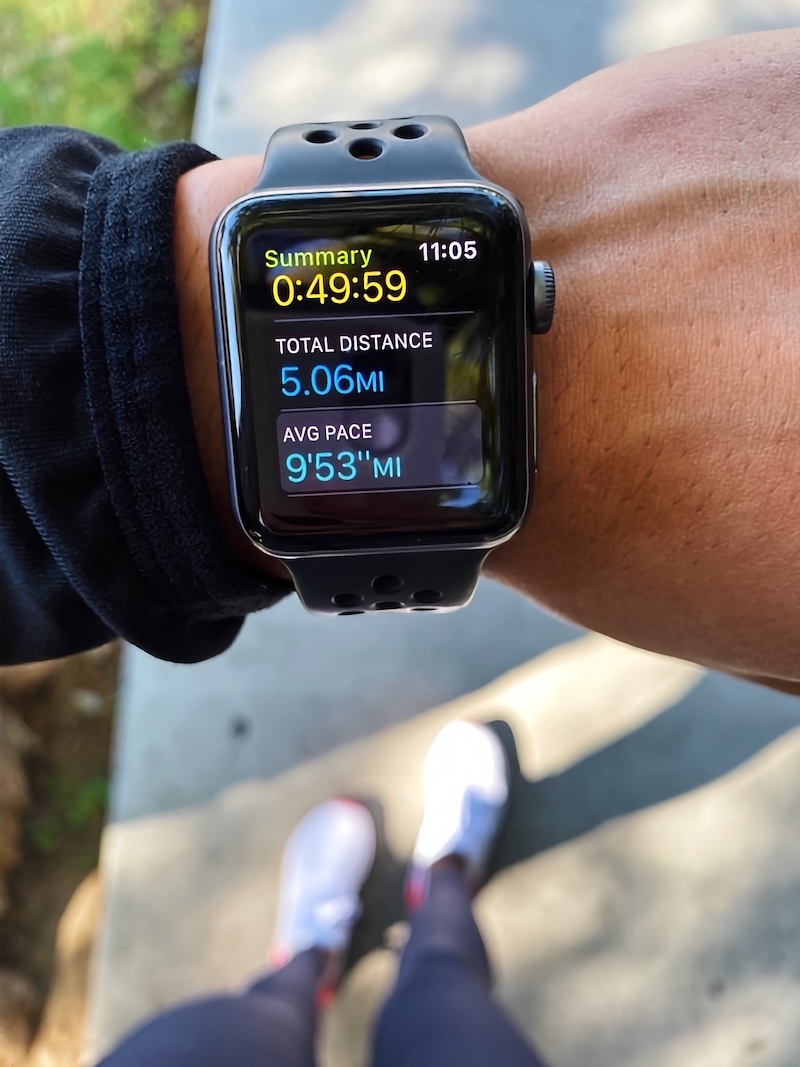
I found my Zen after this run yesterday!
⋯
Electives and Field Trips ⟩
January 21, 2020, by Kat
Second semester of your second year in the OT program at USC is the freedom semester! This is when you are tasked with a difficult yet rewarding, complicated yet exciting, cut throat task of choosing . . . drumroll pleaseeee . . . your own electives!! Having the freedom to choose electives is kind of a double edged sword. There are so many great electives to choose from. There’s early intervention, acute care, motor rehab, to name a few. You can even opt to take elective courses on the main campus in other departments. Let’s say you are interested in running your own clinic one day, so maybe you take a business course. Second semester of your second year is meant for students to take lead in their learning and pursue topics and subjects that align with their interests and their future careers. If you are like me though, every class sounds interesting, which is why making a decision on what to take can be so difficult. There are still a few courses that are required, however, you get to choose how to fill up the rest of your credits.
Anywaysss . . . one of the classes I am taking right now is OT 571 Assistive Technology with Dr. Colin Lenington. Today in class we had the opportunity to go to Mobility Evaluation Program in the city of Bell where we met with individuals who specialize in helping people with disabilities be independent with their driving. During our field trip (Field trips in grad school? What??), my class and I were able to learn about some of the cool adaptive equipment that can be used to help people with varying disabilities to drive. If you think about it, driving is such an integral part of our everyday occupations, especially here in LA. It was such an eye opening experience for me. I had no idea this type of equipment was out there. As a class, we even had the opportunity to see the assistive tech we learned about in use with 2 clients that were there to demonstrate their personalized equipment.
I am not sure the specific realm of OT I want to go into yet. But I do know that I was blown away by the impact that helping someone with a task that I take for granted, driving, can have on an individual who navigates through the world differently than I do. Long story short, I am excited to see what else I learn in OT 571 Assistive Technology, along with my other courses. Cheers to an exciting semester . . . and to hopefully figuring out what area of OT I want to go into.
Check out my class and some assistive tech!
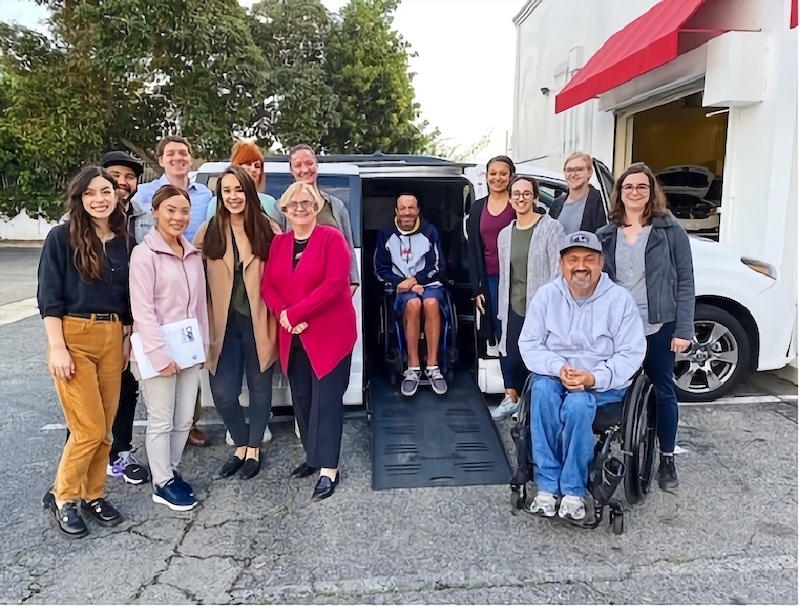
My Assistive Technology class with 2 clients that shared their experience with us. We are so grateful for their willingness to share with us! (Photo shared with permission from all individuals depicted)
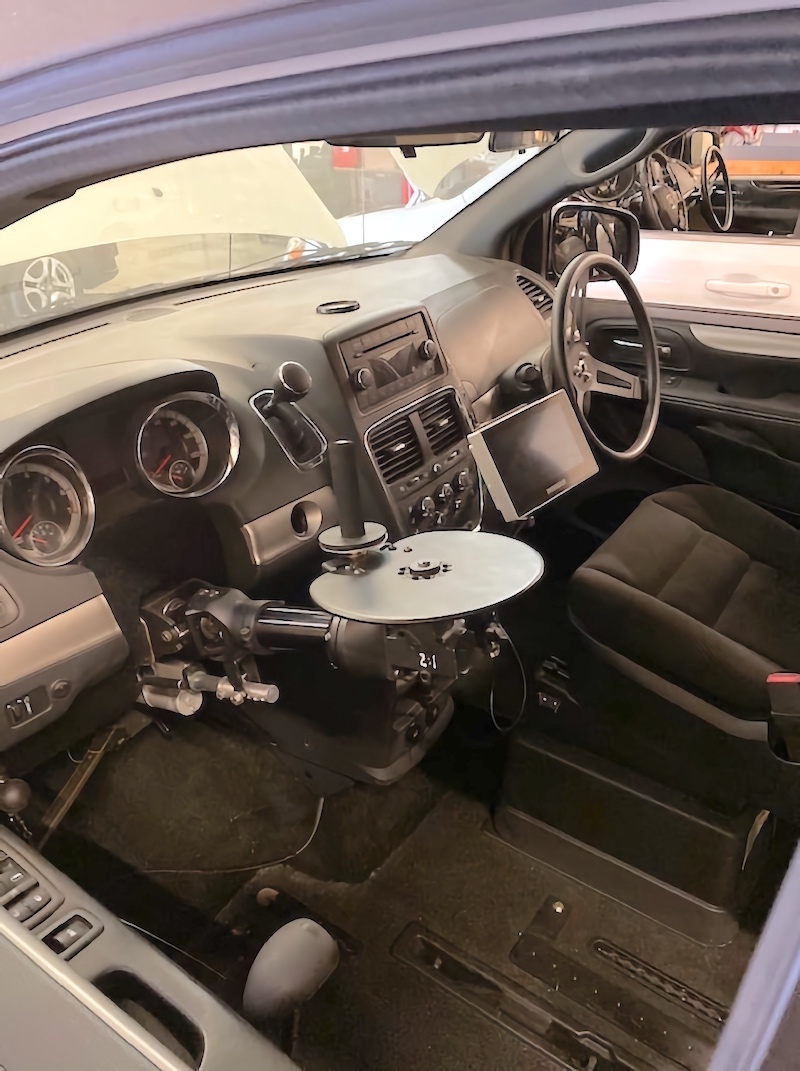
Here is an example of an adapted steering wheel a client may need to allow them to drive in a horizontal plane versus the “typical” vertical plane. This type of steering wheel is similar to what is seen on school buses. The steering is situated over the client’s lap as opposed to being mounted on the dashboard. On the floor of the car, you can also see where a wheelchair can be secured in place instead of the original car seat.
⋯
Social
Facebook Instagram LinkedIn TikTok YouTube