



Student Blog
Makayla

From Classroom to Community: My OT 340 Service-Learning Experience ⟩
September 7, 2026, by Makayla
Classes Getting Involved School/Life Balance What are OS/OT?
One of the coolest classes that I have taken at USC would have to be Dr. Ashley Uyeshiro Simon‘s OT430: Animal and Human Interconnections in Daily Life course, which is offered under the Occupational Science Minor Department. Every semester, the class fills up fast, and I was lucky enough to take this course during my senior year at USC. Aside from the many furry friends that visit the class, field trips, or presentations from industry professionals, what sets this class apart from the rest is the service-based learning project that involves students securing and completing a volunteer project for an organization that promotes animal/animal-human health and well-being. At the end of the semester, we present our experiences in a small group presentation with students from the same animal volunteer organization and get a chance to hear about the vast array of other animal volunteer organization experiences our fellow peers worked at as well.

LAPD Sergeant and K-9 unit visit
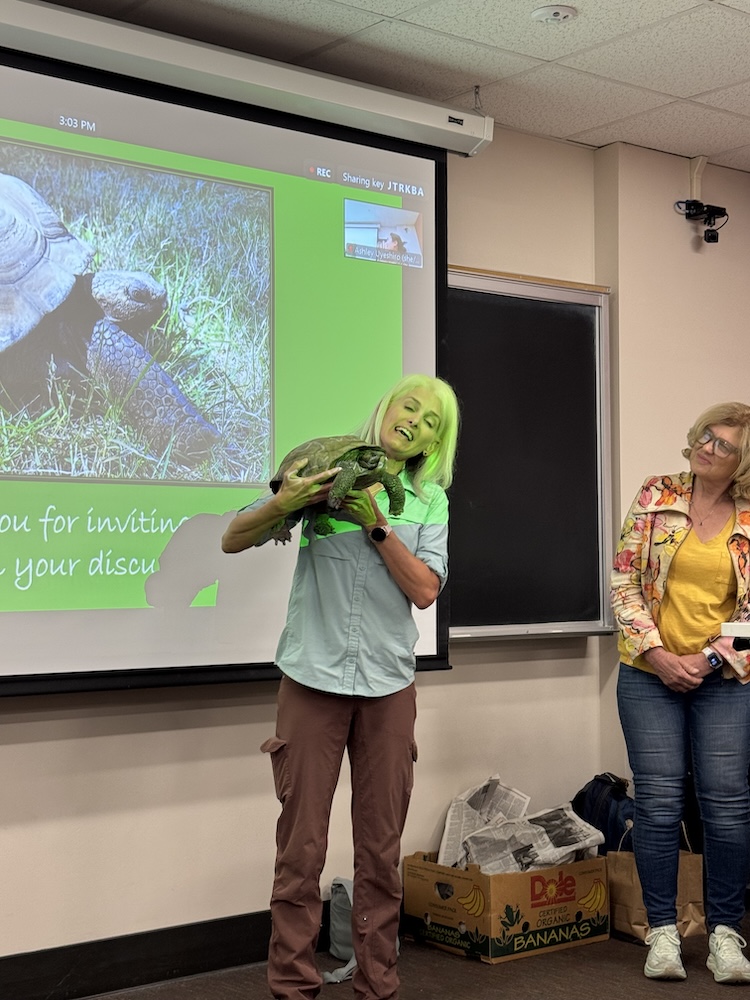
LA Zoo docent visits with their pet tortoise
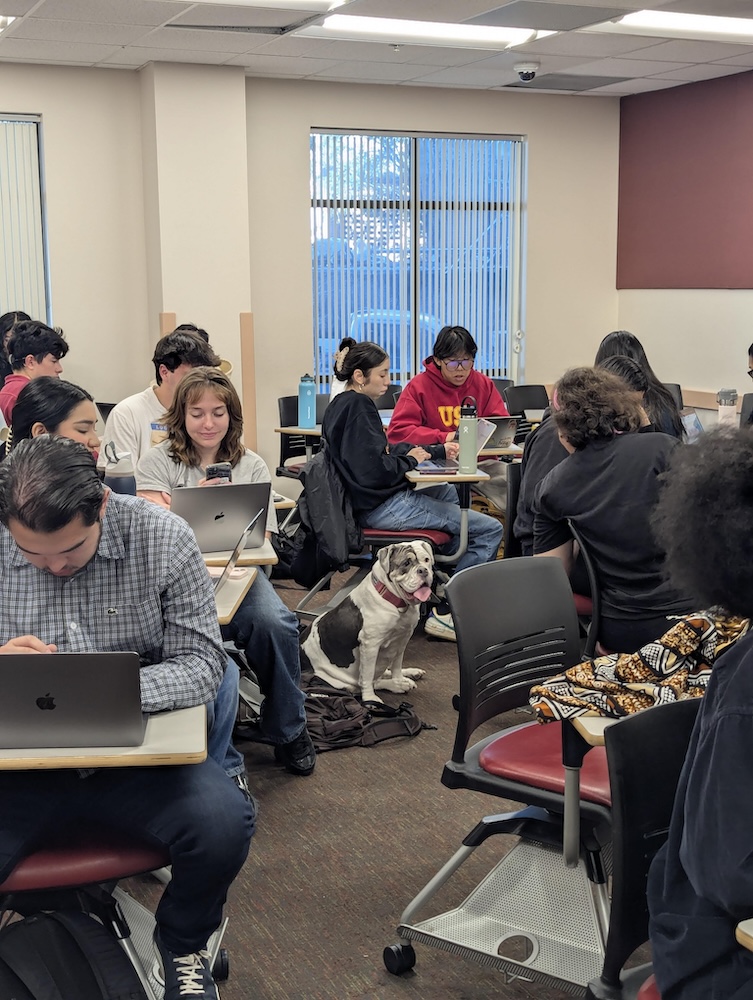
Furry friends in class
For my service-based learning project, I volunteered at Stray Cat Alliance, a non-profit animal welfare organization based in Los Angeles, California, dedicated to rescuing cats and kittens by promoting trap-neuter-return programs and providing medical care for feral and community cats.
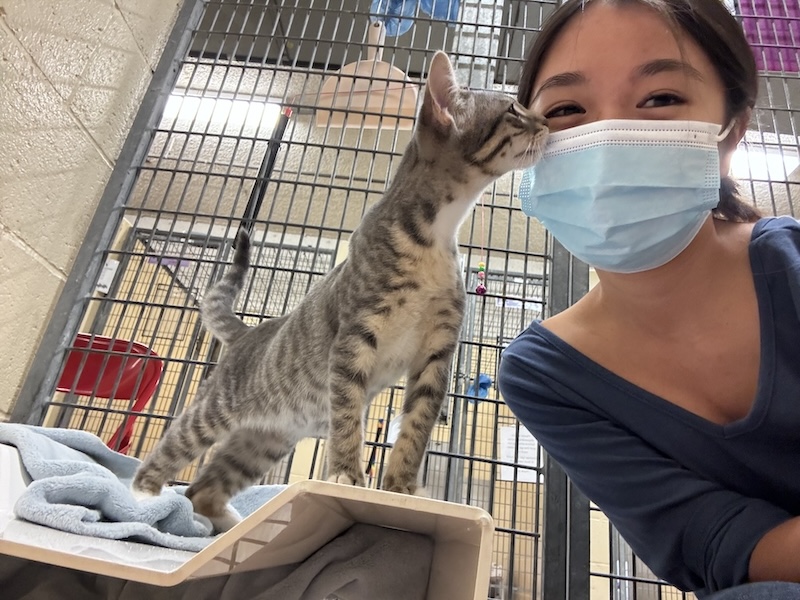
Volunteering at Stray Cat Alliance
The occupations that I engaged in while volunteering included feeding the cats, cleaning/tidying up the cat enclosures, and socializing the cats, as well as tracking the cats’ behaviors in their Daily Observation Sheets. My favorite occupation that I meaningfully engaged in at my site was socializing the cats, where I was able to play with them using the cat toys and sit with them while petting their fur. Here, I was able to observe each of the cats’ unique behaviors and personalities. While it is easy to just play with friendly cats, sitting and interacting with less social cats helps them break out of their shell and, ultimately, makes them more adoptable to a potential caregiver. It is also immensely rewarding to watch cats recover from injury, illness, or spay/neuter surgery and then see them return healthy and thriving! The occupations that I observed the staff engaging in were syringe-feeding little kitties or providing medical care to cats. Sometimes, I would see office staff leading adoption hours and giving orientations to potential cat owners, as well as instructing new volunteer orientations. I found that there were many office staff organizing donations, answering hotline phone calls, and tracking different adoption metrics in their database.
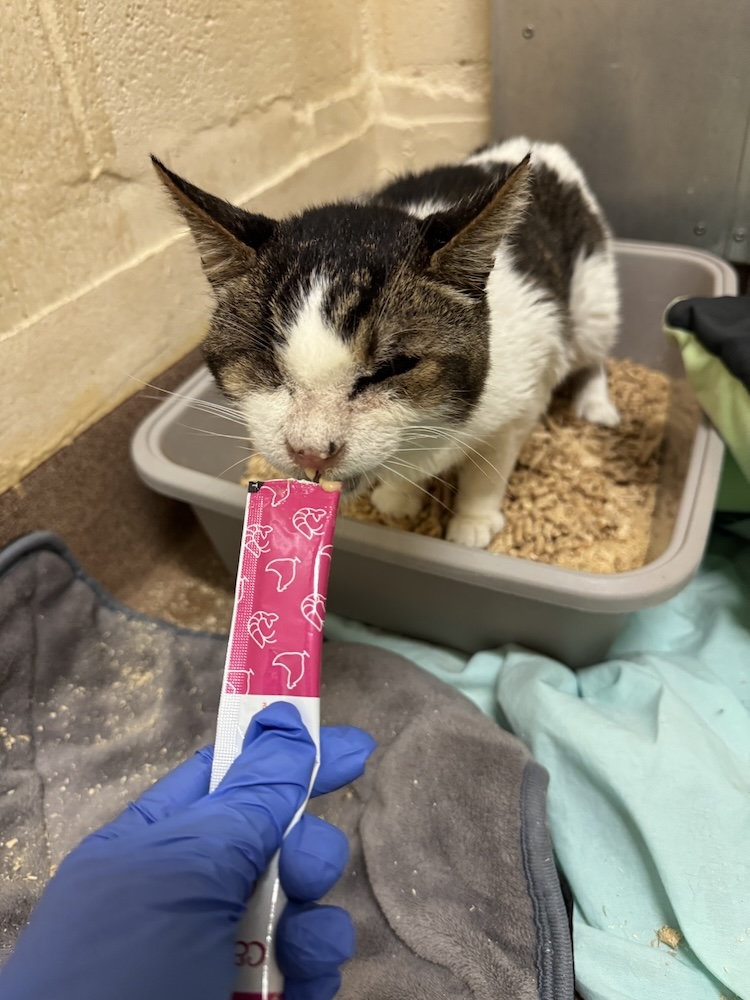
Feeding the kitties breakfast and a treat
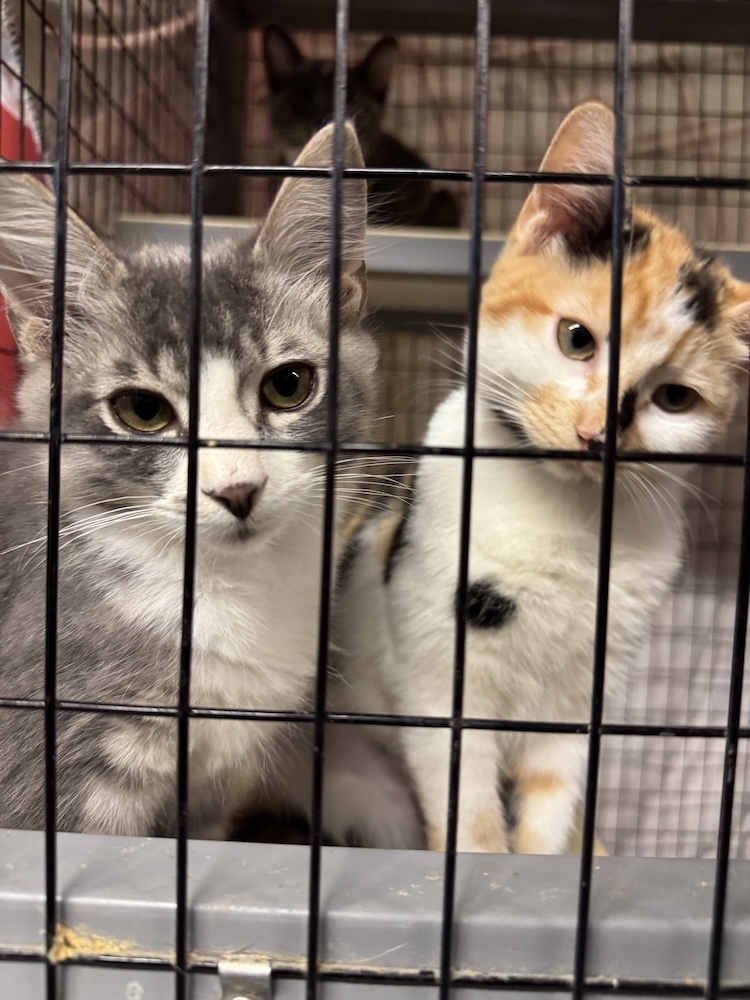
Kitties waiting for their meal
My service-based learning project taught me that it takes a lot of diligent effort by many individuals to run any animal shelter, more than what meets the eye. I have a greater respect for the Stray Cat Alliance animal shelter workers for the amount of work that they put up with and for persevering through caregiver fatigue. While being a cat care volunteer, at times it can be an unpleasant job when having to clean the litter boxes, especially with fecal matter sitting there for long periods of time or smeared around the kennel. At times, I was grossed out at the amount of fecal matter that I had to clean, and it was much easier to think, “Someone else can take care of this.” I had to check myself at times, knowing the value of the volunteers’ responsibilities to ensure that the Stray Cat Alliance staff can complete theirs. When volunteers are not there, the Stray Cat Alliance staff must take on the volunteers’ responsibilities on top of their own work as well. Seeing them around, I found that they work around the clock and on weekends to ensure the health and well-being of the cats, as well as driving efforts to have them fostered or adopted. It’s a thankless job, and I am reminded of the meaningful work that happens behind the scenes to ensure the health and well-being of the populations that we work with. I recognize the importance of stepping up, rather than deflecting to someone else, in keeping at the forefront of how small acts of care contribute to a larger system of collaborative care. Additionally, I acknowledge that when working with vulnerable populations, I should never assume that someone else will take care of things, and check my privilege in the position that I am in to help others. I must do my part, whether difficult or unglamorous, in order for the collective success of a healthcare team and for the betterment of the populations in need.
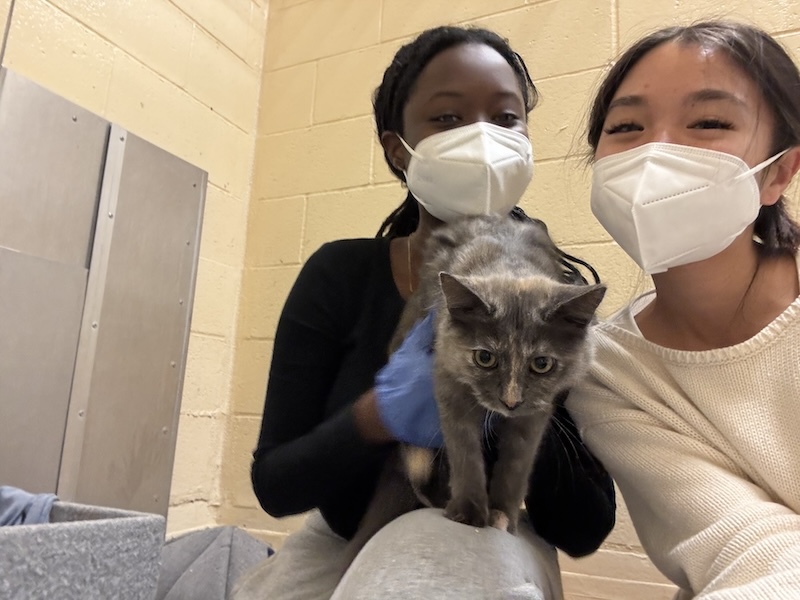
My friend and I volunteering together
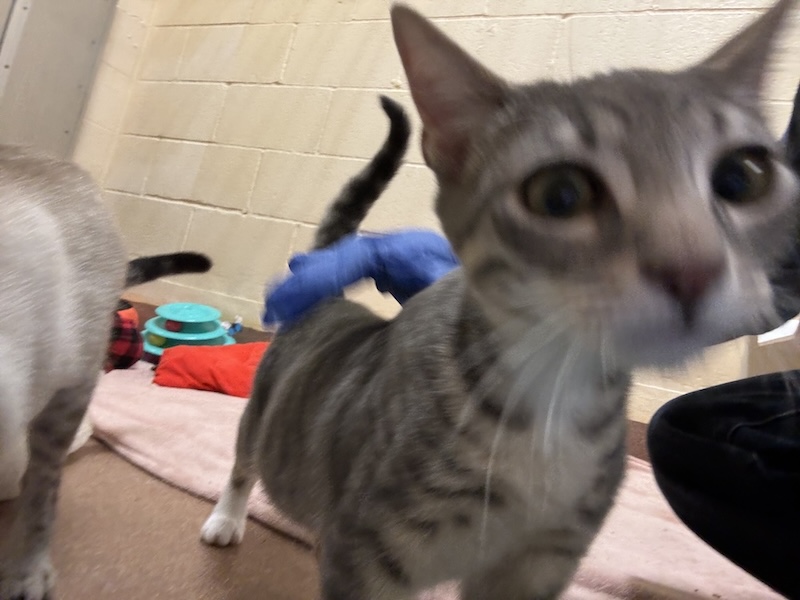
Socializing the cats ฅ(ᵔ꒳ ᵔマ.ᐟ
What surprised me about Stray Cat Alliance was the turnover rate of cats leaving the kennels and new cats coming in. I was surprised when I got to know some of the cats, and then came back to volunteer a different week and to see them gone and replaced with new cats. While bittersweet, it was fulfilling to know that they have found their fur-ever homes and that cat adopters and fosterers are very prevalent, even if I do not see it. This gives me hope, especially during the holiday season, that the cats can touch the lives of so many. What challenged a pre-existing belief that I held was that cats are very quiet and sleep all day. However, being in a cat shelter, many of the cats were very lively, playing or snuggling with their kennel mates, and their “meows” can fill up an entire room. I even saw some cats snore, which I would have never guessed that cats could do, just as humans do.
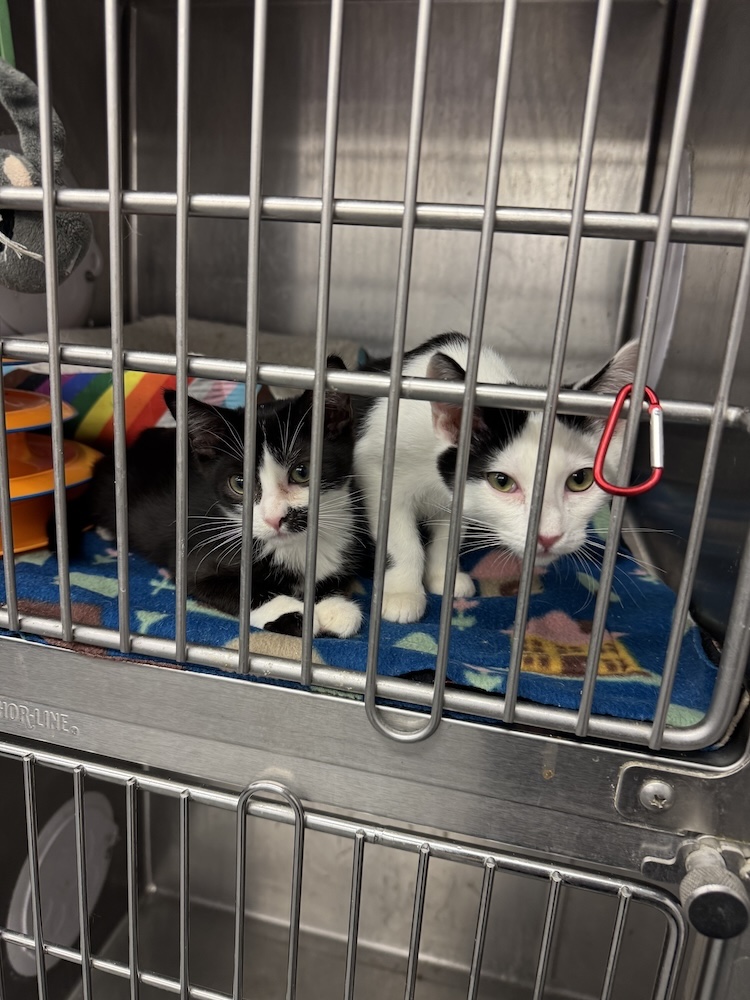
Tiny kitties in their kennel

Friendly cat
What I learned about myself through this experience was that there is power in the choice to show up. When engaging in my service-learning project, it can feel tiring to wake up on a weekend to volunteer, especially knowing that it will be cold and I will probably be getting down and dirty with cleaning up the cat enclosures. Without someone supervising or micromanaging you, you can feel like your work is unacknowledged when doing menial tasks. However, I learned that through my work, no matter how big or small the task is, it returns back to me tenfold. Not only am I able to get volunteering done in the early hours of the weekend, but I feel ever so much more productive the rest of the day.
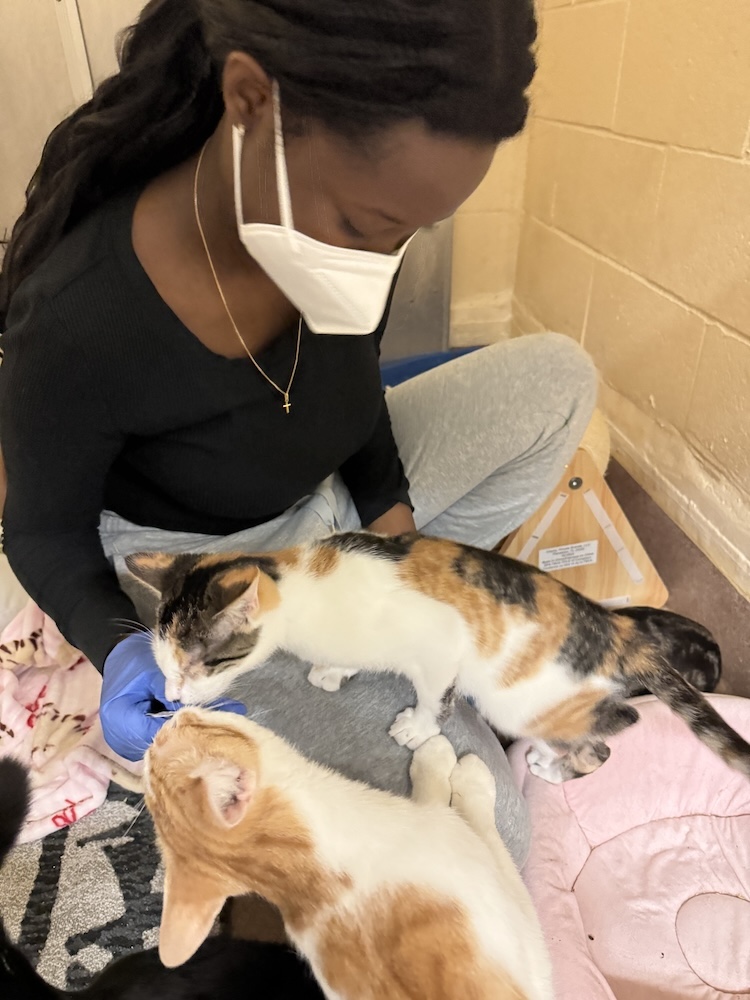
Feeding the cats some mid-day treats

Cats napping together
While socializing with the cats, I feel all my stressors melt away, or even that I forget them altogether. As a result, I can work through life’s challenges or tackle school assignments with greater focus and clarity after volunteering. Additionally, while leaving volunteering at the Stray Cat Alliance, I felt that I had contributed to something greater than myself. Being able to look into the eyes of the cats, there is a quiet understanding in knowing that they are perceiving me as much as I perceive them. While going through the motions of completing the volunteer responsibilities, it puts things into perspective when acknowledging the greater system of care that I am contributing to. The cats can’t take care of themselves, so if no one else will care for them, who will? I am motivated to volunteer again, and while reflecting back on the pictures I took with the cats, I hope to see them soon!
Check out USC’s Feature on OT340 on their Cool Classes tour
Learn more about declaring the Occupational Science Minor
⋯
USC’s Hidden Gems: My Favorite Study and Rest Spaces ⟩
August 8, 2026, by Makayla
Life Hacks School/Life Balance
As a recent graduate of USC, I wanted to share my now un-gatekept and hidden gem study and rest spaces on the University Park Campus. For me, the best places that I like to study or hang out in between classes are in areas with an open view of nature and plenty of plugs for charging, while prioritizing spaces that have close proximity to a microwave to heat up my lunch. Many of the popular places to rest on campus are great but many times are crowded. In the midst of all the busyness that comes with being on a college campus, there is no shortage of places to hang out around campus to find your peace and quiet! Finding the right environments, niche spaces for alone time, and your go-to places are essential for creating healthy routines that you can stick with throughout college.
School of Cinematic Arts 3rd Floor Rooftop
This is the perfect place that allows you to take in the rooftop views of the School of Cinematic Arts, with some shade to study or hang out with friends. Also on the 3rd floor, are indoor study spaces and a small area where students can use a microwave and a sink as well!
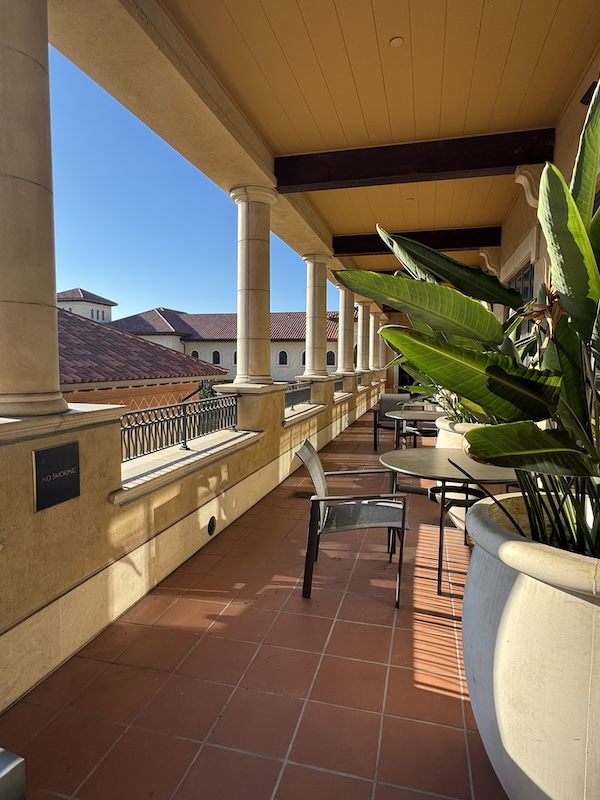
School of Cinematic Arts 3rd Floor Rooftop
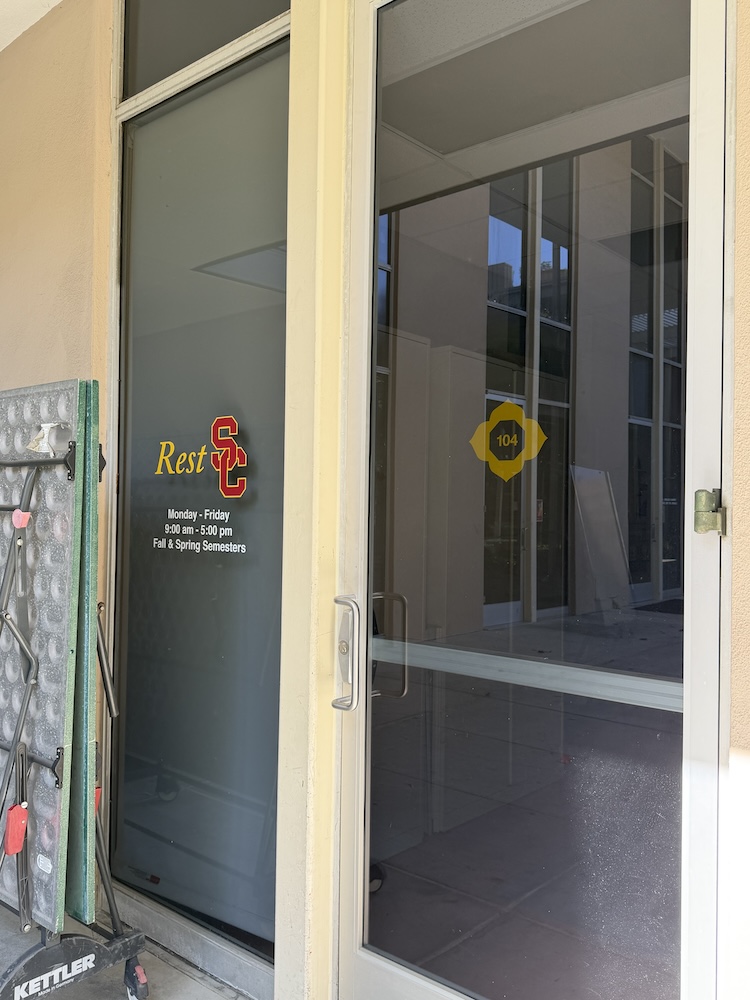
RestSC at the University Religious Center (URC)
RestSC
This space is nestled in the University Religious Center (URC), and it is a space dedicated to resting and recharging. Here, there are couches, pillows, and moon pods, which are zero-gravity beanbag chairs. They also have a smaller space similar to RestSC with beanbags and blankets located in the library in the Dr. Joseph Medicine Crow Center for International and Public Affairs (DMC) as well. I have frequented this space many times to take a quick nap between classes!
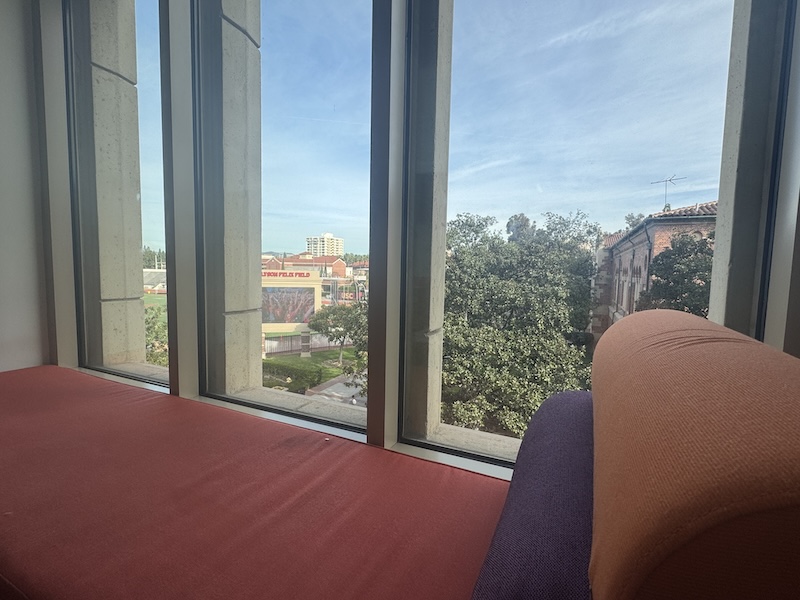
Annenberg Digital Library with the view of the Allyson Felix Track & Field
Annenberg Digital Library
This corner space tucked in the Annenberg Digital Library is a great place where you can work with your laptop propped up with the pillow or even take a nap while enjoying the view of the Allyson Felix Field or people-watch out of the corner windows. Plus, they even have shades that go down for privacy.
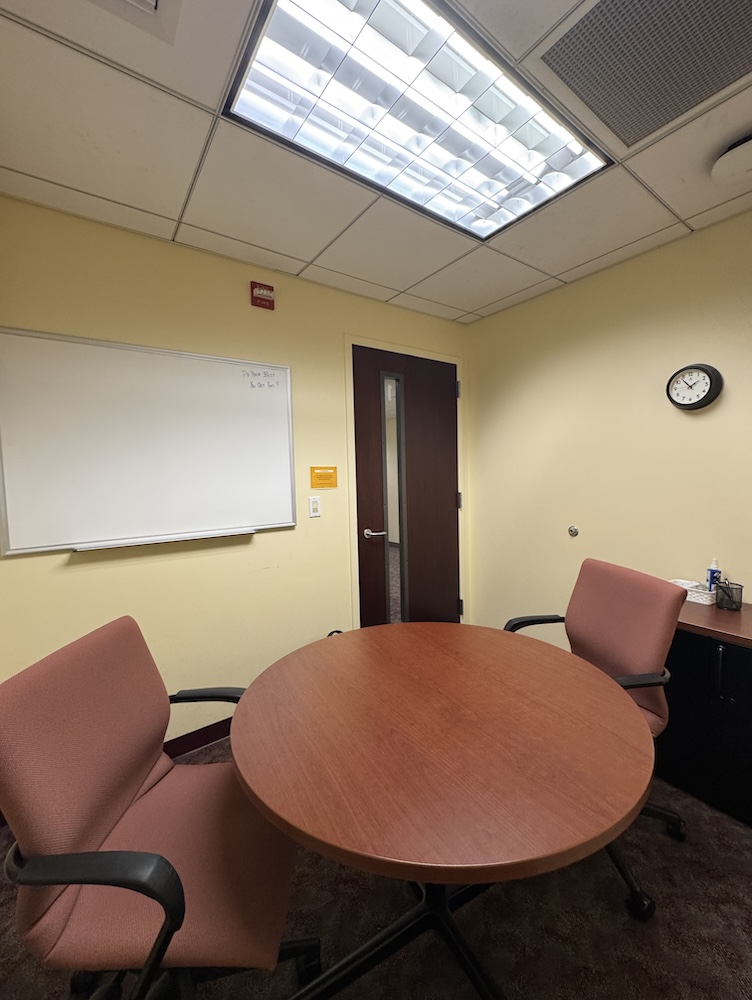
Career Center Interview Rooms
Career Center Interview Rooms
In the basement of the Career Center in the Student Union, you can find the interview rooms where you can book one of their many private rooms. I have come down here to take calls, interviews, work between classes, or sometimes catch some nice AC during a hot day! You can either reserve a room beforehand using their reservation room requests, or they take walk-ins as well. I would take these spaces over any Leavey Library study room any day because you can take all the time that you need, and you don’t have to worry about anyone interrupting you.
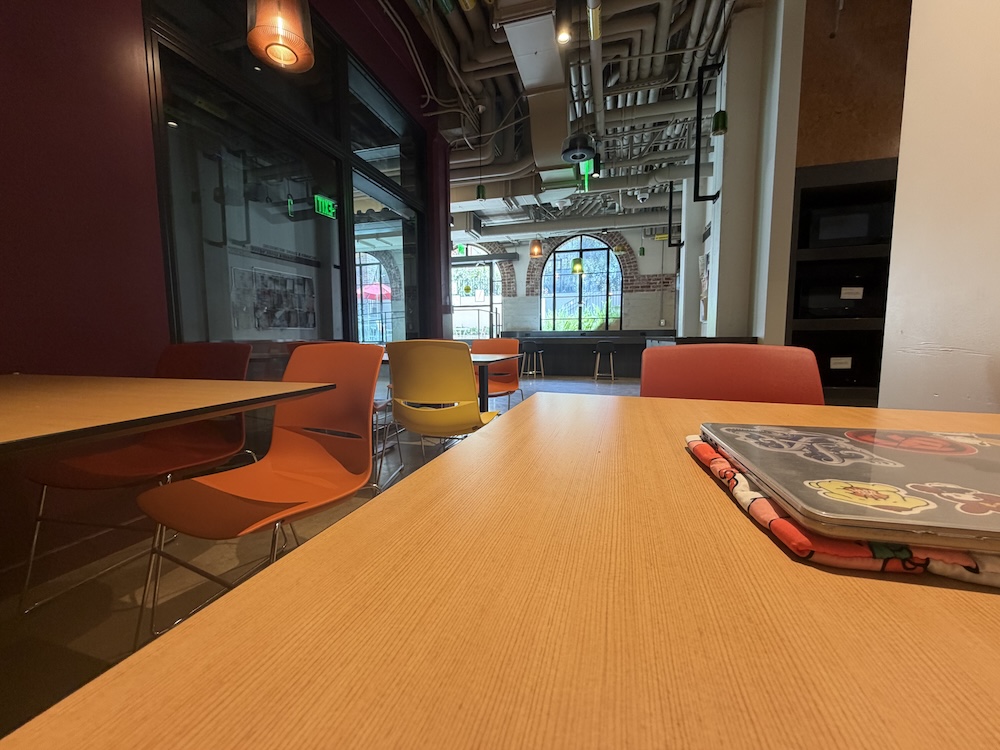
School of Dramatic Arts: Dick Wolf Drama Center
School of Dramatic Arts: Dick Wolf Drama Center
Just behind Taper Hall is the School of Dramatic Arts, where a lounge is located downstairs in the Dick Wolf Drama Center. Here is a nice place with a mix of natural lighting and dim lighting to hang around, eat your lunch, or study. They also have vending machines and microwaves to heat up your food too!
Doheny Library Faculty Hall and 2nd Floor
Across from the main library area in Doheny Library is Faculty Hall, which is my go-to place to catch up on work on a Sunday morning. This area has plenty of tables with nice cushioned chairs and plenty of plugs for charging. I like this place because you get the natural lighting from the windows that face the Alumni Park, and the square tables are nice for quiet group studying as well. I will warn, though, that it does fill up with people throughout the day, so I recommend saving your seat at a table when the library opens. The 2nd floor is also a great option, too!
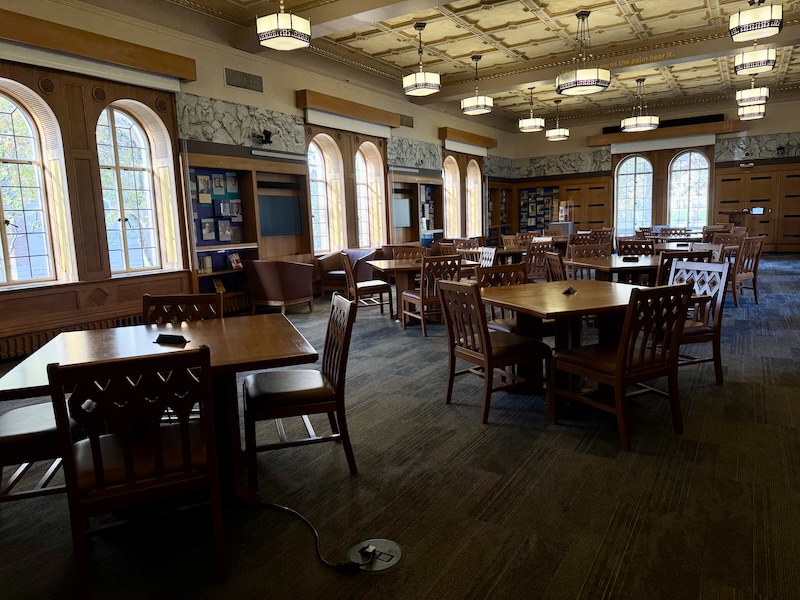
Doheny Library: Faculty Hall
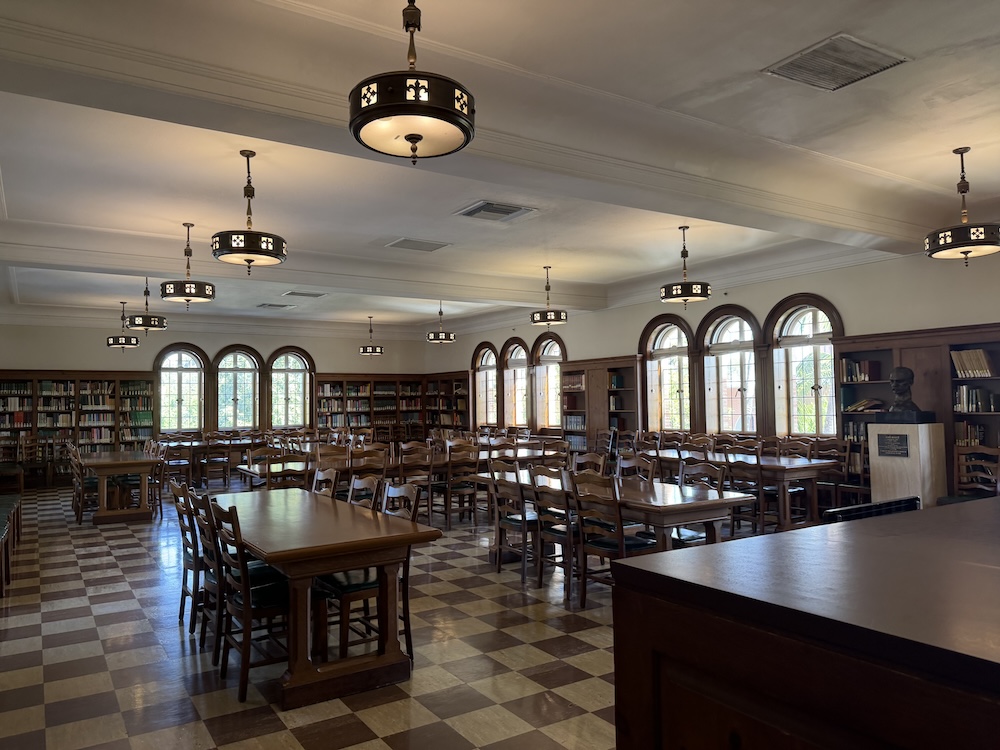
Doheny Library 2nd Floor
4th Floor Taper Hall Lounge
Now this lounge is one that I stumbled across when I was randomly exploring the 4th floor of Taper Hall. This lounge belongs to the USC Dornsife English Department, and it is a great nook to hang out before going to a class in Taper Hall. Here, I like to take in the view of Trousdale Parkway, and there is a microwave and fridge as well; it’s perfect for heating your lunch in between classes. There is also a 3rd floor lounge for Academic Innovation & Research Engagement that is also a great place to study with board games and coffee too.
Price Student Lounge
On the first floor of the Price School is their student lounge that has many couches and cubicles. Again, there is a microwave conveniently located in here, and this lounge leads you to the courtyard in between Verna and Peter Dauterive Hall (VPD), another nice outdoor space as well.
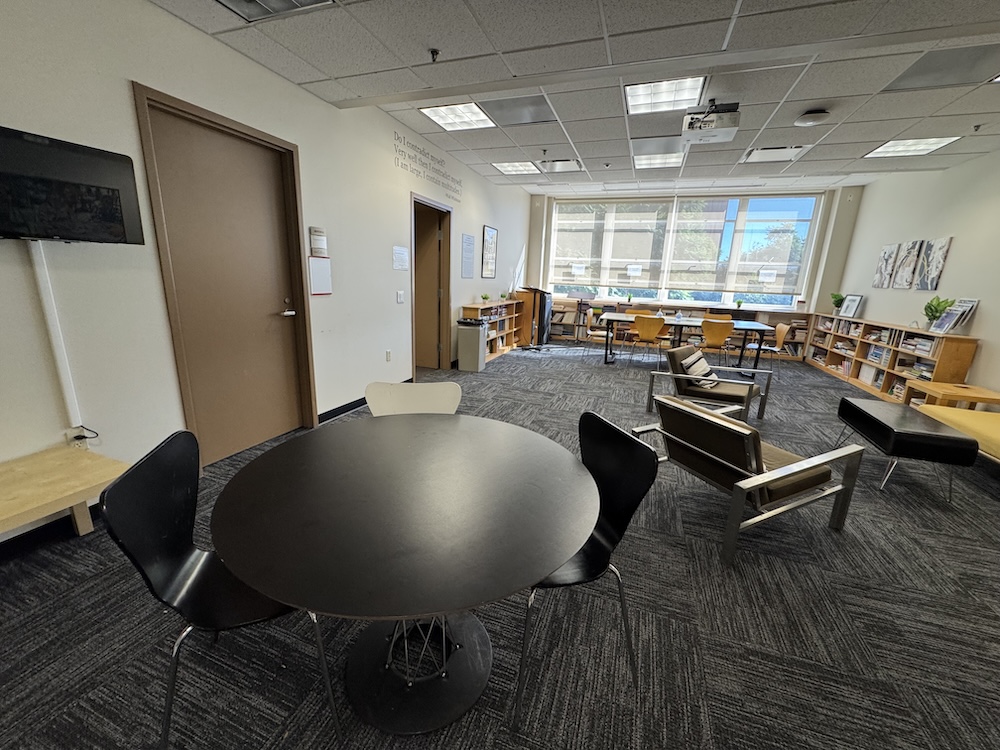
4th Floor Taper Hall Lounge
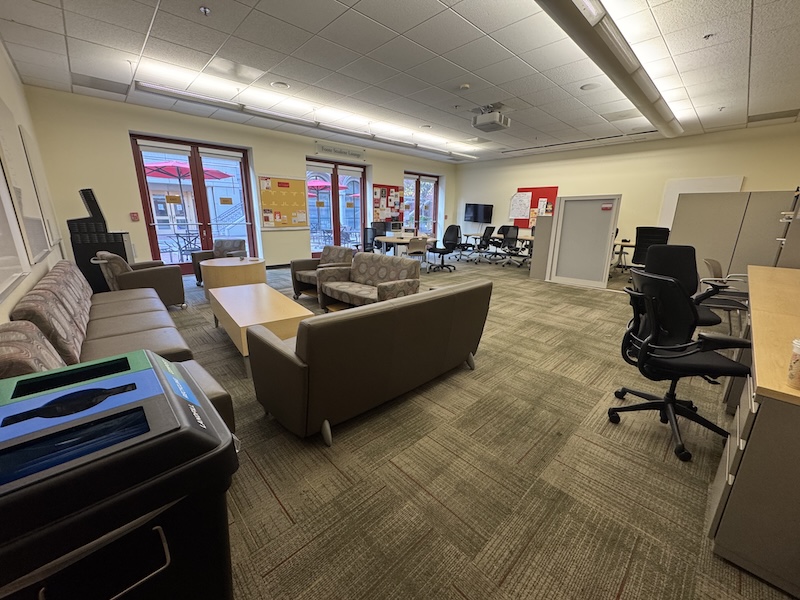
Price First Floor Student Lounge
USC’s Student Equity and Inclusion Programs (SEIP) Centers
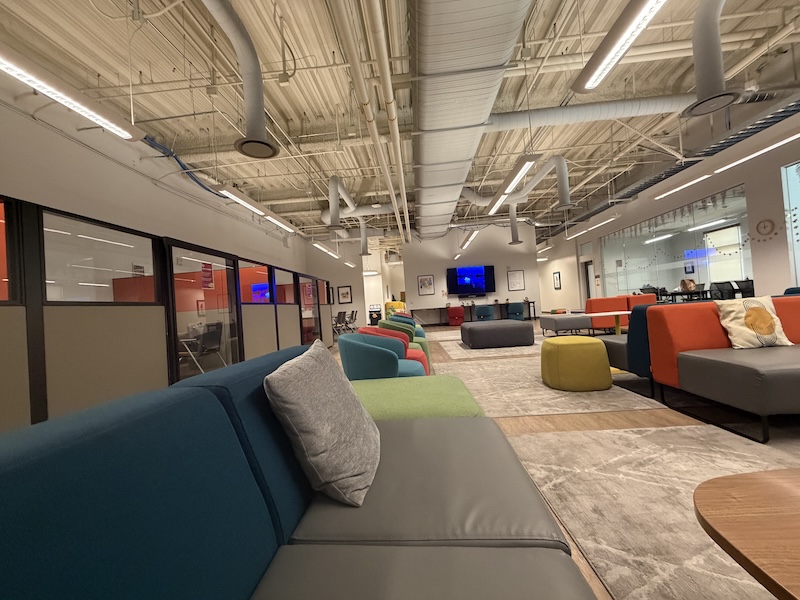
First Generation Plus Success Center (FG+SC)
Within the Student Union and Ronald Tutor Campus Center are USC’s SEIP Centers that house seven different student development centers and three culturally affirming lounges. These places are not only great spaces to hang out, study, or heat up your lunch, but they offer programming that strives to support many students’ identities. While many of these spaces on campus go unnoticed, these were my first stop in terms of getting connected to resources on campus. I even got the chance to work at one of these centers, which was at the Asian Pacific American Student Services. Especially because many spaces have been newly renovated, it has been a place where I have found my community through different programming that offers peer mentoring, professional development, networking opportunities, and several intersectional, community-building opportunities. The Occupational Science Minor Department even does Anti-Procrastination Cafes at many of USC’s SEIP Centers during finals season as well!
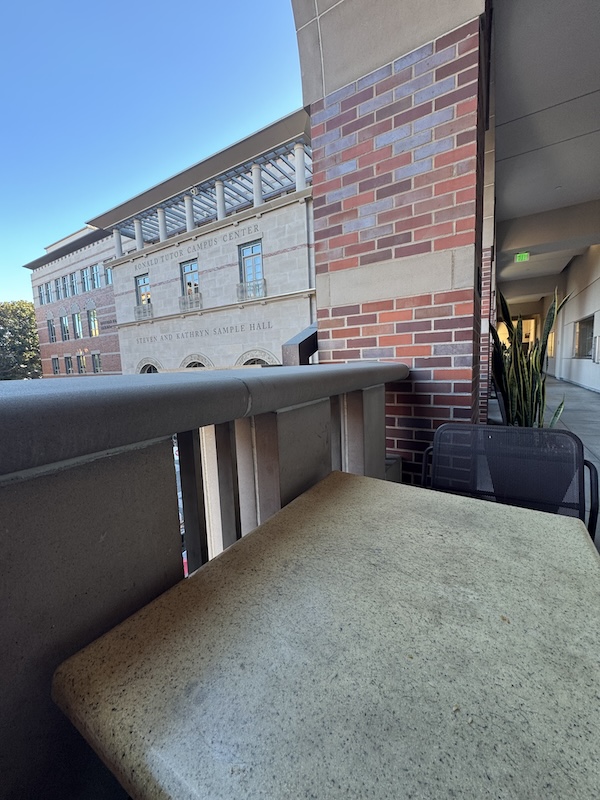
2nd Floor Tables at Ronald Tutor Campus Center
2nd Floor Tables at Ronald Tutor Campus Center
Last, but not least, are the 2nd Floor Tables at the Ronald Tutor Campus Center just outside of the First Generation Plus Success Center (FG+SC). These tables are just upstairs from some food options, and they are in the shade with plugs for charging, which is an added plus.
Bonus: Health Science Campus Spaces
I have also spent some time on the Health Science Campus (HSC) when I took a couple of classes and volunteered at Keck Hospital in the past, so here are some added HSC spaces that I would definitely check out if you are ever up there.
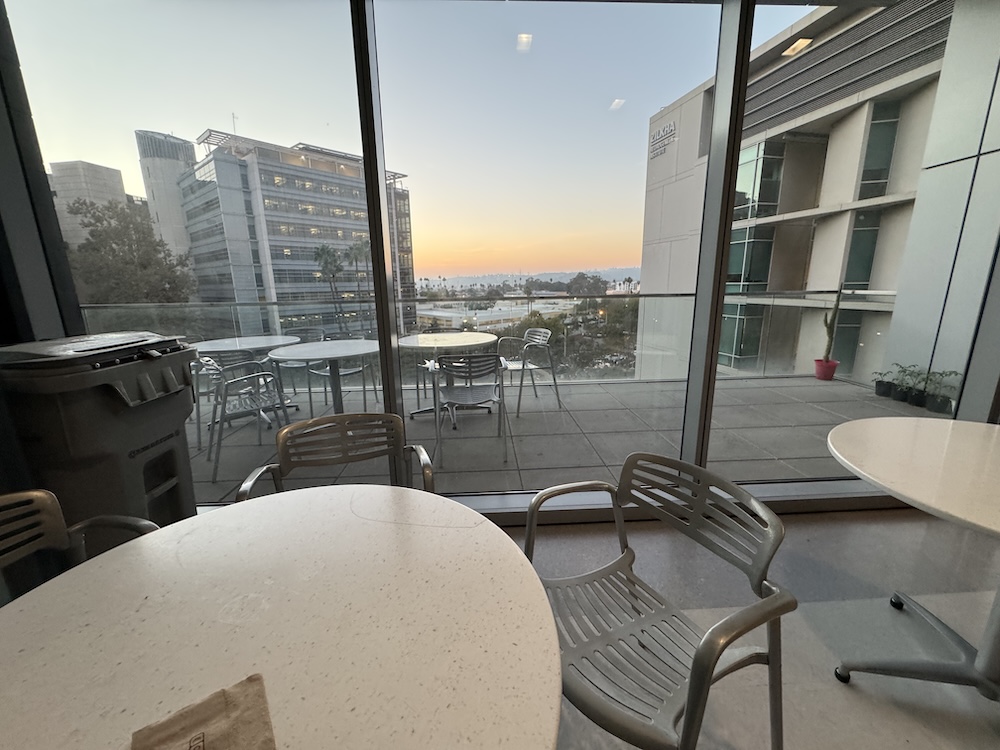
Zilkha Neurogenetic Institute
Zilkha Neurogenetic Institute
The Zilkha Neurogenetic Institute is just right across from the Intercampus (ICS) UPC-Union Station-HSC Bus Stop, and if you take the elevator up, you can find a few different floors with indoor and outdoor seating. I have frequented these floors if I am waiting for the shuttle bus to arrive, and it is also a great place to catch the sunset, too!
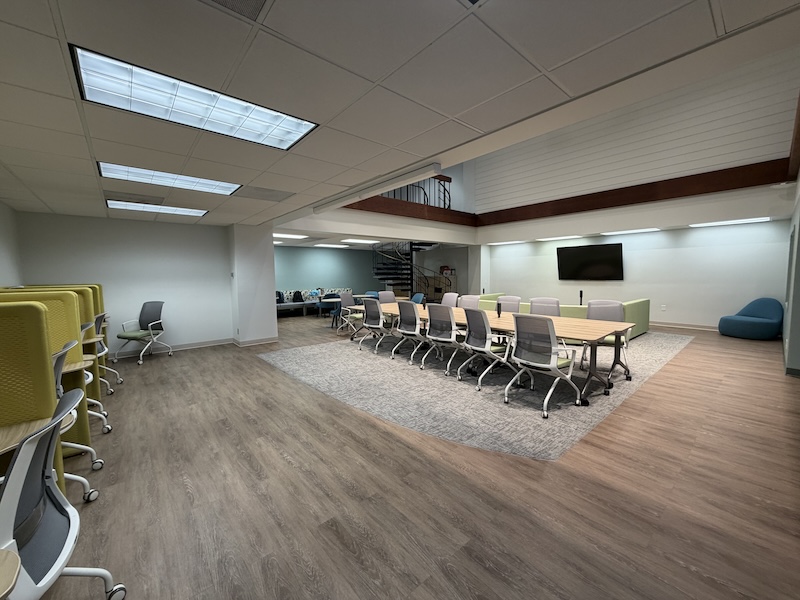
Donald W. and Kathryn Shaw Graduate Student Lounge
Donald W. and Kathryn Shaw Graduate Student Lounge
This lounge is located in the Keck School of Medicine, and it is a HUGE space with tables, cubicles, cushions, outdoor seating, and a kitchen with a fridge and microwave. This is the perfect place to stop in for lunch or squeeze in that last bit of studying before heading to class.
⋯
The Occupations That Make Me Who I Am ⟩
April 23, 2026, by Makayla
Beginnings and Endings School/Life Balance What are OS/OT?
In honor of OT month, I would like to share a piece reflecting on how my engagement and participation have contributed to my daily routines, roles, and identity. As an undergraduate senior set to graduate next month, I am very much in an introspective and contemplative period as my time here at USC is numbered. I want to reflect on my occupations, the meaningful activities that occupy my time, and the collective experiences that have made me who I am today.
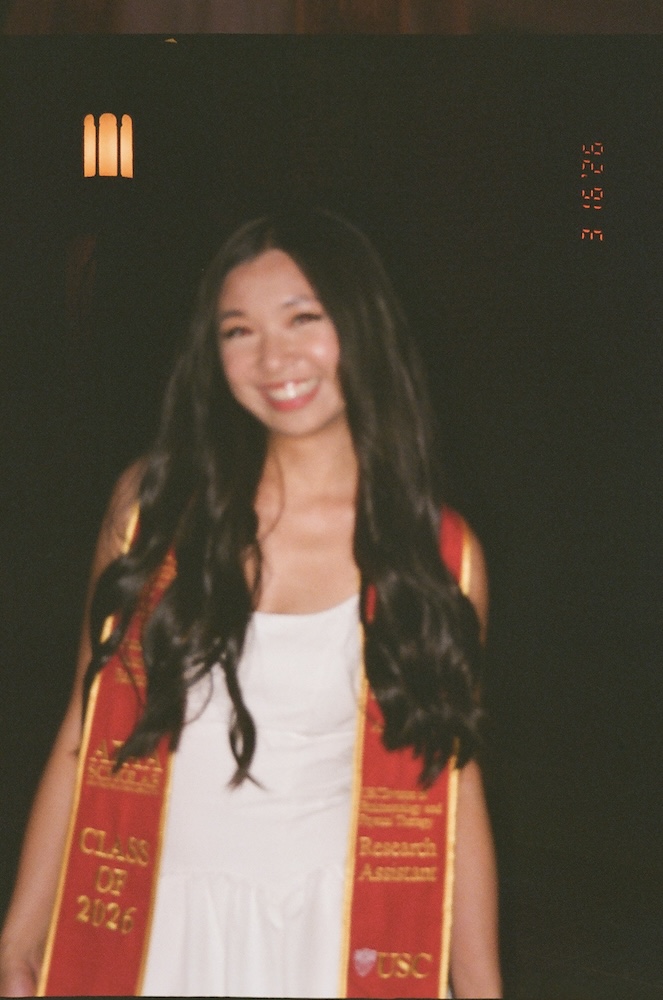
One of my graduation film pictures
Shooting film photography is an occupation that has supported my identity since I was a child, and it involves using a point-and-shoot film camera to capture memorable moments, whether it be with friends, family, nature, or my life as it plays out. The nature of film photography is that it can be an intentional or spontaneous activity where I am able to express my creativity and capture candid shots. Something special about my own film camera is that it was passed down from my dad, who captured film of his own life as well. The element of surprise when I review my developed film is what makes film photography so enjoyable because it is not viewable in the moment, so you never know what to expect or how one moment of my life was captured. Over the years I have acquired countless photographs, from when I was little up until now, that have captured candid memories that can take me back to a brief moment in my life whenever I reflect upon them.

Film photo from a childhood birthday party
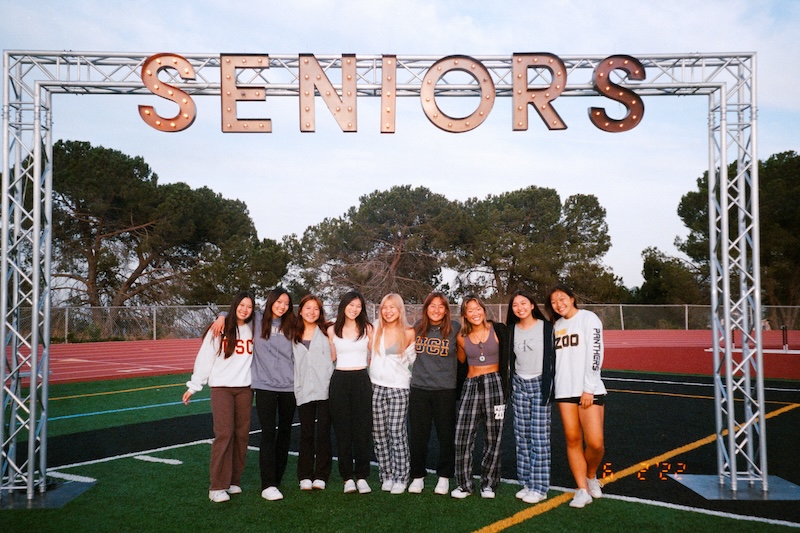
Film photo from my high school senior sunrise
My practice of shooting film photography contributes to my own identity, as I am a very sentimental person. This extends into my collection of photos, shirts, and other trinkets that are reminiscent of enjoyable past experiences. As a result, this trait can manifest in how I interact with people or people I had known previously, acknowledging our prior experiences or history of knowing each other before. I always come back to photos and these memorabilia to reflect on how I lived out those experiences and how different a person I was.
Additionally, creativity is central to my identity, as I capture photographs stemming from my inner imagination to craft the best representation of the important events in my life. A photo never changes, even when the people in it do. With a few clicks of a button, I embrace the side of me that never wants to stop crafting and creating the perfect shots while having tangible items to be remembered by.

Film photo of the New York skyline

Film photo from the Brooklyn Botanical Garden’s cherry blossoms
In this current day and age, while it is easier to use your phones in capturing photos of much higher quality, I see using film photography as preserving tradition, and I believe that there is power in raw memories when you cannot see them right away. I recognize how associations from the past are able to reinvoke new meanings through a present lens. I realize that longing for past memories is a mark of a life well-lived, and in the face of life’s ups and downs, these memories serve as a reminder that better days are to come with different people, places, and contexts.
Going to the beach is another occupation that has supported my identity, and this entails riding my bike on the strand, walking my dog, sharing a meal with a friend, tanning on the sand with a good book in hand, celebrating birthdays, or swimming in the ocean’s waves. Because I live close to the beach, it has become central to my identity, as it contributes to my sense of leisure through relaxation and rejuvenation, while other times it offers me physical health benefits through exercise and vitamin D. My participation at the beach contributes to my identity as a Southern California native because when I gaze upon the beach, I recognize what a privilege it is to savor these moments and be able to share the beauty of nature with so many close friends, relatives, and fellow beachgoers as well. Participating in different activities at the beach contributes to my identity as a nostalgic and introspective person, where I can prioritize my mental well-being while basking in nature’s solace, as well as recognize how many different versions of myself have been to the beach for different capacities.

Sunset at the beach
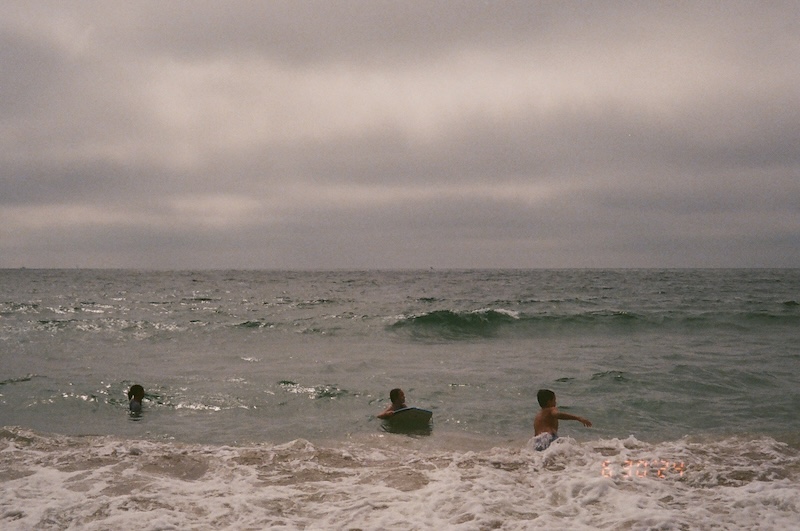
Captured my cousins riding out a wave at the beach

Enjoying the SoCal sunshine at the beach!

My dog, Snoopi, taking in the beach views
Attending concerts is an occupation that has supported my identity, and this activity involves seeing a musical artist’s performance at a venue while I am accompanied by friends or family. The concert experience for me can include dressing up, buying merchandise, and singing along to the musical artist that performs. Seeing a musical artist in person is a surreal experience for me because I am able to reflect on the moments where I am listening to them in my own day-to-day life. Seeing them before my eyes, singing live, is exciting and a full-circle experience to me. My participation in concert-going is reflective of my musical expressions that are central to my identity, as I feel deeply compelled by the emotions and song lyrics that the musical artist sings.

Confetti at the Tame Impala concert

Tame Impala Concert @The Forum

Laufey Concert @The Hollywood Bowl
Participating in the collective effervescence of the concert experience contributes to my sense of social closeness, and these experiences, alongside other music fans, contribute to my identity in belonging, community, and deep emotional connection through musical curation. Collective effervescence at a concert entails synchronized singing, dancing, clapping, or cheering that follows concert norms and social etiquette. Concert-going is not only an occupation for community gathering, belonging, and mutual appreciation for artistry and culture, but it also reflects life’s realities and experiences around us.
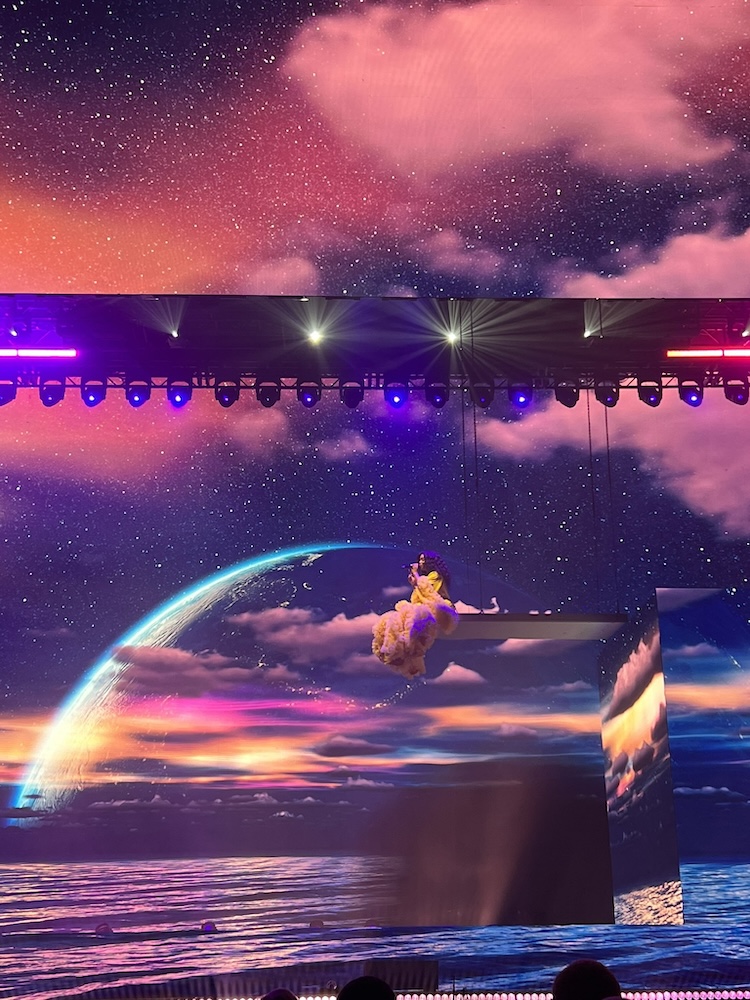
SZA Concert @Madison Square Garden
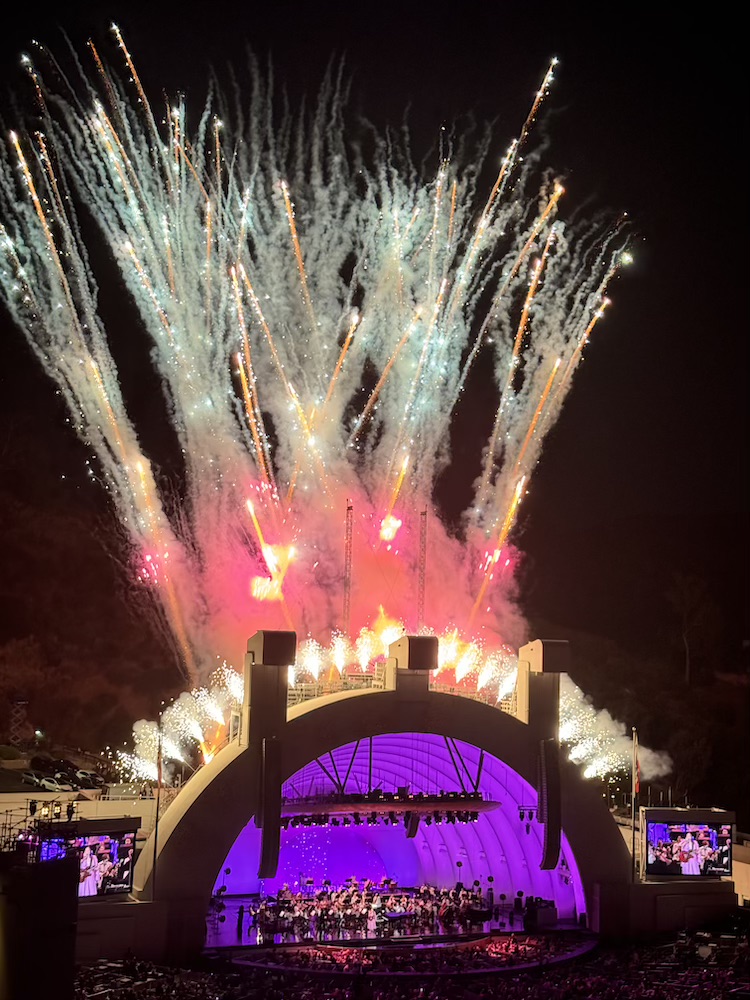
Laufey Concert @The Hollywood Bowl
⋯
Oh the Places OT Will Take You: Presenting at My First Academic Conference at Harvard ⟩
April 22, 2026, by Makayla
Getting Involved School/Life Balance
In continuation of my last blog, Mural Therapy: Arts Justice Advocacy and School-Based OT Intervention, I wanted to share about how my participation in Mural Therapy led me to present about my unique experience at Harvard Graduate School of Education’s Alumni Color of Conference (AOCC) alongside the team of occupational therapist Serena Au, the mural artists, and Mural Therapy student volunteers. Our session, “Painting the Future: Using LA Street Art Culture for Immigrant Justice and Disability Advocacy in Schools,” sought to engage attendees in collective arts in action by participating in art activities rooted in graffiti used in both educational and community settings. By demonstrating how persistence fuels collective creativity, our session invited participants to reimagine education as a living canvas, where social justice emerges not only from policy but from communities painting their futures into existence.
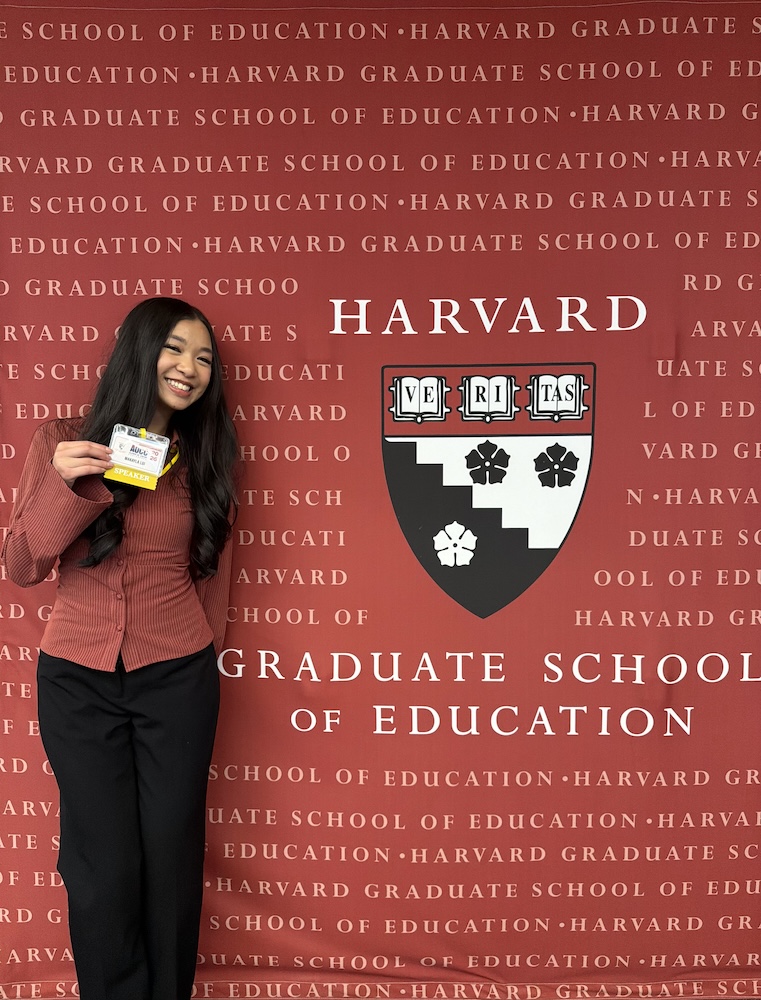
Day 1: Harvard Graduate School of Education’s Alumni Color of Conference (AOCC)

Day 2: Painting the Future Mural Therapy 2025-2026

This year’s theme: Rewriting the Narrative: Persistence as Innovation

Painting the Future: Using LA Street Art Culture for Immigrant Justice and Disability Advocacy in Schools

We made it! Mural Therapy Student Volunteers and OT Serena
Throughout my experience, I created a film to encapsulate the entire Mural Therapy process, documenting this past year’s murals’ impact on the students, mural artists, and surrounding communities alike. I had the pleasure of having attendees experience my film, where I shared interviews from key players of this project who are challenging stigmas surrounding disability, people of color, and graffiti. By introducing culturally sustaining, disability-inclusive creative practices that promote mental health, belonging, and student freedom and agency, I sought to reframe and affirm public art as a legitimate pedagogical and occupational therapy tool.

Presenting my Film!
Throughout our session, we invited participants to doodle or color on our provided coloring sheets that depicted some of the mural artists’ pieces or graffiti alphabet. While doodling for learning, this practice helped them engage with our material and learn about how educators, community leaders, and students can co-create learning environments that challenge deficit-based narratives surrounding disability, migration, and graffiti cultures. Additionally, we led an intergenerational panel discussion featuring our team examining our lived experiences of implementing Mural Therapy, and closed with a Q+A that facilitated dialogue about transferring these strategies into other institutions. In doing so, attendees left with actionable strategies for building collaborative, human-centered learning environments that advance racial equity, disability justice, and immigrant community advocacy.

Doodle for Learning!
This was my first time at an academic conference, let alone presenting, and I was very nervous at first simply being in the room full of highly educated people. However, over the course of the conference, I was able to attend some very insightful sessions that helped ease my nerves, such as attending breakout sessions, panels, affinity breakfasts, networking receptions, and listening to keynote speakers.
Here are some highlights from the sessions I attended:
1. From Harm to Healing: Participatory Design for Just AI Futures
Here, I participated in an interactive design workshop investigating how AI increasingly shapes the education landscape, while reinforcing inequities, particularly for Black, Brown and low-income communities. I learned how centering cultural and embodied knowledge as a core design tool is imperative in using AI and education for true engines of innovation.

From Harm to Healing: Participatory Design for Just AI Futures
2. Designing Schools for Human Nervous Systems
In this session, I heard student testimonials about co-regulating classroom structures and how healing-centered practices, nervous system regulation, and relational safety can be embedded into school culture rather than just isolated within counseling spaces. I learned from a school’s empowerment team on how they use joy as resistance and focus on restorative justice systems that replace punitive discipline.

Designing Schools for Human Nervous Systems
3. AOCC Founders Panel and Keynote Address
I learned about the sacred art of teaching and how, in education, we must treasure the spirit of our students and must not fall into spiritual bankruptcy. Every soul is worth saving, even with individuals that we may find challenges and hardship. Radical vulnerability and rich dialogue take patience, not just working with the ecosystem we are embedded in.
AOCC Founders Panel
Additionally, I got the opportunity to immerse myself in the art scene that Harvard and Boston uniquely offered. I got to visit the Harvard Art Museum, where I got to meet contemporary Nepali artist, Sneha Shrestha, known artistically as IMAGINE, whose art installation was recently acquired by the Harvard Art Museum. Alongside the student volunteers, we learned about the architectural elements of her piece that were inspired by her hometown and how the latticed and arched shapes echo the doorways of many South Asian revered spaces. It was so enlightening being able to learn from this Harvard alumnus, and the work she has done in starting the Children’s Art Museum of Nepal and curating art programs and exhibits of South Asia across the world.

Visiting artist IMAGINE’s art installation
This day was especially special because it was International Women’s Day, and to be in the presence of strong women on this day served as such a great reminder for the wonderful work that raises the standards for our future generations and is continually being done to advance our communities and world at large. Here, I am pictured by two strong USC Chan alumni, Serena Au and Dr. Natalie Palencia, who was also a USC Chan student ambassador like myself.

OT Serena, Dr. Natalie, and I at the Harvard Art Museum
Also, I got to explore the Harvard Art Museum’s Forbes Pigment Collection that houses rare and historic pigments actively used by conservation scientists at the museum. While recalling the Dodgers mural from this past winter that we worked on, it is interesting to learn about the intentionalities and the rich histories that pigments carry beyond the paint at our fingertips. Here, I learned that the very pigment that is used to create the iconic Dodger Blue pigment (Lapis Lazuli) is primarily and historically sourced from Afghanistan.

Harvard Art Museum’s Forbes Pigment Collection-Iconic Dodger Blue Pigment
Lastly, I got to explore the Boston area with the team before I headed back to sunny, Southern California. I got to visit Faneuil Hall for some Boston clam chowder and even got to squeeze in a visit to see my cousin for dinner and check out Tufts University.

My presenter name tag

Boston sunset to send me off back home to Southern California
Attending Harvard AOCC was one of the first academic conferences that I have been to, and I was just so appreciative that I was able to inhabit the same space as so many knowledgeable and intelligent people. In the midst of so many hardships in the news and around our communities, it is reassuring to know that the work is still being done by so many dedicated individuals who continuously push the bar to advance education for all.
Since then, I have returned back to OT volunteering at the special education center — where Mural Therapy all started — and my film has been considered into the Harvard Film Archive. I have since presented about Mural Therapy in Dr. Gabe Craven’s OT310 course, Exploring Creative Occupations with OT Serena. I am so honored to share this amazing experience not only with Harvard, but also bringing it back to USC Chan. It is such a full-circle experience, as I previously took Dr. Gabe Craven’s OT310: Exploring Creative Occupations course this past semester, right when I first started participating in Mural Therapy as well. Being able to come back to Dr. Gabe Craven’s class and seeing the exact same excitement and curiosity this project gave me in the fellow undergraduate students engaged in the presentation gave me a deep sense of gratitude, purpose, and hope for the future.

Guest Lecturing: Dr. Gabe Craven’s OT310 course, Exploring Creative Occupations

Sharing my Mural Therapy Film to OT310

Letters from the kids at my OT volunteering at the special education center — All who were a part of Mural Therapy!
⋯
Mural Therapy: Arts Justice Advocacy and School-Based OT Intervention ⟩
March 24, 2026, by Makayla
Community Getting Involved Living in LA School/Life Balance
Every Friday, I have the pleasure of volunteering with USC Chan alumnus and school-based occupational therapist Serena Au, servicing students (ages 4-16) with moderate to severe disabilities at a special-education school.
Over the past winter, I participated in Mural Therapy, an interdisciplinary and accessible arts program that OT Serena founded at this special-education school in South Central Los Angeles where, every semester, professional artists are invited to collaborate with the students to provide culturally responsive art education and community-based healing.
While embracing the rich cultural scenes of L.A. public art, Mural Therapy results in the students painting an entire school-wide mural that helps beautify the campus and surrounding neighborhoods as well. This collaboration involves everyone on campus, including students, muralists, occupational therapists, physical therapists, healthcare assistants, special education teachers, and surrounding community members.
While Mural Therapy supports their mental and emotional health, students build connections between life skills development and occupational therapy treatment interventions. In doing so, students develop and work on a wide variety of occupational therapy goals, such as shoulder flexion/extension, fine motor skills/grasps, postural control, and bilateral coordination. Here, public art and graffiti are legitimized as pedagogical and therapeutic tools.

Evolution of Blue - Dodgers Mural
Last year, communities all over Los Angeles were at the center of constant environmental and political turmoil, and at its center, students at this special education center continuously navigate the intersectionality of their different identities and multiple layers of marginalization, including disability stigma, racialized barriers, and economic inequity. Yet in the wake of devastation, this year’s mural focused on painting over loss with color and storytelling, transcending trauma into collective artistic, educational, and social change.
Rooted in the themes of resilience and affirmations of L.A. culture, OT Serena decided to collaborate with a community muralist, Mister Alek, to paint a Dodgers mural, a profound symbol of intergenerational city pride embraced by the surrounding school and neighborhood community.

Mural Therapy made it to the news!

Muralist Mister Alek and I

Mister Alek next to his iconic “LA” sign

Stenciling painting shirts
Before every mural, there is an extensive process in educating and engaging the students, faculty, and community members alike. This includes stenciling, decorating painting shirts, coloring the artist’s coloring pages, completing worksheets, and engaging in thoughtful lessons and discussions on the meanings and representation behind the mural to come.

Mister Alek and Dodgers Coloring Sheets by the students

Hanging the students’ coloring sheets on the fence next to the mural
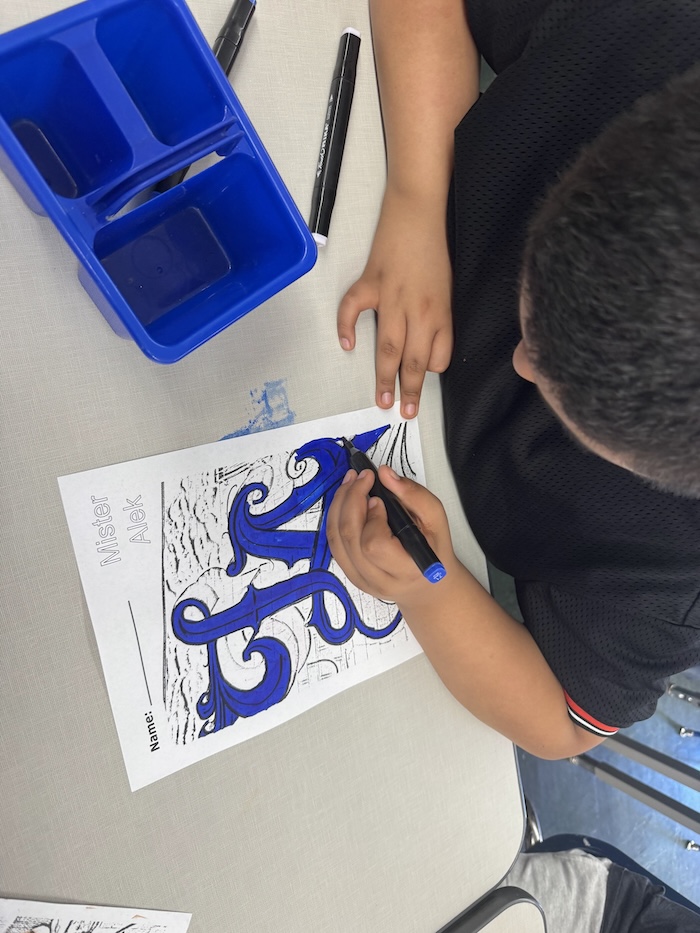
Mister Alek coloring sheet
For the Dodgers Mural, I sought to create a lesson on the history of the Dodgers, the sport of baseball, as well as educate on how disability representation in Major League of Baseball (MLB) remains prevalent. Prominent and outspoken figures have reshaped dominant narratives about individual differences that affect the field of play, including pitcher Jim Abbott, born without a right hand due to amniotic band syndrome, and African-American MLB player Curtis Pride, who was born deaf. Advances in technology have enabled adaptive versions of engaging with baseball for the blind and visually impaired, such as beep baseball leagues or OneCourt tactile tablets for fans to use at MLB stadiums.

Teaching a Dodgers Lesson to the students

Teaching about Jim Abbott - MLB pitcher born without a right hand
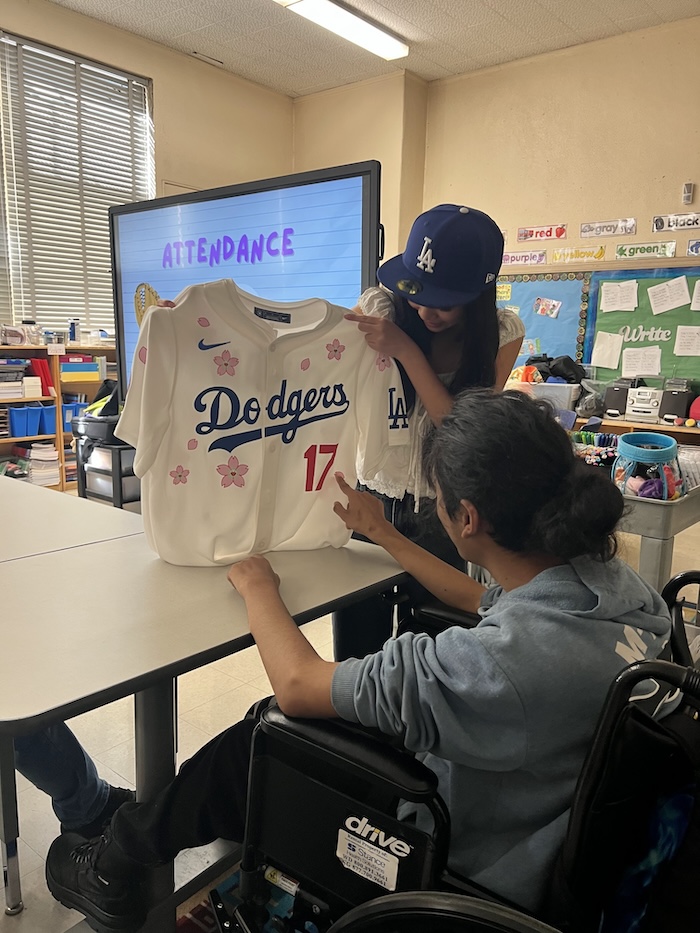
Showing my Dodgers jersey and their tactile features
Together with the students, we scaled the entire wall and painted the background. Students painted high, low, and across all the different directions, watching their brush strokes make permanent marks in ways that would be visible and celebrated publicly. It was really so powerful seeing students who are wheelchair-bound and rarely stand up willing to stand for long periods of time for something so cool, joyful, and regulating as the act of painting.
Through an OT lens, I recognized that the index finger isolation used to position a spray paint can on a vertical surface mirrors the same fine motor patterns students use to scroll or select on Augmentative and Alternative Communication (AAC) devices on a horizontal surface. This skill transfer across different mediums and environments demonstrates just how powerful mural therapy transcends artistic expression into occupational therapy interventions in real time.

Students painting the base of the mural

One of my favorite students - using his standing wheelchair to paint

Here is me painting fills
Mural therapy is not about painting a wall; it is creating a sensory and emotional experience because students are engaged in the texture of the wall, the consistency of the paint, the bristles of the brushes, and simply being present in the space.
Many students have diagnoses that make them sensitive to sensory input; however, they might need something like bright colors to pay attention or auditory input of the sounds of a shaking spray paint can. The high sensory and high visual impact that a mural can give is so important, as they act as mirrors to the students and give them validation in their artistic expressions.

Different shades of spray paint cans

Watching Mister Alek spray paint an eye
Embracing the power of sports and teaching about the Dodgers is something that I hold near and dear to my heart. My family traces its roots to Lincoln Heights, just behind Dodger Stadium. I was raised in the South Bay, where I leaned on Asian baseball and basketball leagues to shape my sense of belonging and as anchors of my identity. Watching Shohei Ohtani take the field in Dodger blue or remembering the cultural impact of NBA player Jeremy Lin reinforced how Asian athletes can serve as powerful counter-narratives, disrupting longstanding stereotypes and affirming that we belong not at the margins of the game, but at its center.
These experiences fundamentally reframed how I conceptualize mobility, not just as physical movement, but as narrative and social possibility.
When I first learned to spray paint through this mural project with muralist Mister Alek, I had the pleasure of learning how to spray paint clouds and graffiti fills. Here, I experienced a renewed sense of freedom, a feeling reminiscent of being a child again. The spray paint moved quickly, fluidly, without hesitation, expanding across the wall in ways that felt limitless. That feeling embodied mobility: the ability to move, to explore, to take up space without restriction.

Mister Alek and I on the lift

Learning to spray paint clouds

Learning to spray paint fills of hair

Learning to spray paint fills of clothing
Mobility is often framed as purely physical attributes, but it is also social permission. It is about who is told they are capable of moving forward and who is told to stay still. For many students with disabilities, the message they receive is subtle but persistent: you are not smart enough, your body does not fit the mold, you are not athletic. This narrative restricts their personal potential long before physical barriers ever do.
Yet athletics has repeatedly proven that mobility can be redefined.
Coming off winning back-to-back World Series championships, the Los Angeles Dodgers players represent more than the name on the front of their uniforms. Rooted in the historic Elysian Park neighborhood of Los Angeles, the Dodgers have long been a focal point for surrounding Latino, Black, and Asian communities, and have long been present at the crossroads of social justice, solidarity, and community outreach. Known for their diverse fanbase and initiatives toward underserved communities, the team is a staple of L.A. culture and intergenerational city pride. Their presence reflects a broader story about who gets to occupy space — and who gets to be celebrated within it.
Mobility, curiosity, and excitement are not just themes of sport but foundations of inclusion. Within schools, athletics function as formative spaces where identity and belonging are not only expressed but also validated and legitimized. Murals serve as a direct reflection of the reality around us. When students participate in this mural, there is an public acknowledgement that they are contributing to something greater than themselves. Students perceive themselves adjacent to these positive role models through a lens of great admiration and reflection, bestowing greater agency and resolve in their own challenges.

Mister Alek, OT Serena, and I
Seeing themselves in the projection of the Dodgers players, this representation sets a precedent for newer generations to acknowledge that they can create archetypes of their own narratives. Promoting diverse athletic representation in schools fosters a critical appreciation for deconstructing structural barriers and validating marginalized experiences, serving as a liaison for cultivating a more inclusive world at large.

The Women of the Dodgers Mural Therapy Team with OT Serena and Dr. Natalie (Past Student Ambassador)- All different generations representing USC Chan!
As an aspiring occupational therapist, my experience with mural therapy has reshaped how I understand education as a health, art, and embodied practice. Situated at the crossroads of USC, South Central, and disability communities, this experience has expanded how I envision my future field of practice.
Through shared creation, community belonging becomes tangible and imperative, challenging stigma surrounding graffiti artists, disability, and the individuals we often overlook in our daily lives. I look forward to participating with OT Serena for future murals, and I can’t wait to see all walks of life embrace and continue the legacy of the mural for years beyond my time!
⋯
Social
Facebook Instagram LinkedIn TikTok YouTube