



Student Blog

From Classroom to Community: My OT 340 Service-Learning Experience ⟩
September 7, 2026, by Makayla
Classes Getting Involved School/Life Balance What are OS/OT?
One of the coolest classes that I have taken at USC would have to be Dr. Ashley Uyeshiro Simon‘s OT430: Animal and Human Interconnections in Daily Life course, which is offered under the Occupational Science Minor Department. Every semester, the class fills up fast, and I was lucky enough to take this course during my senior year at USC. Aside from the many furry friends that visit the class, field trips, or presentations from industry professionals, what sets this class apart from the rest is the service-based learning project that involves students securing and completing a volunteer project for an organization that promotes animal/animal-human health and well-being. At the end of the semester, we present our experiences in a small group presentation with students from the same animal volunteer organization and get a chance to hear about the vast array of other animal volunteer organization experiences our fellow peers worked at as well.

LAPD Sergeant and K-9 unit visit
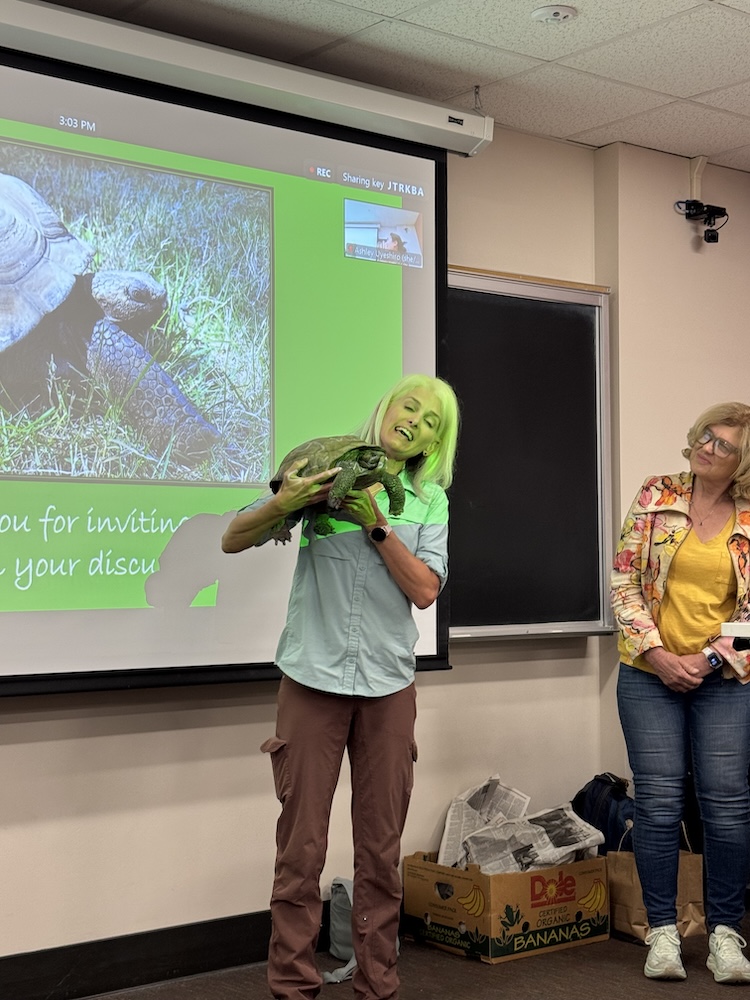
LA Zoo docent visits with their pet tortoise
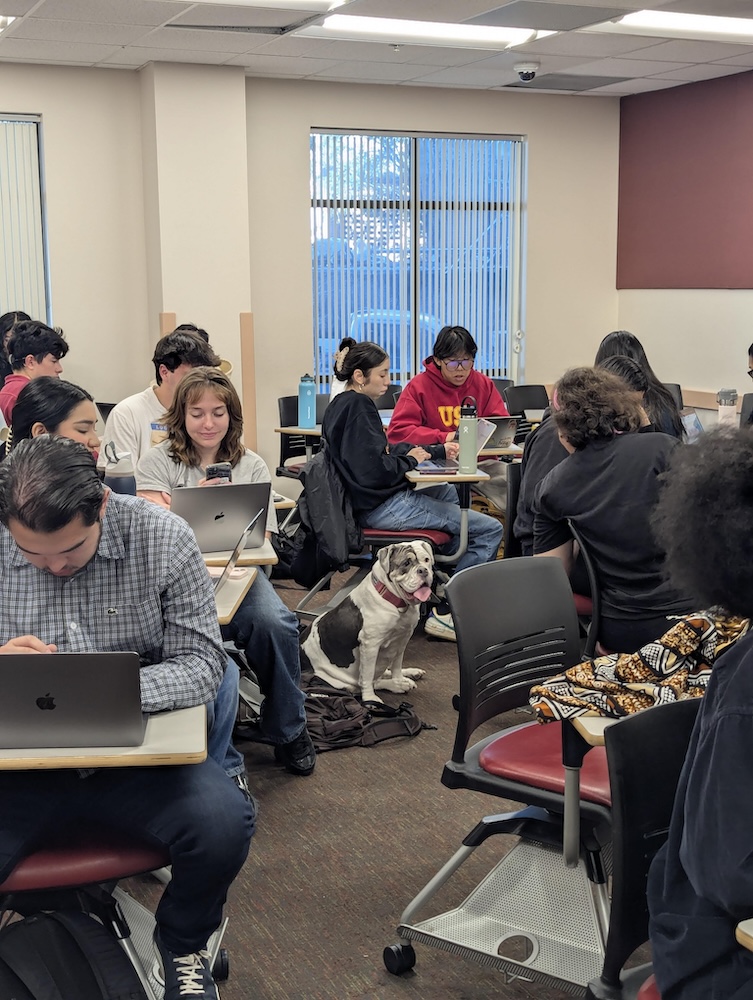
Furry friends in class
For my service-based learning project, I volunteered at Stray Cat Alliance, a non-profit animal welfare organization based in Los Angeles, California, dedicated to rescuing cats and kittens by promoting trap-neuter-return programs and providing medical care for feral and community cats.
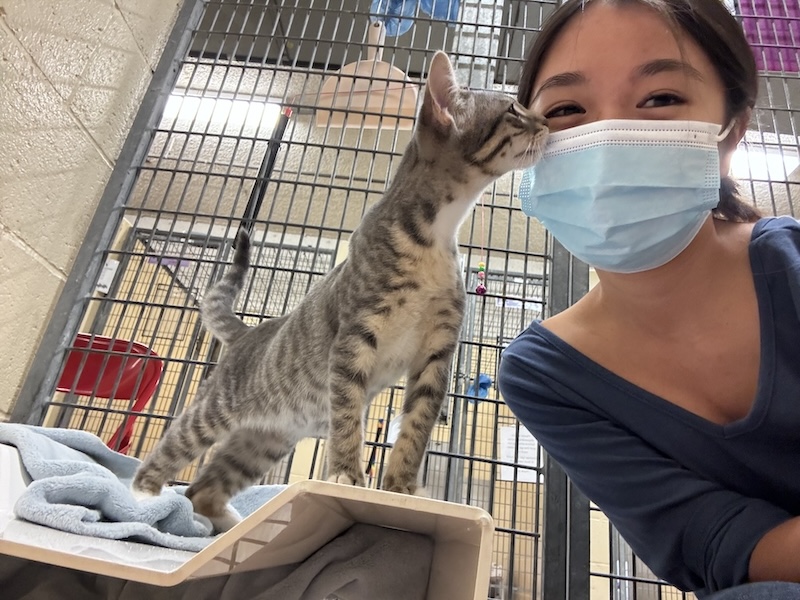
Volunteering at Stray Cat Alliance
The occupations that I engaged in while volunteering included feeding the cats, cleaning/tidying up the cat enclosures, and socializing the cats, as well as tracking the cats’ behaviors in their Daily Observation Sheets. My favorite occupation that I meaningfully engaged in at my site was socializing the cats, where I was able to play with them using the cat toys and sit with them while petting their fur. Here, I was able to observe each of the cats’ unique behaviors and personalities. While it is easy to just play with friendly cats, sitting and interacting with less social cats helps them break out of their shell and, ultimately, makes them more adoptable to a potential caregiver. It is also immensely rewarding to watch cats recover from injury, illness, or spay/neuter surgery and then see them return healthy and thriving! The occupations that I observed the staff engaging in were syringe-feeding little kitties or providing medical care to cats. Sometimes, I would see office staff leading adoption hours and giving orientations to potential cat owners, as well as instructing new volunteer orientations. I found that there were many office staff organizing donations, answering hotline phone calls, and tracking different adoption metrics in their database.
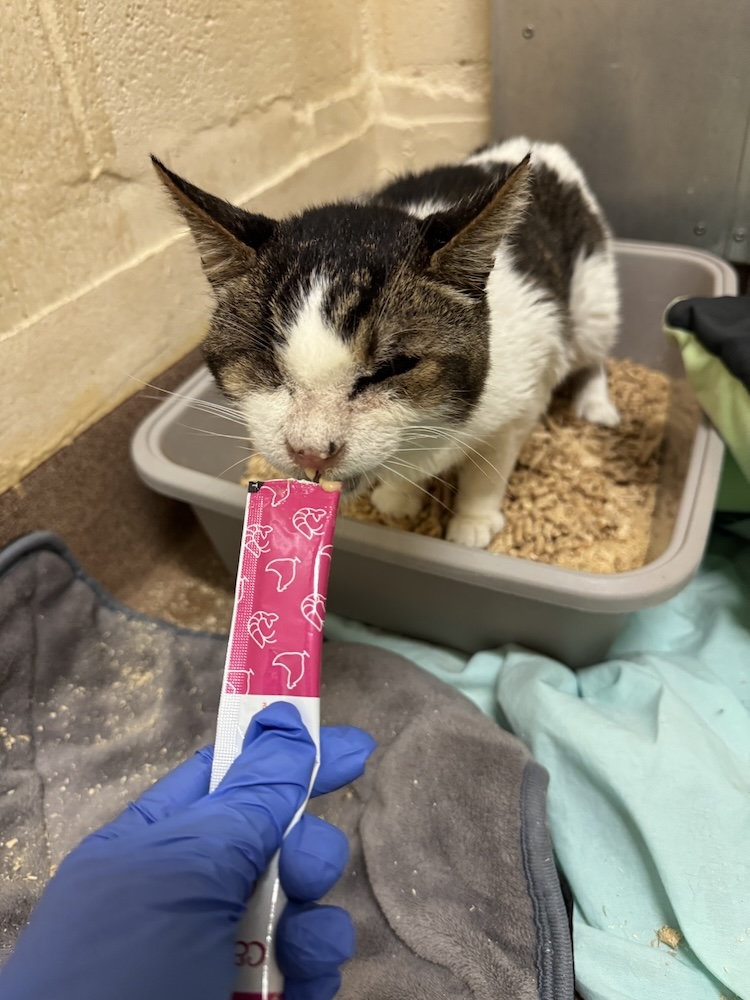
Feeding the kitties breakfast and a treat
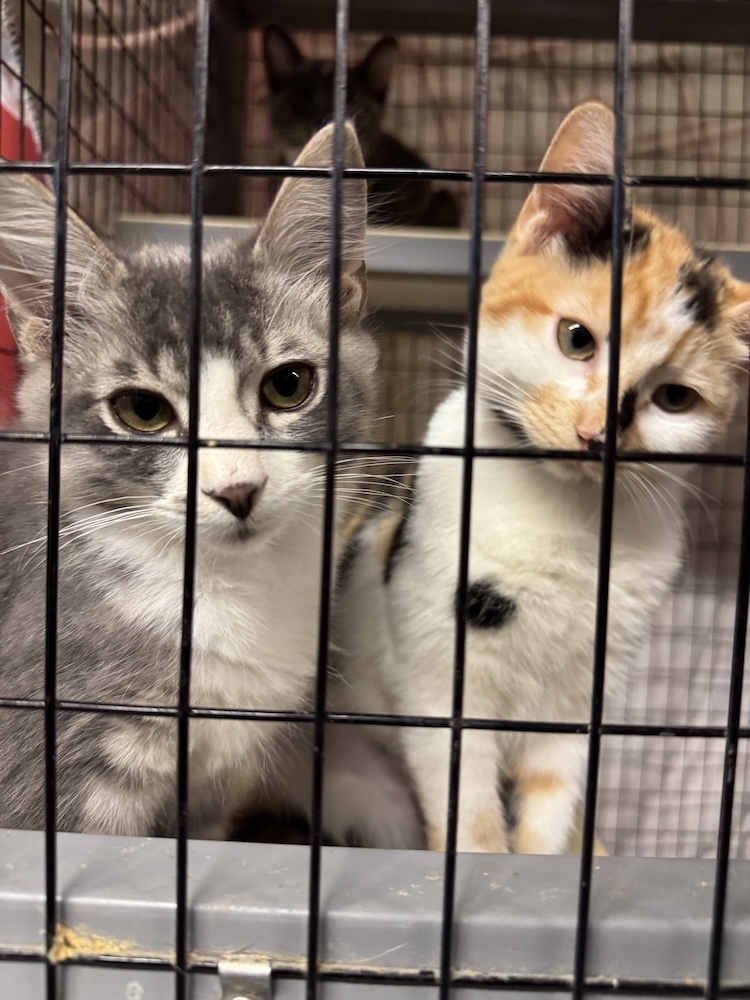
Kitties waiting for their meal
My service-based learning project taught me that it takes a lot of diligent effort by many individuals to run any animal shelter, more than what meets the eye. I have a greater respect for the Stray Cat Alliance animal shelter workers for the amount of work that they put up with and for persevering through caregiver fatigue. While being a cat care volunteer, at times it can be an unpleasant job when having to clean the litter boxes, especially with fecal matter sitting there for long periods of time or smeared around the kennel. At times, I was grossed out at the amount of fecal matter that I had to clean, and it was much easier to think, “Someone else can take care of this.” I had to check myself at times, knowing the value of the volunteers’ responsibilities to ensure that the Stray Cat Alliance staff can complete theirs. When volunteers are not there, the Stray Cat Alliance staff must take on the volunteers’ responsibilities on top of their own work as well. Seeing them around, I found that they work around the clock and on weekends to ensure the health and well-being of the cats, as well as driving efforts to have them fostered or adopted. It’s a thankless job, and I am reminded of the meaningful work that happens behind the scenes to ensure the health and well-being of the populations that we work with. I recognize the importance of stepping up, rather than deflecting to someone else, in keeping at the forefront of how small acts of care contribute to a larger system of collaborative care. Additionally, I acknowledge that when working with vulnerable populations, I should never assume that someone else will take care of things, and check my privilege in the position that I am in to help others. I must do my part, whether difficult or unglamorous, in order for the collective success of a healthcare team and for the betterment of the populations in need.
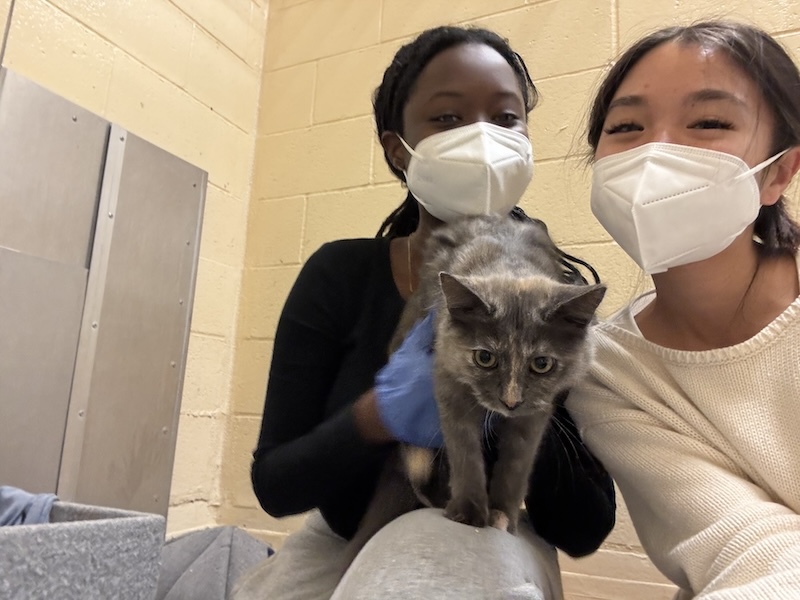
My friend and I volunteering together
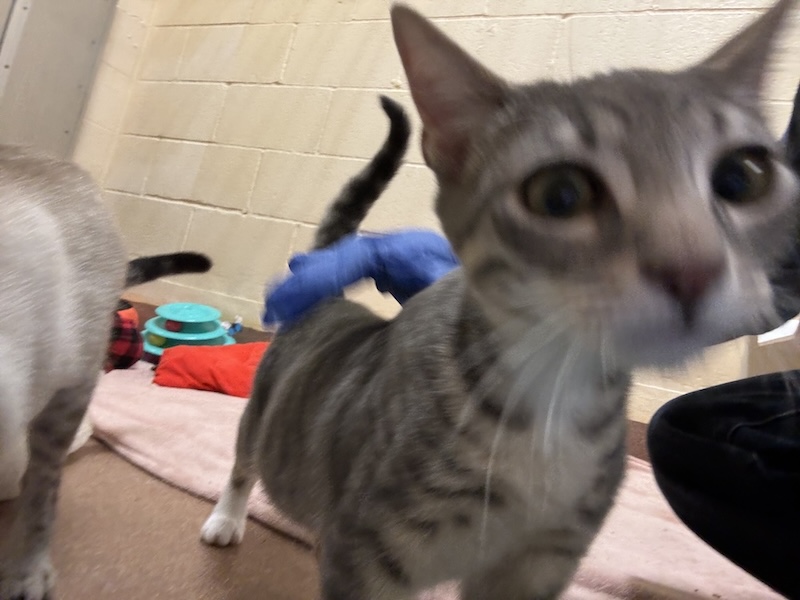
Socializing the cats ฅ(ᵔ꒳ ᵔマ.ᐟ
What surprised me about Stray Cat Alliance was the turnover rate of cats leaving the kennels and new cats coming in. I was surprised when I got to know some of the cats, and then came back to volunteer a different week and to see them gone and replaced with new cats. While bittersweet, it was fulfilling to know that they have found their fur-ever homes and that cat adopters and fosterers are very prevalent, even if I do not see it. This gives me hope, especially during the holiday season, that the cats can touch the lives of so many. What challenged a pre-existing belief that I held was that cats are very quiet and sleep all day. However, being in a cat shelter, many of the cats were very lively, playing or snuggling with their kennel mates, and their “meows” can fill up an entire room. I even saw some cats snore, which I would have never guessed that cats could do, just as humans do.
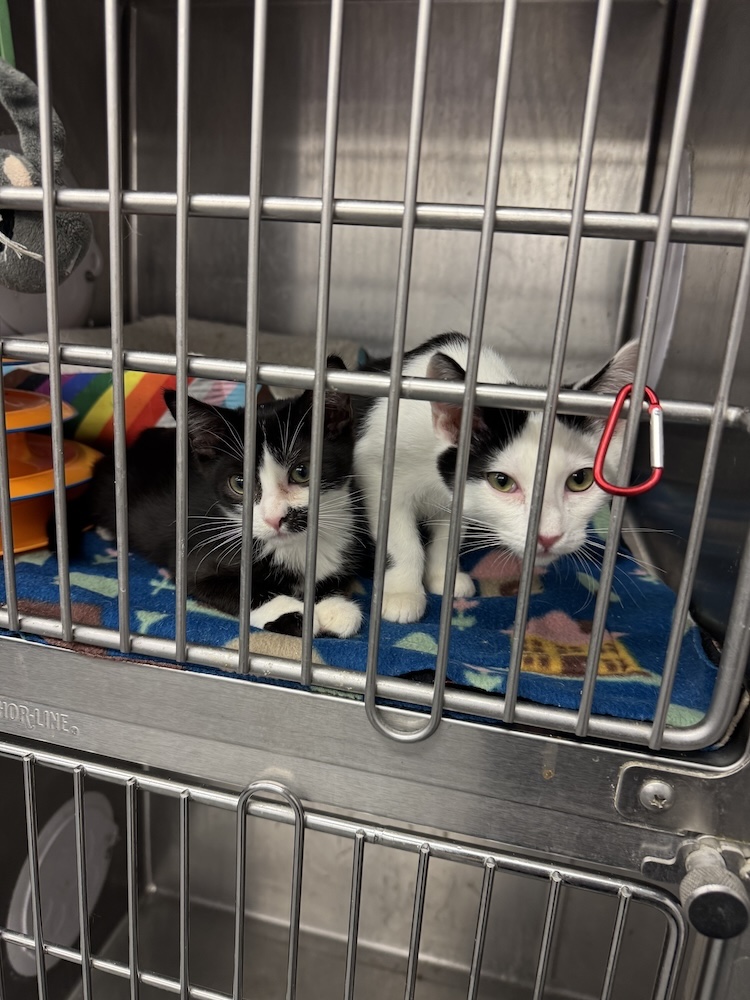
Tiny kitties in their kennel

Friendly cat
What I learned about myself through this experience was that there is power in the choice to show up. When engaging in my service-learning project, it can feel tiring to wake up on a weekend to volunteer, especially knowing that it will be cold and I will probably be getting down and dirty with cleaning up the cat enclosures. Without someone supervising or micromanaging you, you can feel like your work is unacknowledged when doing menial tasks. However, I learned that through my work, no matter how big or small the task is, it returns back to me tenfold. Not only am I able to get volunteering done in the early hours of the weekend, but I feel ever so much more productive the rest of the day.
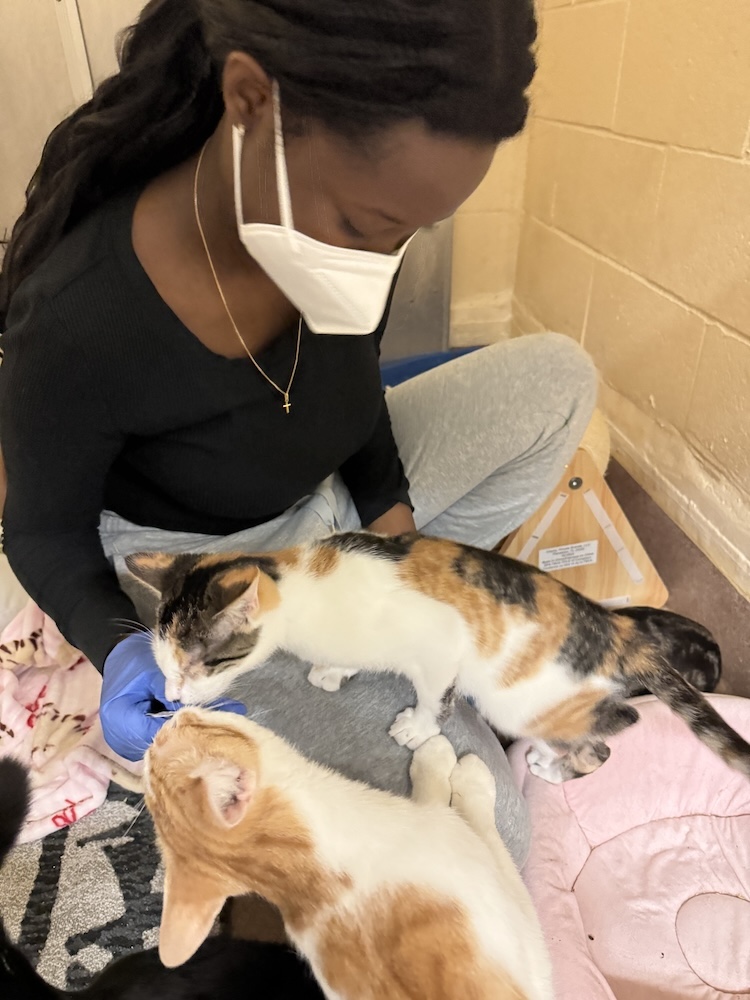
Feeding the cats some mid-day treats

Cats napping together
While socializing with the cats, I feel all my stressors melt away, or even that I forget them altogether. As a result, I can work through life’s challenges or tackle school assignments with greater focus and clarity after volunteering. Additionally, while leaving volunteering at the Stray Cat Alliance, I felt that I had contributed to something greater than myself. Being able to look into the eyes of the cats, there is a quiet understanding in knowing that they are perceiving me as much as I perceive them. While going through the motions of completing the volunteer responsibilities, it puts things into perspective when acknowledging the greater system of care that I am contributing to. The cats can’t take care of themselves, so if no one else will care for them, who will? I am motivated to volunteer again, and while reflecting back on the pictures I took with the cats, I hope to see them soon!
Check out USC’s Feature on OT340 on their Cool Classes tour
Learn more about declaring the Occupational Science Minor
⋯

Feeling Brand New Going Into Year 2! ⟩
August 30, 2026, by Kayla
Beginnings and Endings Community Living in LA School/Life Balance
It’s hard to believe that I’m already starting my second year of grad school! When I first started this journey, I knew OT school would challenge me, but I didn’t fully understand just how much I would learn not only about occupational therapy, but also about myself. As I get ready to head back to school, I’ve been reflecting on my first year, what I learned, and what I’m looking forward to during this next chapter.
My first year of OT school was filled with new friendships, new experiences, and a boat load of caffeine. One of the biggest things I learned was being grateful to be able. Able to be independent but also learn how to help others be independent as well. There were definitely moments when I was questioning if I could even make it out, but those experiences taught me resilience and I didn’t come this far to only come this far.
One of my favorite memories from my first year was attending the LA Kings game together as a cohort because it was my first hockey game but also a great way for us to get to know one another outside of the classroom. Looking back, I’m proud of myself for surviving in a completely new city and just finishing out the year successfully.
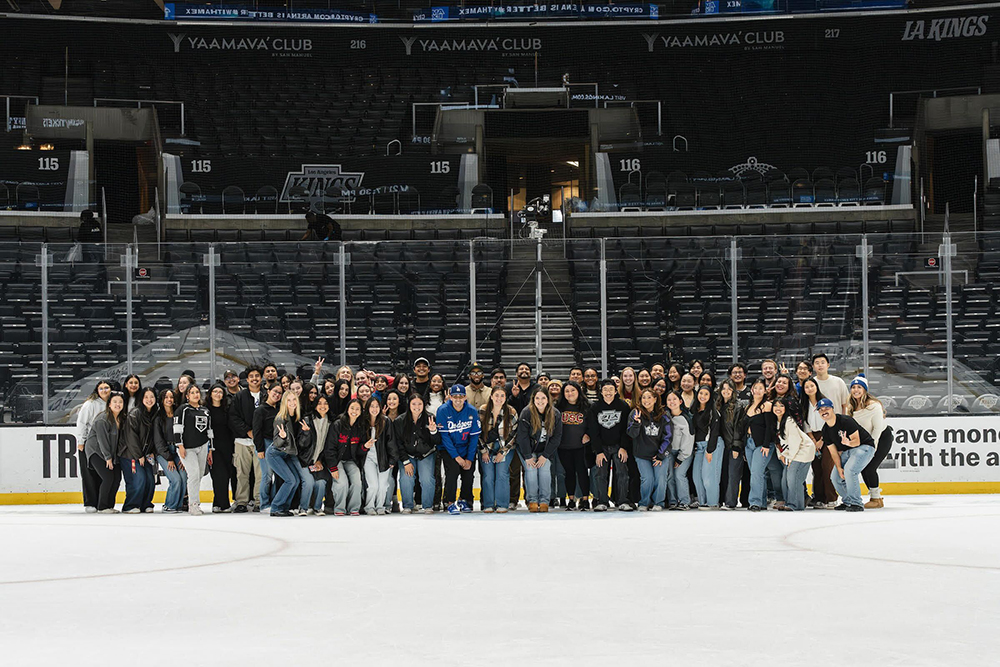
At the LA Kings game!
If you’re starting your first year of OT school, here are a few things I wish I had known:
- You don’t have to know everything right away. OT school is a learning process, and it’s okay to ask questions and make mistakes.
- Find your people. Having classmates, friends, professors, or mentors who understand what you’re going through can make a huge difference.
- Give yourself grace. There will be difficult exams, long assignments, and days when you feel overwhelmed. One difficult day doesn’t define your ability to become a great OT.
- Remember why you started. When school gets stressful, reconnect with the reason you chose occupational therapy in the first place.
- Celebrate the small wins. Getting through a difficult exam, mastering a new skill, completing a project, or simply making it through a busy week are all accomplishments worth recognizing.
As I start my second year of OT school, I’m feeling excited, nervous, motivated, grateful, a combination of them all.
There’s still a long way to go before I can officially call myself an occupational therapist, but I’m proud of how far I’ve already come. Here’s to another year of learning, growing, making memories, and getting one step closer to becoming an OT!
What are you most looking forward to this school year?
⋯
What Is the USC Chan PP-OTD Really Like? Three Things I Didn’t Fully Appreciate Before I Started ⟩
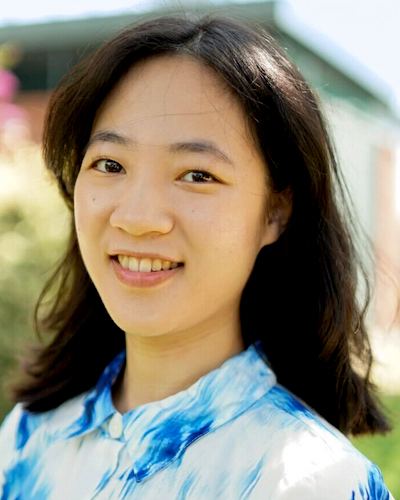
August 12, 2026, by Cindy
Beginnings and Endings Classes
Is a PP-OTD worth it after you’ve already started working as an occupational therapist? That was a question I asked myself before returning to USC Chan. I had practiced as an occupational therapist in both Taiwan and California for about three years, working in hospitals and skilled nursing facilities. Returning to school would be a significant investment of time, energy, and resources, so I wanted the experience to offer something that clinical practice alone could not.
For my PP-OTD residency, I joined the USC Occupational Therapy Faculty Practice, where I received training in Lifestyle Redesign® while developing a residency project focused on supporting international students as they adapt to life in the United States. Now, as I finish the program, here are three things I didn’t fully appreciate before I started.
1. My residency project became more than an assignment.
At the beginning of the year, my goals were straightforward: become a more proficient clinician, complete my residency project, and graduate. But somewhere along the way, my project stopped feeling like a graduation requirement.
I began with questions I had been thinking about since my PP-MA program: Why might international students participate less in meaningful occupations after moving to a new country, even when they know how to access them? Can occupational therapy support international students? Through my PP-OTD coursework in leadership, knowledge mobilization, and occupational science, that question gradually became tangible initiatives. I built partnerships with stakeholders, developed resources, and created tools that will continue to support international students after my residency ends.
Seeing an idea grow into something that could have a life beyond my degree gave the project a sense of purpose I hadn’t anticipated.
2. I finally had the opportunity to intentionally bring occupational science into my practice.
Occupational science has always been one of my favorite parts of occupational therapy. But as a practicing clinician, I rarely had the time or opportunity to intentionally explore what an occupational science question could look like in practice.
My residency gave me the space to synthesize occupational science, evidence, and people’s lived experiences to explore international students’ lived experiences through an occupational science lens and how Lifestyle Redesign could support international students navigating major life transitions.
At the same time, my clinical residency at the USC Occupational Therapy Faculty Practice gave me the opportunity to deepen my knowledge and hands-on practice of Lifestyle Redesign. The training and clinical experience helped me build toward certification. I accumulated the required practice hours, studied extensively for the certification exam, and ultimately passed it. It was a goal I had been working toward since I first learned about Lifestyle Redesign in 2019. Achieving my dream of becoming an occupational therapist specializing in Lifestyle Redesign is incredibly meaningful to me.
3. Leadership became something I practiced — not just something I studied.
Before the PP-OTD, “leadership” felt like something that might come later in my career. After all, I am still an early-career occupational therapist.
But the program showed me that leadership doesn’t have to begin with a title. During my residency, I reached out to university partners, listened to stakeholder feedback, adapted my ideas, developed educational resources, and learned how to move an idea from evidence to implementation.
I’ve always hoped to create an impact beyond individual client care. The PP-OTD didn’t just teach me about that possibility but also gave me opportunities to start practicing it.
Returning to school was a much bigger commitment than I imagined when I started. I entered the PP-OTD hoping to deepen my clinical practice, and I am leaving with specialized training in an area I care deeply about and a broader set of skills to grow into an occupational therapy leader. For me, the value of the PP-OTD has been learning how to provide meaningful care while also developing occupational-centered programs, translating knowledge into practice, and creating change beyond individual treatment sessions.
⋯
USC’s Hidden Gems: My Favorite Study and Rest Spaces ⟩
August 8, 2026, by Makayla
Life Hacks School/Life Balance
As a recent graduate of USC, I wanted to share my now un-gatekept and hidden gem study and rest spaces on the University Park Campus. For me, the best places that I like to study or hang out in between classes are in areas with an open view of nature and plenty of plugs for charging, while prioritizing spaces that have close proximity to a microwave to heat up my lunch. Many of the popular places to rest on campus are great but many times are crowded. In the midst of all the busyness that comes with being on a college campus, there is no shortage of places to hang out around campus to find your peace and quiet! Finding the right environments, niche spaces for alone time, and your go-to places are essential for creating healthy routines that you can stick with throughout college.
School of Cinematic Arts 3rd Floor Rooftop
This is the perfect place that allows you to take in the rooftop views of the School of Cinematic Arts, with some shade to study or hang out with friends. Also on the 3rd floor, are indoor study spaces and a small area where students can use a microwave and a sink as well!

School of Cinematic Arts 3rd Floor Rooftop
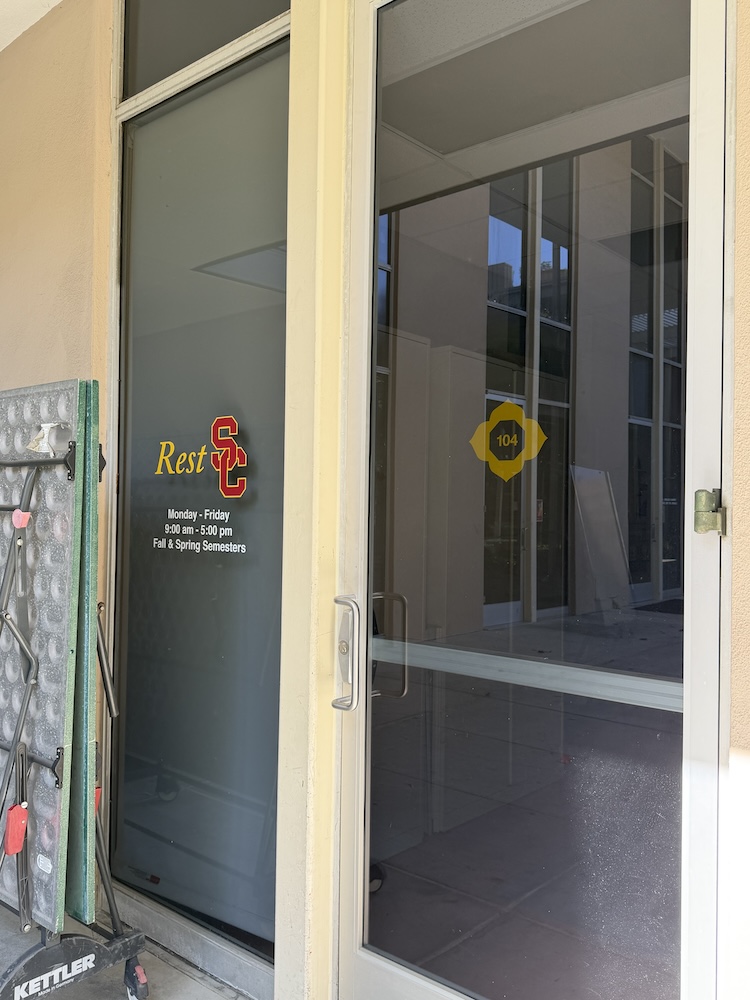
RestSC at the University Religious Center (URC)
RestSC
This space is nestled in the University Religious Center (URC), and it is a space dedicated to resting and recharging. Here, there are couches, pillows, and moon pods, which are zero-gravity beanbag chairs. They also have a smaller space similar to RestSC with beanbags and blankets located in the library in the Dr. Joseph Medicine Crow Center for International and Public Affairs (DMC) as well. I have frequented this space many times to take a quick nap between classes!
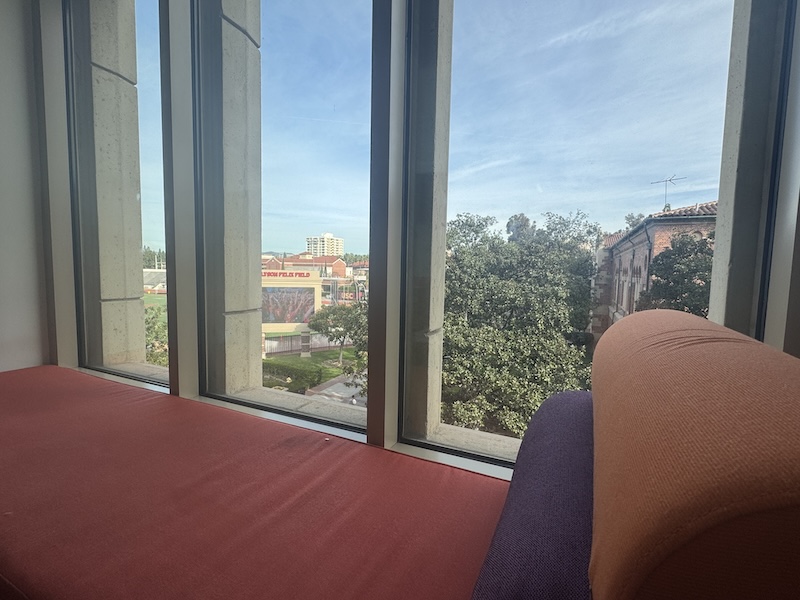
Annenberg Digital Library with the view of the Allyson Felix Track & Field
Annenberg Digital Library
This corner space tucked in the Annenberg Digital Library is a great place where you can work with your laptop propped up with the pillow or even take a nap while enjoying the view of the Allyson Felix Field or people-watch out of the corner windows. Plus, they even have shades that go down for privacy.
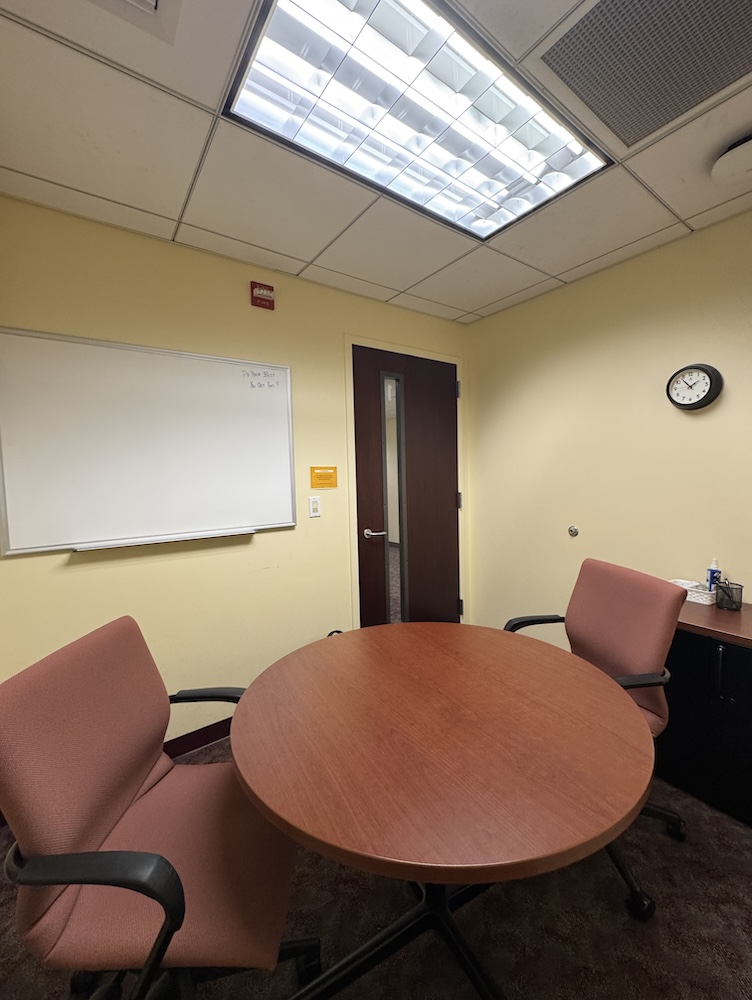
Career Center Interview Rooms
Career Center Interview Rooms
In the basement of the Career Center in the Student Union, you can find the interview rooms where you can book one of their many private rooms. I have come down here to take calls, interviews, work between classes, or sometimes catch some nice AC during a hot day! You can either reserve a room beforehand using their reservation room requests, or they take walk-ins as well. I would take these spaces over any Leavey Library study room any day because you can take all the time that you need, and you don’t have to worry about anyone interrupting you.
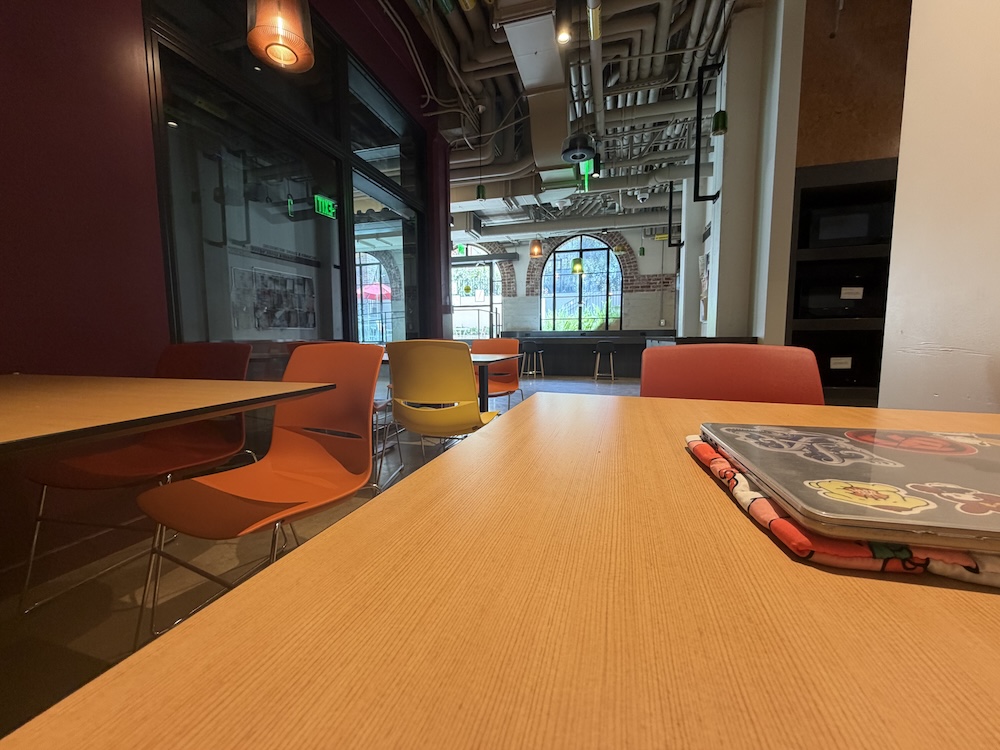
School of Dramatic Arts: Dick Wolf Drama Center
School of Dramatic Arts: Dick Wolf Drama Center
Just behind Taper Hall is the School of Dramatic Arts, where a lounge is located downstairs in the Dick Wolf Drama Center. Here is a nice place with a mix of natural lighting and dim lighting to hang around, eat your lunch, or study. They also have vending machines and microwaves to heat up your food too!
Doheny Library Faculty Hall and 2nd Floor
Across from the main library area in Doheny Library is Faculty Hall, which is my go-to place to catch up on work on a Sunday morning. This area has plenty of tables with nice cushioned chairs and plenty of plugs for charging. I like this place because you get the natural lighting from the windows that face the Alumni Park, and the square tables are nice for quiet group studying as well. I will warn, though, that it does fill up with people throughout the day, so I recommend saving your seat at a table when the library opens. The 2nd floor is also a great option, too!
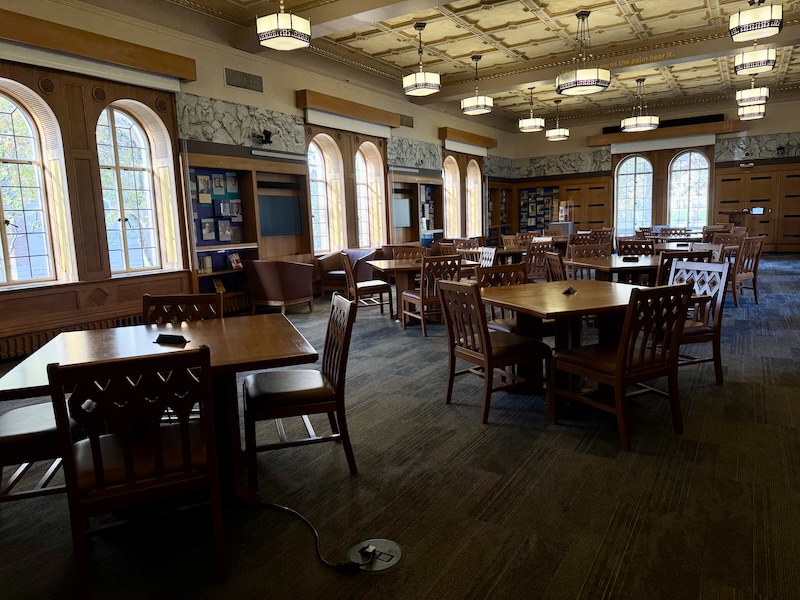
Doheny Library: Faculty Hall
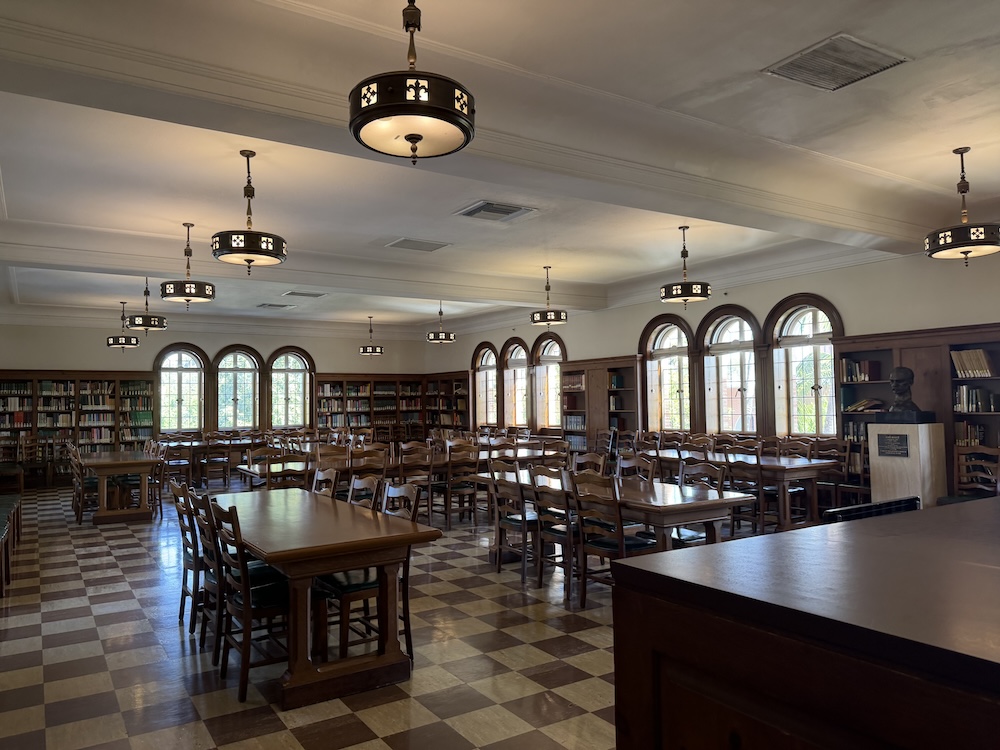
Doheny Library 2nd Floor
4th Floor Taper Hall Lounge
Now this lounge is one that I stumbled across when I was randomly exploring the 4th floor of Taper Hall. This lounge belongs to the USC Dornsife English Department, and it is a great nook to hang out before going to a class in Taper Hall. Here, I like to take in the view of Trousdale Parkway, and there is a microwave and fridge as well; it’s perfect for heating your lunch in between classes. There is also a 3rd floor lounge for Academic Innovation & Research Engagement that is also a great place to study with board games and coffee too.
Price Student Lounge
On the first floor of the Price School is their student lounge that has many couches and cubicles. Again, there is a microwave conveniently located in here, and this lounge leads you to the courtyard in between Verna and Peter Dauterive Hall (VPD), another nice outdoor space as well.
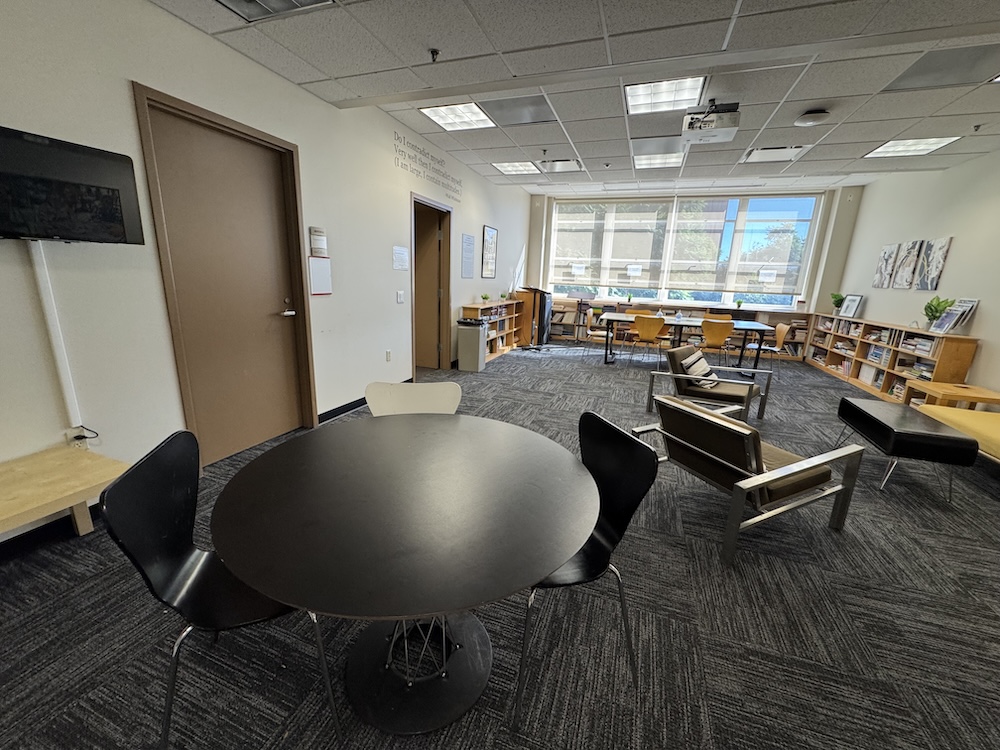
4th Floor Taper Hall Lounge
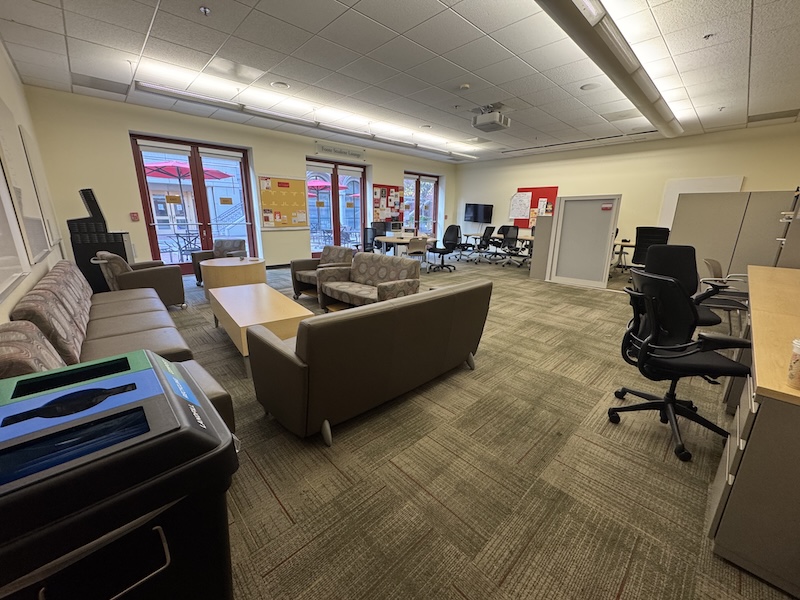
Price First Floor Student Lounge
USC’s Student Equity and Inclusion Programs (SEIP) Centers
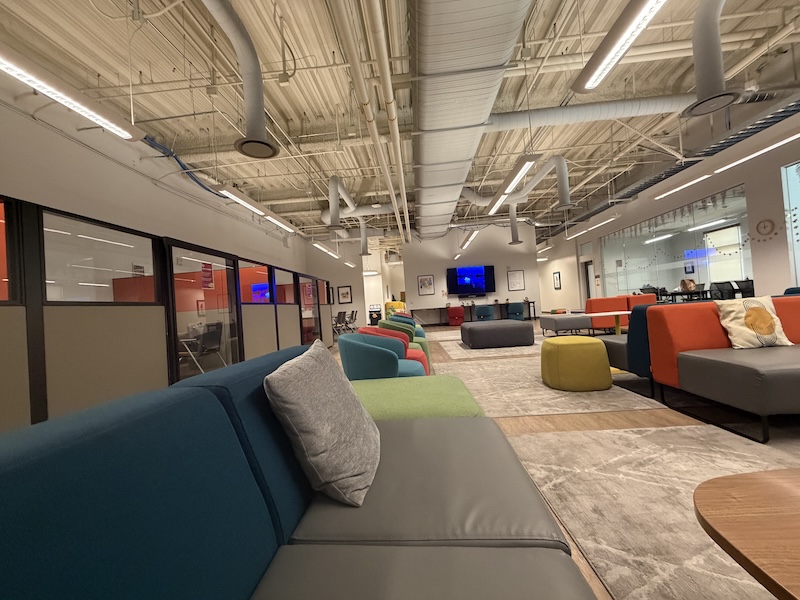
First Generation Plus Success Center (FG+SC)
Within the Student Union and Ronald Tutor Campus Center are USC’s SEIP Centers that house seven different student development centers and three culturally affirming lounges. These places are not only great spaces to hang out, study, or heat up your lunch, but they offer programming that strives to support many students’ identities. While many of these spaces on campus go unnoticed, these were my first stop in terms of getting connected to resources on campus. I even got the chance to work at one of these centers, which was at the Asian Pacific American Student Services. Especially because many spaces have been newly renovated, it has been a place where I have found my community through different programming that offers peer mentoring, professional development, networking opportunities, and several intersectional, community-building opportunities. The Occupational Science Minor Department even does Anti-Procrastination Cafes at many of USC’s SEIP Centers during finals season as well!
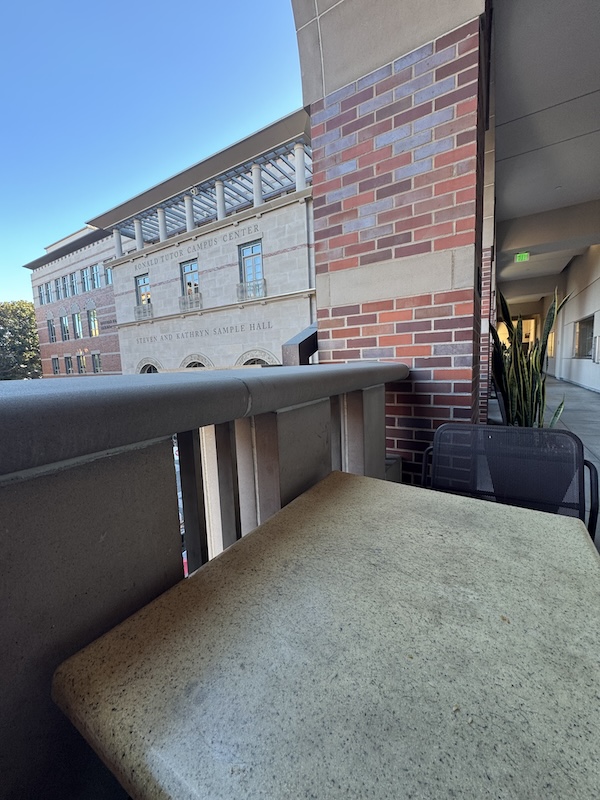
2nd Floor Tables at Ronald Tutor Campus Center
2nd Floor Tables at Ronald Tutor Campus Center
Last, but not least, are the 2nd Floor Tables at the Ronald Tutor Campus Center just outside of the First Generation Plus Success Center (FG+SC). These tables are just upstairs from some food options, and they are in the shade with plugs for charging, which is an added plus.
Bonus: Health Science Campus Spaces
I have also spent some time on the Health Science Campus (HSC) when I took a couple of classes and volunteered at Keck Hospital in the past, so here are some added HSC spaces that I would definitely check out if you are ever up there.
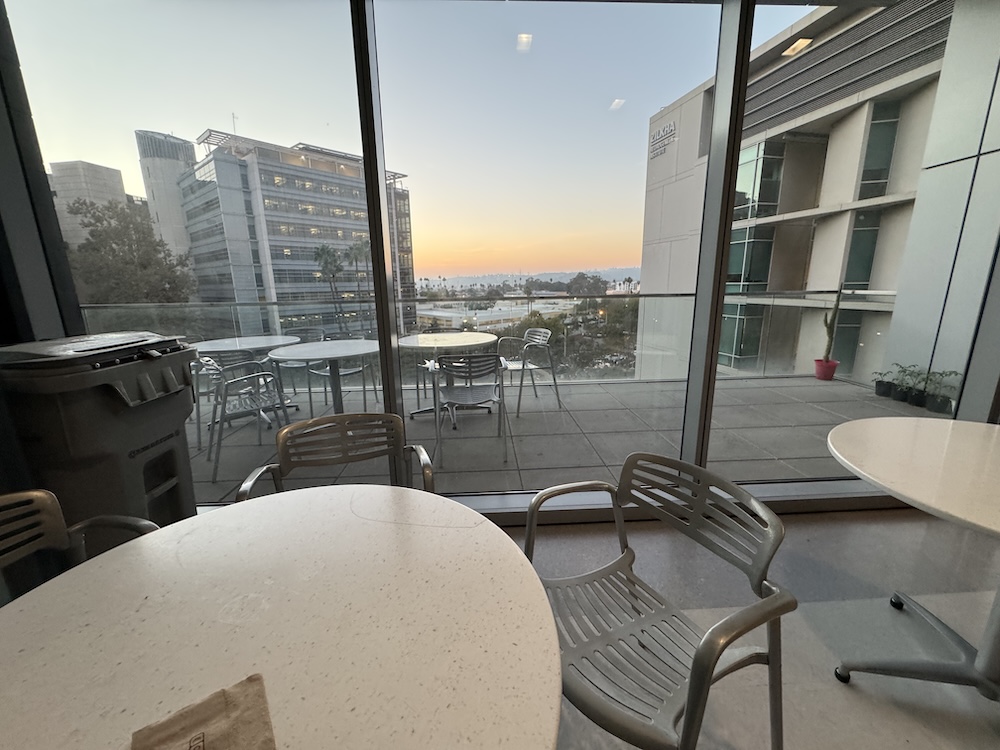
Zilkha Neurogenetic Institute
Zilkha Neurogenetic Institute
The Zilkha Neurogenetic Institute is just right across from the Intercampus (ICS) UPC-Union Station-HSC Bus Stop, and if you take the elevator up, you can find a few different floors with indoor and outdoor seating. I have frequented these floors if I am waiting for the shuttle bus to arrive, and it is also a great place to catch the sunset, too!
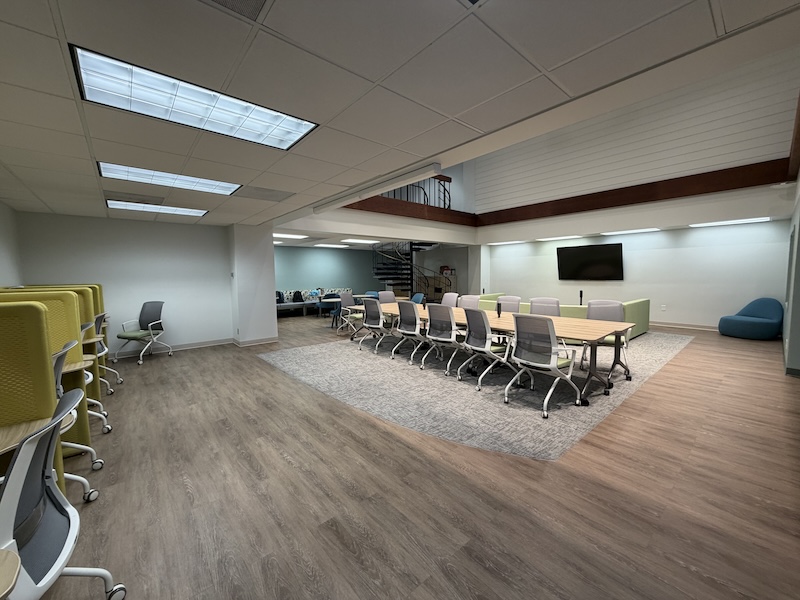
Donald W. and Kathryn Shaw Graduate Student Lounge
Donald W. and Kathryn Shaw Graduate Student Lounge
This lounge is located in the Keck School of Medicine, and it is a HUGE space with tables, cubicles, cushions, outdoor seating, and a kitchen with a fridge and microwave. This is the perfect place to stop in for lunch or squeeze in that last bit of studying before heading to class.
⋯

Finding Your Balance in Graduate School: Advice from an E-OTD Student ⟩
August 4, 2026, by Marilyn
Beginnings and Endings Classes Getting Involved School/Life Balance
Starting graduate school can feel exciting, overwhelming, and everything in between. While everyone’s experience is different, here are a few things that have helped me navigate life as a USC Chan E-OTD student and that I hope will help you as you begin your own journey.
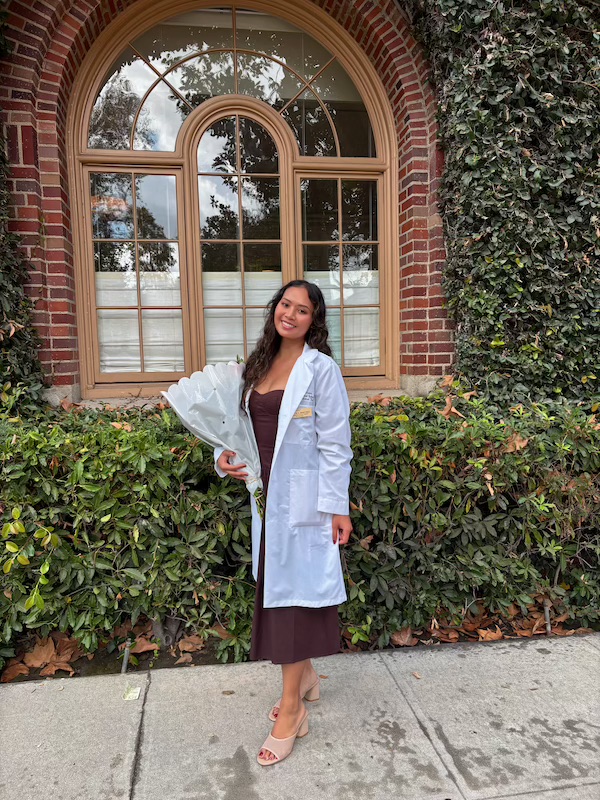
My White Coat Ceremony!
One piece of advice I’d give to any incoming USC Chan student is to never be afraid to ask questions.
Before starting the E-OTD program, I completed my Master’s in Public Health (MPH) at USC, but my experience was very different because it was mostly online. Being in an in-person program has shown me just how approachable the faculty are. Your professors, advisors, and job supervisors genuinely want to see you succeed, not just as a student, but as a future occupational therapist. Go to office hours, ask questions in class, or even stop by to say hello. You never know where those conversations might lead, and who knows, they may even become your future colleagues someday.
Another thing I really appreciated about the program is the flexibility with scheduling. Before your first semester, you’ll be able to choose your preferred schedule from the four options provided, making it easier to find one that works with your life, whether you commute, work, or have responsibilities outside of school. No matter which schedule you’re assigned, everyone takes the same core classes and completes the same immersions; the timing of those immersions is just different depending on your schedule. Later in the program, you’ll also have the opportunity to take electives based on your interests.
If there’s one thing I’ve learned, it’s that having a life outside of school isn’t a luxury; it’s a necessity. One of my favorite occupations is spending time with the people I care about, whether that’s classmates, old coworkers, lifelong friends, or family. Even something as simple as grabbing lunch or planning a beach day helps me recharge.
Just as important are the moments I spend by myself. Working out, reading a book, dancing around my room, or taking myself out for coffee or a meal are all ways I practice self-care and protect my mental well-being. As much as I love school, I know I’d burn out without that balance. I’m definitely a planner (my friends and family can attest to that!), so I intentionally make time for fun alongside studying. I’m far from perfect, and I can absolutely be a perfectionist, but every day I try to find those small moments to pause, breathe, and remind myself that taking care of myself is just as important as preparing to take care of others.
Graduate school is a journey, and while it can be challenging at times, remember to give yourself grace, celebrate the little wins, and enjoy the experience along the way.
⋯
Social
Facebook Instagram LinkedIn TikTok YouTube