




AI-augmented MRIs may improve post-stroke prognosis
September 30, 2025
New NIH-funded project uses AI to enhance MRI image resolution to better understand how global brain health impacts long-term stroke recovery.
Artificial Intelligence Research Technology
By Mike McNulty
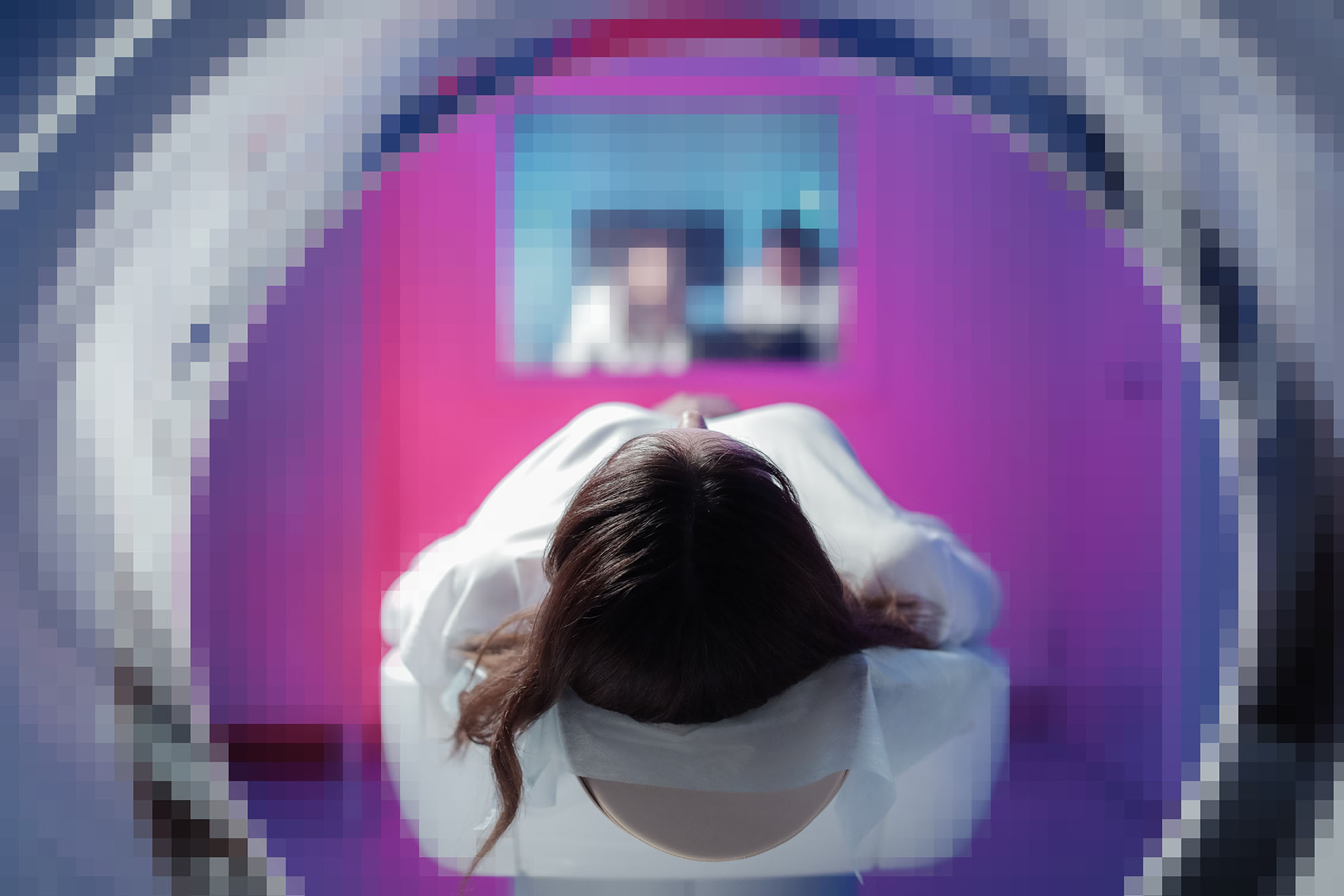
(Adobe Stock)
Artificial intelligence is seemingly, suddenly, everywhere. Soon, thanks to a new USC-led study funded by the National Institutes of Health, it will be used to generate synthetic stroke MRI images that are just as accurate and detailed as those produced by the world’s most powerful MRI machines.
If you or a loved one just had a stroke, that’s incredibly exciting news.
Stroke is the fifth-leading cause of death and leading cause of long-term disability in the U.S., and costs America’s health care system more than $50 billion each year. Unfortunately, it is challenging to accurately predict patient outcomes, especially for those who have more severe initial impairments, and especially when predicting the longer-term trajectory for the months after stroke.
Thanks to a new $2.9 million grant from the NIH National Institute of Neurological Disorders and Stroke, a research team led by Associate Professor Sook-Lei Liew looks to better forecast stroke survivors’ recovery through 12 months after stroke.
To do so, the team will take low-resolution MRIs — the type of brain images typically captured at a local hospital immediately after a stroke — and feed them to AI algorithms which can generate crisp, accurate, high-resolution versions of the same MRIs — analogous to the type captured by ultra-high field MRIs, which are mostly reserved for academic research at large, urban medical centers.
These AI-generated MRIs can provide additional data about global brain health (GBH), a composite measure of the brain’s cellular, vascular and waste disposal systems. In previous research, Liew and her team showed that GBH buffers the severity of damage to the brain after stroke, and is associated with more successful post-stroke outcomes. The better the overall brain health, the more likely that their long-term outcomes will be positive.
“We know that global brain health is a clinically meaningful biomarker, but measuring it requires research-grade MRIs that aren’t available to most stroke survivors,” said Liew, the study’s principal investigator.
Liew holds joint appointments at the Keck School of Medicine’s Mark and Mary Stevens Neuroimaging and Informatics Institute, the USC Division of Biokinesiology and Physical Therapy and the USC Viterbi School of Engineering. She is also a licensed occupational therapist.
“We can sidestep this bottleneck by using routine clinical MRIs that most stroke patients get when they come into the hospital, and augment them with AI to generate better brain images that provide clearer data for predicting patient outcomes and empowering rehab providers, like occupational therapists,” Liew said.
A tool for precision rehabilitation

Associate Professor Sook-Lei Liew
The four-year study, titled “Global Brain Health Predictors of Post-Stroke Sensorimotor Recovery using AI Enhanced Clinical MRIs,” has three main objectives.
First, the team will train AI algorithms to take actual low-resolution stroke MRIs and generate the equivalent of high-resolution MRI images. The algorithm will also “read” those high-res MRIs and automatically generate accurate metrics about GBH and stroke lesion size and location. Then, the team will validate the algorithm’s accuracy by comparing it against a database of actual low- and high-res MRIs gathered from more than 430 participants from the ENIGMA Stroke Recovery Consortium, which Liew also leads. The expectation is that the AI-enhanced MRIs closely correspond to that of the real-world, high-resolution MRIs.
Secondly, the team will recruit more than 200 stroke survivors and collect low-res MRIs, clinical assessments and comorbidity data at four time points: at baseline, 3-, 6- and 12-months after stroke. The researchers will then model those data with the AI-generated images and metrics to reveal whether declining GBH after stroke is also a predictor of declining sensorimotor and cognitive outcomes. If so, that may mean the time window for effective post-stroke rehab therapies is actually open wider than what is currently thought by the clinical community.
Thirdly, the team will use the AI-generated MRIs to create clinical decision trees to accurately predict survivors’ 3-, 6- and 12-month outcomes. They will validate the robustness of the decision trees against data gathered in a previous multi-site study of nearly 500 stroke survivors.
Finally, they will build an open-source, downloadable software toolkit with the low- to high-resolution upscaling AI algorithms and predictive models. That will allow any clinician or researcher, no matter where they are in the world, to input a standard clinical MRI image and get AI-generated imaging and metrics that can predict 12-month post-stroke outcomes with a goal of more than 80 percent accuracy.
“Ultimately, this project is about moving from one-size-fits-all therapy to precision rehabilitation,” Liew said. “AI can effectively enhance low-resolution MRIs to help better predict how people are expected to recover, so that clinicians can deliver customized care that gives every stroke survivor the best possible chance at recovery.”
“Global Brain Health Predictors of Post-Stroke Sensorimotor Recovery using AI-Enhanced Clinical MRIs” (RF1 NS115845-06A1; PI: S.-L. Liew) is funded by the NIH/National Institute of Neurological Disorders and Stroke.
⋯
Next by tag Artificial Intelligence ⟩ Research ⟩ Technology ⟩