





Brain Activity and Behavioral Indicators of Sensory Processing (BABeIS)
Lab: insp!re ⟩ Cluster: Autism, Sensory Processing, and Neurodevelopment ⟩
Principal Investigator: Sapir Soker-Elimaliah PhD
Sponsor: Grace Baranek PhD, OTR/L, FAOTA
Project Co-ordinators: Julia Lisle OTD, OTR/L; Sapir Soker-Elimaliah PhD
Period
Jul 2025 – Jun 2027
Total funding
$161,972
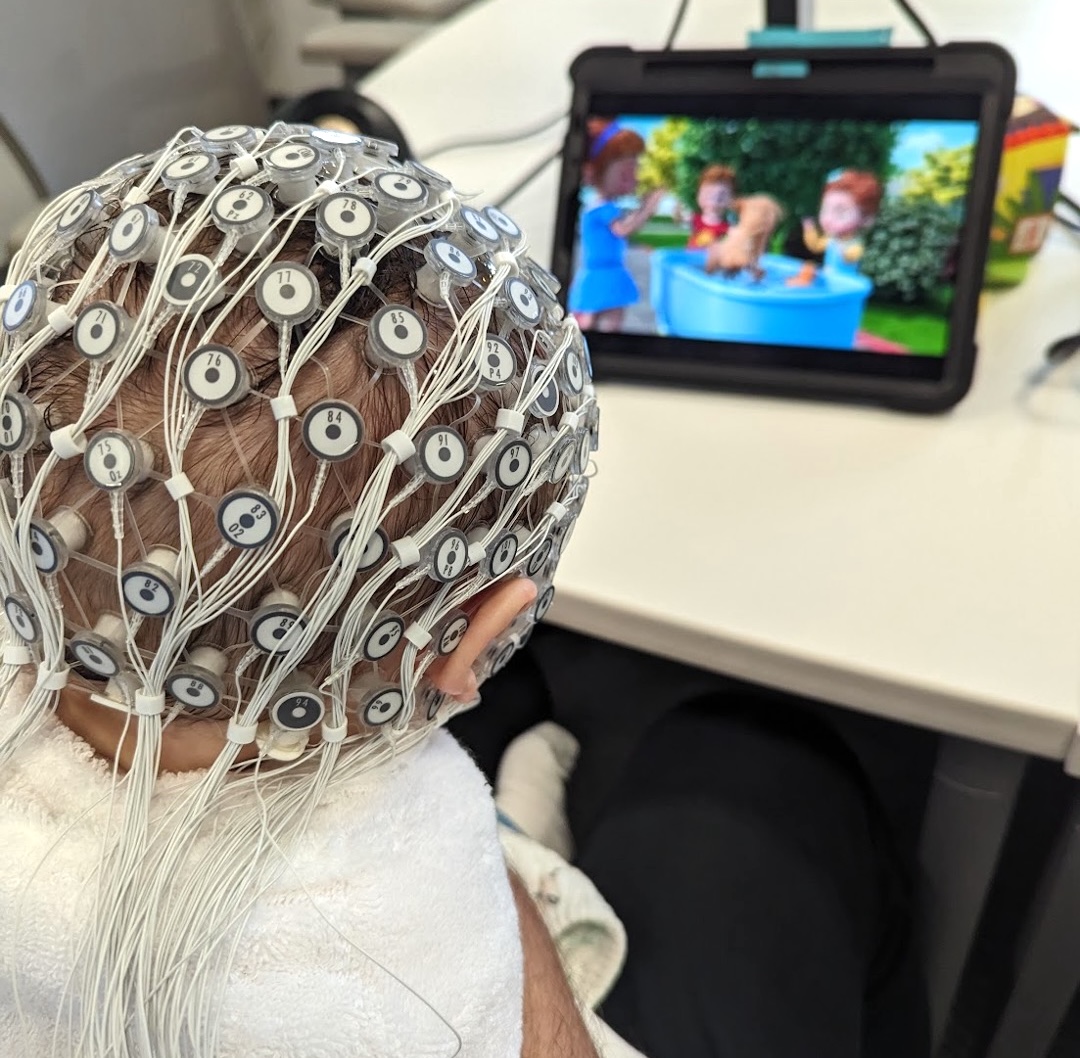
Infant participant wearing EEG cap in the insp!re lab
Sensory hyper- and hypo-reactivity are core features of autism, often evident early in infancy, however, the neurophysiological mechanisms behind these behaviors are not well understood. Sensory discrimination, which refers to the ability to distinguish between new and familiar stimuli, is crucial in early development, influencing both sensory processing and learning. While previous studies in older children show mixed results regarding sensory discrimination in autism, the link between neurophysiological discrimination and observable sensory reactivity remains unclear in infancy.
The study has three main goals: (1) to identify differences in neurophysiological discrimination in infants at high vs. low likelihood for autism, (2) to explore the association between neurophysiological discrimination and observable sensory reactivity behaviors, and (3) to examine potential sex differences in neurophysiological discrimination. Over two years, 60 infants aged 9-12 months at varying likelihood levels for autism will be assessed using an event-related potential (ERP) auditory oddball paradigm to measure their neurophysiological responses to auditory stimuli, while behavioral sensory reactivity will be evaluated through observations and parent reports. Advanced statistical methods will be used to capture nuanced patterns in the data.
The study’s long-term goal is to shed light on the origins of sensory processing differences in autism and their effects on developmental outcomes. Identifying early biomarkers of sensory reactivity could improve diagnostic tools and provide better support for autistic children, particularly by reducing misdiagnosis and facilitating timely intervention.
Funding
| Type | Source | Number | Period |
|---|---|---|---|
| Federal | NIH / National Institute of Child Health & Human Development (NICHD) | F32HD115302 | Jul 2025 – Jun 2027 |
Social
Facebook Instagram LinkedIn TikTok YouTube