




Student Blog
International

Terapia Ocupacional ⟩
January 12, 2012, by Chelsea
International What are OS/OT?
I have always wondered about the extent of occupational therapy’s impact around the world. If I ever wanted to move to a different country would I be able to find a good job practicing OT? Would there be a great stigma against disability? How would I advocate for my patients?
This year we have many international students from various countries such as India, South Korea, Hong Kong, Saudi Arabia, and Taiwan studying in our program at USC and their stories have been intriguing. Many of these students have already been practicing occupational therapy in their countries and have come to the United States to obtain their Master’s or Doctorate from USC. A lot of the stories I have heard indicate that many other countries are less accepting of disability than our own. My friend from India told me that Mothers are often deeply ashamed of their children who have disabilities. In fact, one mother had the audacity to ask my friend how to essentially “get rid” of her child. However, I have also heard stories of countries that are much more accessible to people with disabilities than the United States.
Thankfully, the United States has come a long way since the beginning of the 20th century in terms of disability rights and acceptance. The right of people who are disabled have been protected by Government legislation such as the Civil Rights Act, the Social Security Amendments of 1965, the Architectural Barriers Act of 1968, the Rehabilitation Act of 1973, the Individuals with Disabilities Education Act (IDEA) of 1975, and the Americans with Disabilities Act of 1990 to name a few. I would love to learn more about the rights of people who are disabled in other countries. Someday I hope I can travel around Latin America and practice occupational therapy. I speak Spanish and I am taking an elective this semester titled “Spanish for the Health Professions” so I am not too worried about the language barrier, but if I were to practice OT in another country I would need to know a great deal about the rights of people with disabilities so that I could advocate for my patients as I would in the United States. One beneficial resource is the World Federation of Occupational Therapists, which supports the development, use and practice of occupational therapy worldwide. Spreading occupational therapy practice and ideals to areas of the world that lack adequate rehabilitation services is an alluring, yet daunting task and something that I definitely hope to do someday. The world has quite a ways to go in addressing the rights of people with disabilities, therefore I believe that many countries would benefit from learning about the policies we have in the United States and vice versa.
⋯

International Holiday ⟩
December 13, 2011, by Kimberly
Community Diversity International
Last week we had an international student dinner to celebrate the end of the semester. Everyone brought a traditional dish from their culture or from their family. All the food was amazing and each dish was even judged for prizes according to taste and presentation. My favorite part of the evening however was sitting down at the long table in the OT Lifestyle redesign Center and talking about all of our different holiday traditions. There was a large Christmas tree at the end of the room which spurred on discussions of Christmas and where the tree comes from, how to decorate it, what the significance of the star is, etc. We also heard about the Chinese Moon Festival and the history behind eating moon cakes. We heard a YouTube recording of an Indian song sung in all the different dialects and languages the nation speaks. How being married in some cultures means you are an adult and thus need to now provide presents for all the kids as opposed to receiving them. There were discussions of what family traditions surround this time of year for everyone and whether or not people were getting to go home. It was a nice celebration in the middle of study week and gave us a chance to pause. I think the fact that we all take time during this season to pause it one of my favorite parts. So, even if you are still working or taking that last final, remember to pause and reflect on your traditions, your celebrations, the people around you and all that has happened this past year.
⋯
Welcome International Students! ⟩
September 13, 2011, by Kimberly
Community International
Last weekend I attended the first-ever international student welcome BBQ at Dr. Erna Blanche’s house. This year the OT department decided to pair 2nd year students with international students entering the program. It was really nice to be able to meet all the international students in a setting outside of class. The informality of being in someone’s home, being next to the beach, and actually having time to talk was much appreciated.
After introductions and a nice meal with a few faculty and administrators, all of us students walked around the marina and down through the sand to the ocean. It was fun to see some of the international students react to seeing the Pacific for the first time or being reminded of their oceans at home. It reminded me of my study abroad experience in college when I finally got to see the ocean in Portugal after being landlocked in the middle of Spain for 3 months; a much-needed reprieve for this southern California girl.
We all got to watch the sunset and then just hang out a bit more before heading home. I am excited to get to know all the international students more and talk to them about OT in their home countries. Though I may know LA, I have a lot to learn from them about global issues and how we can work together to strengthen our profession. It’s a really exciting program and I hope that USC continues with it in years to come.
⋯
What makes USC’s program unique? ⟩
November 8, 2010, by Helen
Community Fieldwork Getting Involved International What are OS/OT?
The professors at USC support your learning in every way possible.
In the past couple weeks, I have held information sessions at UC San Diego, UC Davis, Sacramento State, and UC Berkeley. I am constantly being asked why I chose USC’s program and what makes USC’s program unique. From holding these information sessions and meeting so many ambitious and passionate future applicants I have had the opportunity to reflect more on the profession of Occupational Therapy. I have also had time to reflect on how attending USC’s program has influenced my professional future and outlook about the profession. The faculty at USC has such immense confidence in their students and provide the support for their students to not only be great clinicians, but to be leaders in their profession. This investment in the students is what has made my learning experience as a graduate student so unique.
In the last year, I have been provided with the opportunity to attend Lobby Day in Sacramento, advocating for Universal Health Care. Additionally, I was given the opportunity to do an international fieldwork in Ghana. I have also had the opportunity to attend OTAC conference in Pasadena, AOTA conference in Florida, as well as the student conclave in Kentucky. Attending these events, networking with current practitioners and leaders in the field, and learning what direction research is moving towards, have intertwined to inspire me about my profession. I am so proud to be an Occupational Therapy student at USC and am so grateful for being able to attend a university where the faculty truly supports your learning. The professors and faculty hold a holistic view of their students, emphasizing that it is not only valuable to be an excellent student doing well academically, but it is equally valuable to gain practice experience, leadership experience, research experience, and to be knowledgeable about the theory behind practice. By valuing all these learning components, I have a strong sense of the history of my profession, where we stand currently in our health care system, and what needs to be done in the future. The field of Occupational Science was founded at USC, Jane Ayres was a professor at USC researching Sensory Integration techniques, Lifestyle Redesign was established at USC, and our dean Florence Clark is the president of the AOTA. So to answer the question of why I chose USC and why I feel USC is ranked so highly for our OT program, I feel that it is because all these elements combine to create passionate practitioners who think broadly about the field of Occupational Therapy.
⋯
Ghana ⟩
October 11, 2010, by Helen
Fieldwork International What are OS/OT?
As a first year in the graduate program at USC, you have the opportunity to travel to Ghana and have a pediatric physical disabilities fieldwork experience. I had an amazing experience in Ghana and would love to return and work with the children there in the future. It was exactly this time last year that I was just deciding if I wanted to apply to travel to Ghana or not and I wanted to share some of my experience with those who are currently in the process of deciding whether or not they’d like to travel there this year. 😊 I learned more than I could have ever imagined from the children I met in Ghana and I highly recommend the trip to the first years in the graduate program.
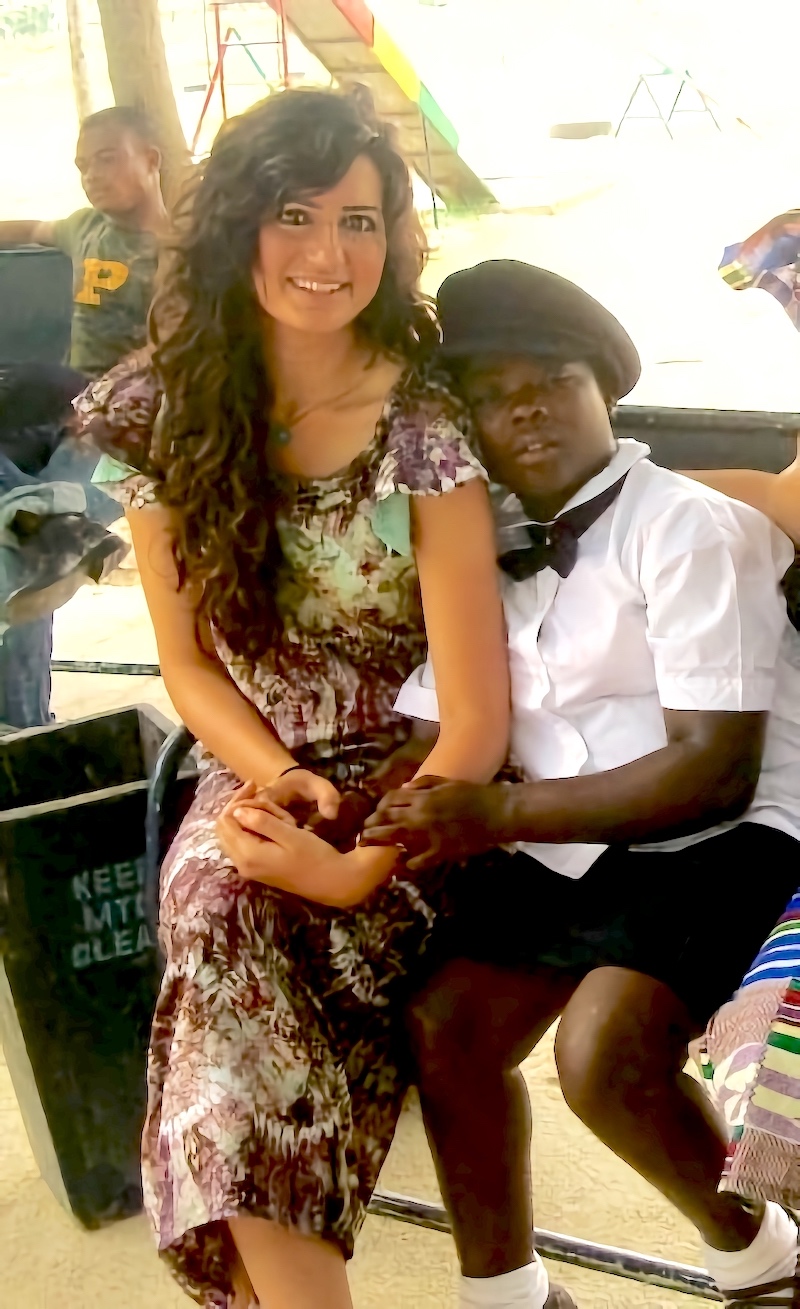
After a long trek from the airport, we stepped off our bus at Mephibosheth and the quiet was immediately broken by the laughter of children from behind their boarding hall window. This laughter was my source of energy for the entirety of my trip to Ghana. I had difficulty sleeping the first couple days I was in Ankamu and the Gomoa District because I was so excited to be engulfed by this entirely new place and people. I wanted to know every child’s history, how they had come to be at this facility, and I was so anxious to implement a treatment plan with students of my own. Little did I know, these children who I would be spending the following days with, would forever impact my value of time, family, resilience, interdependence, and the immeasurable value of healthcare access and occupational engagement.
Mephibosheth is the only facility in Ghana that addresses the needs of children with physical and mental disabilities. Pastor Joe and his wife Andrea have created this boarding school in the Gomoa District as a safe haven and source of occupational hope for children who are otherwise often unacknowledged by their society. As a boarding school with minimal in home aid from the school faculty, the children have adopted interdependency as their form of survival.
The practice of occupational therapy in the United States is defined by the American Occupational Therapy Association (AOTA) as being a science driven, evidence based profession that enables people of all ages to live life to its fullest by helping them promote health and prevent — or live better with — illness, injury, or disability (AOTA). Occupational therapists intervene to maximize quality of life at the early intervention, acute, or rehabilitation stages of development. As occupational therapists strive to promote independence and quality of life for clients experiencing an array of conditions, I was curious to see how therapy regarding independence in self-care would translate to the Ghanaian culture which so beautifully valued interdependence.
The day we sat quietly listening to Andrea, Pastor Joe’s wife, give us bullet points on each child’s medical and social histories, I mechanically wrote bullet points on the notes being dictated. My first notes read, “*Clara (name has been changed) — cage for six years, malnourished, Osteoporitic, estimated around 17-18 years old, has seizures, parents ashamed — guardianship given to German orphanage.” I couldn’t help but be in shock that I was just laughing for ten minutes outside with this same young lady about how she loves sunglasses and the ocean. I was quieted by the incredible confidence and happiness she exuded and humbled by how resilient this young woman who is actually 23 years of age is. My three pages of bullet form medical history notes about each child, have to this day not fully taken form in my mind.
I was baffled by the type of treatment plan I would create for our personal student *Kate, her bullets read “16-17 years, psych history, knocks doors to tell problems, taken to exorcism prayer camp, bit her breast/self mutilation, number one corn husker.” Knowing what resources were available to us, my partner and I attempted to brainstorm multiple activities we could do with her and made it our goal to give her as much positive attention as possible while trying our best to share our energy fairly between the two children we were assigned. Upon returning from Ghana, one of my most disheartening thoughts is that the entire two weeks I was there, I was unable to have a meaningful conversation with this young lady. I know that there was a language barrier in our attempts to talk to *Kate and that she was most likely not properly medicated and most definitely not in the most ideal place to address her needs, however I still felt a sense of responsibility to emotionally connect with this girl who would demand an apology from me every two minutes for looking at her, brushing against her, accidentally smiling a second too long at her, or not holding her hand when she wanted.
On the flight back from Ghana, I read our personal account readings about how practitioners should address mental health illnesses, emotional intelligence, and the value of having a trusted friend in the process of alleviating symptoms experienced by patients who have mental health disorders. As I read these personal account readings, I felt increasingly motivated to inspire change for people like *Kate who had suffered years of misunderstandings, physical and emotional trauma, and the trauma of social isolation. It seemed to me that everything these personal accounts told of what should not be done to address mental health needs was what *Kate had experienced and it breaks my heart to know that there is a very small likelihood that she will ever get the medical attention that the she truly deserves.
Pastor Joe preached on the value of being self-disciplined and having peer support. The value of leading a disciplined life was the topic of his three talks I attended at church. Leading a disciplined life means being able to practice self respect and through doing so and truly taking into consideration what is in one’s own best interest, is it possible to truly extend care and compassion for your neighbor. Pastor Joe preached that one must never forget that “there is always someone higher than you and someone lower. No one is above all.” This idea echoed in my mind as I observed the kids interacting with one another. Those who had increased range of motion helped the others get dressed, those who were able to read, helped pass out shirts with the proper labels, the kids who were doing better cognitively had the responsibility of passing out snacks. Everyone fed one another, wheeled one another, dressed one another, and shared every possession so openly. There is a set system of checks and balances among the kids at Mephibosheth. Each child has a role, character, and identity within their Mephibosheth family.
My last night at Mephibosheth, I had a conversation with one of the students that truly exemplifies the charisma of the children we worked with. I said to *Clara, “Your birthday is coming up! If you could do anything in the world for your birthday, what would that be?” and she replied with a smile “I would go to the beach and have a cola with my orphanage mother.” The children we worked with did not have the luxury of drinking soda and the beach was less than a mile away from their facility. The children travel to the beach once a year when the USC students visit, due to the need for adequate supervision/volunteers to travel with. The children I was so fortunate to have spent time with at Mephibosheth have forever influenced my thoughts, values, and ambition to decrease discrepancies in health care access.
⋯
Social
Facebook Instagram LinkedIn TikTok YouTube