Keck Medical Center of USC
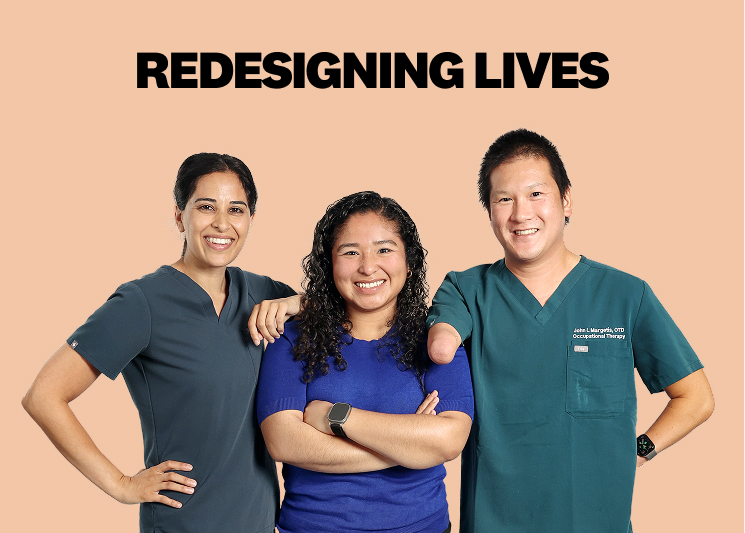
At Keck Medical Center of USC, our occupational therapists play a vital role in your recovery, helping you regain independence after medical or surgical procedures, maximize your functional abilities, minimize the impact of illness or injury on your daily activities and promote resilience in the face of life-altering health conditions.
We collaborate closely with families and caregivers, referring physicians and other providers to ensure continuity of care, support community reintegration and help you achieve your meaningful goals.
Occupational Therapy Programs
at Keck Medical Center of USC
Bariatric Center of Excellence
- Incorporate lifestyle and habit changes into daily living prior to surgery
- Improve safety and performance of personal care activities
- Prepare for return to work, school, social and other activities
- Overcome barriers to following dietary guidelines
Cardiothoracic Surgery
- Incorporate post-operative precautions
- Improve functional strength and activity endurance
- Safely perform basic personal care activities and daily routines
- Develop a home transition plan including caregivers
- Provide recommendations for appropriate referral to continued outpatient rehabilitation
Critical Care Rehabilitation
- Facilitate early mobility and early engagement
- Participate in the evidence-based multidisciplinary A-F ICU Liberation Bundle, contributing to improved ICU outcomes
- Foster participation whilst monitoring invasive hemodynamic monitoring devices and vasoactive medications
- Formally assessing for & addressing delirium
Geriatrics / Aging
- Fall risk assessment
- Home and environmental recommendations
- Chronic disease management within functional routines
- Dementia-supportive strategies for ADLs and behavior management
Hand Therapy
- Assess and treat limitations in strength, coordination, sensation and motor control
- Customized splinting and positioning
- Teach therapeutic exercise
- Retrain neuromuscular system
- Desensitize
- Customize plan for maximizing function and avoiding injury in the context of everyday activities
Long COVID Rehabilitation
- Restore endurance and activity tolerance after prolonged hospitalization or post-viral fatigue
- Address cognitive changes (“brain fog”), decreased attention, memory, and executive functioning
- Manage dysautonomia symptoms that affect daily routines (e.g., POTS, orthostatic intolerance)
- Support safe return to daily activities, work, school, and community participation
- Teach energy conservation, pacing, and lifestyle modifications for symptom stabilization
- Provide breathing and body mechanics strategies that support functional activities
- Develop individualized home programs for gradual reengagement in meaningful occupations
Lymphedema and Edema Management
- Improve range of motion
- Increase independent performance of self-care
- Minimize possibility of bacterial infection
- Reduce swelling through manual therapy and compression bandaging
- Provide personal plan for lymphedema management in the context of everyday activities
Neurology / Neurosurgery
- Introduce neuromuscular re-education
- Assess neurocognitive dysfunction and initiate cognitive rehabilitation
- Perform neurorehabilitation of paretic limbs
- Employ splinting and physical modalities
- Providing compassionate care within the USC ALS Center of Excellence
- Lifestyle Redesign® for Multiple Sclerosis and Parkinson’s Disease, Pain Management, and Headaches
- Treating for visual, visual-perceptual, and oculomotor deficits
- Facilitating quality of life and participation, particularly with the neuro-oncology patients
Oncology
- Recover functional activity performance
- Reprioritize personal goals during progressive debilitation or during remission
- Intervene to minimize nerve injury and sensory loss, and improve range of motion and strength
- Decrease contractures, edema or lymphedema, and manage debilitating pain and fatigue
- Lifestyle Redesign® Cancer Survivors
Orthopedics
- Ensure compliance with movement restrictions or other precautions
- Early out-of-bed ambulation during practice of automated routines
- Educate and train use of adaptive equipment to increase independence
- Prevent falls by planning for the challenges, routines and environments of everyday life
- Provide customized plans for daily activities that optimize likelihood of better surgical outcomes
Palliative Care & End-of-Life Care
- Maximizing comfort and dignity during daily activities
- Supporting meaningful roles, routines, and legacy work
- Caregiver education for safe care at home
- Energy conservation during advanced disease
Plastic and Reconstructive Surgery
- Foster independence following gender affirming care
- Provide education in preparation for transition home
- Provide referrals to related programs (i.e., Breast Oncology/Lymphedema)
Psychiatry / Mental Health
- Improve capacity for functional activity
- Reinforce healthy routines and daily habits
- Enhance role performance to successfully meet the demands of everyday life in the community
Transplantation
- Improve physical and psychosocial health to promote transplantation candidacy
- Maintain quality of life through successful activity performance and routines
- Restore independence in daily living activities and meaningful occupations





Social
Facebook Instagram LinkedIn TikTok YouTube