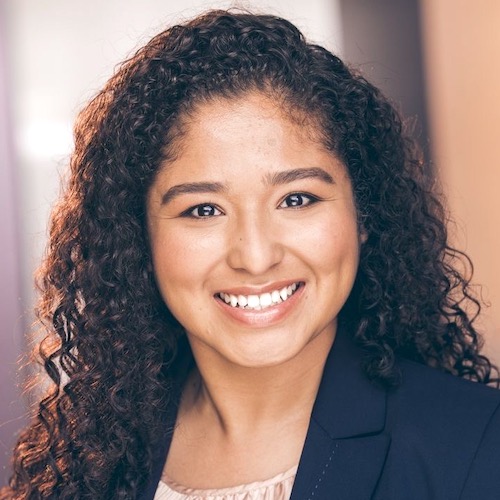
Marilyn Thompson OTD, OTR/L, LRC (she/her/ella)
Assistant Professor of Clinical Occupational Therapy
HRA 500
(323) 442-3340
.(JavaScript must be enabled to view this email address)
Marilyn Thompson OTD, OTR/L, LRC earned her master’s and doctorate in occupational therapy from the University of Southern California. She completed her doctoral residency at Kaiser Permanente, where she advanced the role of occupational therapy in primary care by developing interdisciplinary lifestyle intervention services for individuals managing chronic conditions, mental health needs, bariatric care, sickle cell disease, and pediatric obesity. As an assistant professor of clinical occupational therapy at USC and clinical faculty member within the USC Occupational Therapy Faculty Practice, Dr. Thompson focuses on supporting clients in chronic condition self-management while advancing culturally responsive care and health equity for underserved communities.
Education
Doctorate of Occupational Therapy (OTD)
2021 | University of Southern California
Master of Arts (MA)
in Occupational Therapy
2020 | University of Southern California
Bachelor of Arts (BA)
in Human Biology
2017 | University of Southern California
Selected Publications
Jalaba, T., Schiewe, E., & Thompson, M. (2026). Developing an evidence-based rubric for inclusive, accessible, and uniform patient education materials: Inspiring change in occupational therapy practice. Brazilian Journal of Occupational Therapy, 34(Special Issue), 274. Full text Show abstract
Introduction/Rationale. Occupational therapy practitioners provide patient education to enhance engagement and outcomes. However, patient education materials (PEMs) often lack consistency and may not effectively address inclusivity or accessibility. The absence of a standardized, evidence-based framework for developing PEMs reduces the effectiveness of interventions. Thus, an evidence-based rubric is needed to improve the quality of PEMs, ensuring they meet diverse patient needs while maintaining consistency across practice settings.
Objectives. This study aims to develop and validate an evidence-based rubric to guide occupational therapy practitioners in creating high-quality, accessible, inclusive, and standardized patient education materials.
Methods/Approach. A comprehensive literature review identified existing frameworks for creating effective PEMs, emphasizing inclusivity, accessibility, and clarity. Based on the review, a draft rubric was created, focusing on criteria such as language clarity, cultural sensitivity, and accessibility for diverse patient populations. Expert panels of occupational therapists reviewed and refined the rubric. A pilot test was conducted with practitioners who used the rubric to assess and improve current PEMs.
Results/Practice Implications. During the pilot test, the practitioners were able to use the rubric to inform changes that improved the quality, inclusivity, and accessibility of PEMs. Participants felt more confident in adapting these materials for diverse patient populations. This rubric helps occupational therapy practitioners create better patient education resources that are inclusive and accessible.
Conclusion/Contribution to the Occupational Therapy Profession. Developing this evidence-based rubric supports occupational therapy practitioners in enhancing the quality of patient education, promoting better outcomes, and ensuring that materials are accessible and inclusive for all patients. This tool contributes to the ongoing quality improvement efforts in occupational therapy practice.
⋯



Social
Facebook Instagram LinkedIn TikTok YouTube