



Tracy Jalaba OTD, OTR/L, LRC (she/her/hers)
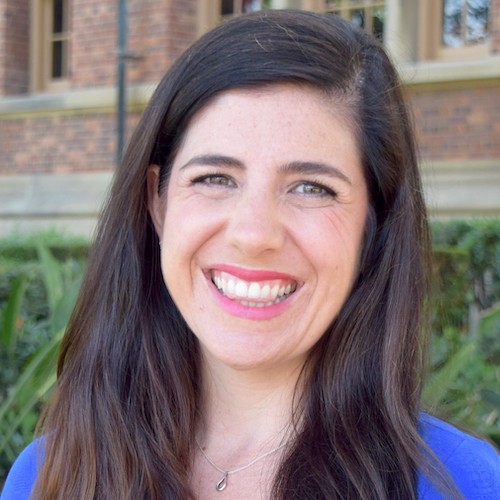
Associate Professor of Clinical Occupational Therapy
HRA 500
(323) 442-3340
.(JavaScript must be enabled to view this email address)
Tracy Jalaba completed her doctoral residency at the USC Occupational Therapy Faculty Practice (OTFP), where she focused on expanding and improving the Lifestyle Redesign® program for Adults and Adolescents with Autism Spectrum Disorders (ASD). As a clinical faculty member, Dr. Jalaba continues to work at the OTFP primarily within their ASD, college student, mental health, sleep disorders, and health coaching programs. She has completed the training course for Cognitive Behavioral Therapy for Insomnia and is a PEERS® Young Adult Certified Provider. Dr. Jalaba serves as a professional development coordinator for AOTA’s Mental Health Special Interest Section’s steering committee. In addition to her work at OTFP, she represented occupational therapy in the USC Office for Student Accessibility Services for seven years.
Doctorate of Occupational Therapy (OTD)
2015 | University of Southern California
Master of Arts (MA)
in Occupational Therapy
2014 | University of Southern California
Bachelor of Science (BS)
in Exercise Biology
2010 | University of California, Davis
Lambdin-Pattavina, C., Cozzolino, M., & Jalaba, T. (2026, January). Volunteerism as occupation: An experience of serving AOTA. OT Practice, 31(1), 20-23. Full text Show abstract
Volunteerism is vital for nonprofit organizations, including the American Occupational Therapy Association (AOTA). With more than 200 volunteer positions and countless micro-opportunities, volunteers are critical to AOTA’s success and continuation. However, AOTA is experiencing a shortage of individuals available to contribute their time and talent.
Tags. Occupations and Everyday Activity
Jalaba, T., Schiewe, E., & Thompson, M. (2026). Developing an evidence-based rubric for inclusive, accessible, and uniform patient education materials: Inspiring change in occupational therapy practice. Brazilian Journal of Occupational Therapy, 34(Special Issue), 274. Full text Show abstract
Introduction/Rationale. Occupational therapy practitioners provide patient education to enhance engagement and outcomes. However, patient education materials (PEMs) often lack consistency and may not effectively address inclusivity or accessibility. The absence of a standardized, evidence-based framework for developing PEMs reduces the effectiveness of interventions. Thus, an evidence-based rubric is needed to improve the quality of PEMs, ensuring they meet diverse patient needs while maintaining consistency across practice settings.
Objectives. This study aims to develop and validate an evidence-based rubric to guide occupational therapy practitioners in creating high-quality, accessible, inclusive, and standardized patient education materials.
Methods/Approach. A comprehensive literature review identified existing frameworks for creating effective PEMs, emphasizing inclusivity, accessibility, and clarity. Based on the review, a draft rubric was created, focusing on criteria such as language clarity, cultural sensitivity, and accessibility for diverse patient populations. Expert panels of occupational therapists reviewed and refined the rubric. A pilot test was conducted with practitioners who used the rubric to assess and improve current PEMs.
Results/Practice Implications. During the pilot test, the practitioners were able to use the rubric to inform changes that improved the quality, inclusivity, and accessibility of PEMs. Participants felt more confident in adapting these materials for diverse patient populations. This rubric helps occupational therapy practitioners create better patient education resources that are inclusive and accessible.
Conclusion/Contribution to the Occupational Therapy Profession. Developing this evidence-based rubric supports occupational therapy practitioners in enhancing the quality of patient education, promoting better outcomes, and ensuring that materials are accessible and inclusive for all patients. This tool contributes to the ongoing quality improvement efforts in occupational therapy practice.
Jalaba, T., & Dixon, N. (2026). Innovative approaches to neurodiverse-affirming practices: Occupational therapy for adults with ADHD. Brazilian Journal of Occupational Therapy, 34(Special Issue), 760. Full text Show abstract
Introduction/Rationale. As of 2020, the estimates of global prevalence of adults with symptomatic ADHD is 6.76% and an estimated 80% have at least one co-occurring psychiatric diagnosis. Deficits in executive functioning, focus, sensory processing, and emotional regulation associated with ADHD can greatly impact occupational performance. Occupational therapy practitioners can equip neurodivergent adults with cognitive compensatory strategies, environmental adaptations, and lifestyle modifications to support their engagement in health-promoting roles and occupations.
Objectives. Understand the functional and occupational strengths and challenges of adults with ADHD; Learn about effective OT interventions to address the occupational needs of this growing population
Methods/Approach. Speakers will provide a brief overview of outpatient OT services for adults with ADHD including considerations for developing a neurodiverse-affirming environment and addressing common symptoms and comorbidities. The primary focus will be on specific interventions that can support these individuals, including externalization strategies, lifestyle modifications, and self-regulation training. A case example will be used to demonstrate the application of the information presented.
Results/Practice Implications. OTPs can equip adults with ADHD with the tools to self-monitor for sensory needs, adapt their environment to support their regulation, make sustainable lifestyle changes to support nervous system regulation to improve their symptom management.
Conclusion/Contribution to the Occupational Therapy Profession. Adults with ADHD represent a growing population with unique occupational needs. OTPs have a unique skillset to bring to the treatment team for these individuals and it is important that we understand the appropriate approaches to serve in this emerging practice area.
Rice Collins, C., Cunningham, R., Shomer, L., Jalaba, T., & Marchioni, M. (2025). Lifestyle Redesign®: An intervention framework for preventing and managing chronic conditions. In M. N. Ikiugu, S. D. Taff, S. Kantartzis, & N. Pollard (Eds.), Routledge companion to occupational therapy: Theories, concepts and models (pp. 214–225). Routledge. Full text
Keptner, K., Lambdin-Pattavina, C., Jalaba, T., Nawotniak, S., & Cozzolino, M. (2024). Preparing for and responding to the current mental health tsunami: Embracing Mary Reilly’s call to action. American Journal of Occupational Therapy, 78(1), 7801347010. https://doi.org/10.5014/ajot.2024.050200 Show abstract
Although occupational therapy has its roots in mental health practice, the profession has not been able to adequately and consistently address mental health issues that face society today. As we continue to experience both the protracted coronavirus disease 2019 pandemic and political and social unrest, occupational therapy professionals must take action at individual, state, and national levels to assist in mitigating the current mental health tsunami and improving a fractured mental health care system. In this column, we define and explore issues facing the mental health care system and the different roles and perspectives that are relevant to occupational therapy professionals. Recommendations for the future are provided: actions that can be facilitated at the individual level, in practice, education, and research; at the state level, through state organizations and strategic partnerships; and at the national level, through the American Occupational Therapy Association and other means of advocacy. We want to honor Mary Reilly’s vision that occupational therapy become one of the greatest ideas of our time.
Tags. across the lifespan, groups and populations, home and community settings, hospitals, long-term care, mental and behavioral health settings, outpatient clinics, prevention, schools, early intervention, and community education settings, mental health, tsunamis
Jalaba, T. (2022, May 2). Occupational therapy’s role in addressing the mental health crisis on college campuses. SIS Quarterly Practice Connections, 7(2), 18–20. Full text
Jalaba, T., Smith, L., Rice, C., & Lawlor, M. (2018). Promoting wellness and healthy living for individuals with ASD. In R. Watling & S. L. Spitzer (Eds.), Autism across the lifespan: A comprehensive occupational therapy approach (pp. 447-464). Bethesda, MD: AOTA Press. Full text
AHEAD Journal of Postsecondary Education and Disability Reviewer of the Year | 2024
AHEAD Journal of Postsecondary Education and Disability
Bracing for mental health “tsunami” ⟩
January 5, 2024
Tracy Jalaba MA ’14, OTD ’15, associate professor of clinical occupational therapy, co-authored a new op-ed in the American Journal of Occupational Therapy concerning the mental health “tsunami” seemingly engulfing many parts of contemporary American society. “The tsunami metaphor has two…
Managing Stress ⟩
April 15, 2020
Stress Management Tips for National Stress Awareness Day, from Dr. Tracy Jalaba of the USC OT Faculty Practice.
AJOT Authors and Issues Episode 25: Preparing for the Mental Health Tsunami
Stacey Reynolds, PhD, OTR/L, FAOTA, in
AJOT Authors & Issues | February 19, 2024
On this edition of AJOT Authors & Issues we talk with Dr. Karen Keptner, Dr. Carol Lambdin-Pattavina, Dr. Tracy Jalaba, Dr. Melinda Cozzolino, and Steve Nawotniak. They are the authors of an article in AJOT entitled, “Preparing and Responding to the Current Mental Health “Tsunami”: Embracing Mary Reilly’s Call to Action,” in Volume 78, Issue 1.
LR IRL — Lifestyle Redesign in Real Life
Latest in Lifestyle Redesign® | November 2023
Taking a mulligan with an OT for a caddie
Students with Autism Spectrum Disorder make up 12% of disabled student population at El Camino College
Rosemary Montalvo, in
El Camino College — The Union | May 29, 2019
The type of assistance that is needed by students with autism varies from person to person and depends on the proactiveness of the student to request accommodations, but sometimes, schools fail to meet every accommodation needed by some students, Tracy Jalaba an assistant professor of clinical occupational therapy at USC told The Union.
⋯
Social
Facebook Instagram LinkedIn TikTok YouTube