



Student Blog
Two Letters, One Enlightening Minor ⟩
June 2, 2025, by Cara
Beginnings and Endings Community What are OS/OT?
Though it’s been a few weeks since graduation, I find myself constantly reminiscing. My undergraduate experience was nothing short of exhilarating and transformative. A large part of that was due to being part of the OS Minor. The below is a love letter to the program and everything it gave me.
Dear OS Minor,
It’s not often you find an environment that makes it worthwhile to show up to class. But you were one of those hidden gems. You arrived when I needed it most, turning the fear that comes with transferring into a sense of community, direction, and opportunity.
The courses themselves weren’t just theoretical — they were opportunities for self-expression, connection, and catharsis. I gained practical skills both for my OT toolbox and to thrive in life. Whether it was intimate class discussions, creative group work to understand OT across the lifespan, or service-learning like beach clean-ups and interacting with shelter animals, I learned to build meaningful connections and approach every space I occupy with open-mindedness, humility, and inclusivity. Additionally, I better understood who I am and what matters to me. Embracing the power of personal narrative allowed me to express my values to inspire others in my community, like Thrive Pod, a newsletter column for USC’s AAPI community, encouraging students to break the stigma and prioritize self-care.

Me and my friend, Kyra, who I met in my very first OS class!

One of many fun moments with my OT 251 group, the OT Wellness Wizards. Yes, that’s us skipping (take the class to find out why).

Tobey 😊
But what truly makes the program valuable isn’t fun, unique courses that merely fulfill credit. It’s the professors, some of the most wholesome and remarkable individuals I’ll ever know.
To the faculty: there will never be enough words to do you justice. From the start, you created a welcoming and nurturing space, where every student was on a first-name basis with you all and going to office hours didn’t feel formal or intimidating. I’ll never forget Ashley’s sweetness and natural talent for breaking the ice, Diego’s childlike energy, Arameh for being the ultimate girl boss, Gabe for being down-to-earth, and Kate who, put simply, is the epitome of “Dancing Queen” by ABBA. Thanks to all of you and the comfort you provided, I found the reassurance I needed that USC was the right place for me, and that I’d be supported with the quality education and support concomitant with my aspirations.
Besides your personalities, what sets you apart from other professors is the way you constantly enhance learning. It’s not just in your thoroughly written syllabus, but rather through the compassion you give so sincerely and freely. You took the time to understand my interests, offered mentorship, helped me get involved on campus, guided me through graduate school applications, and believed in my potential as an OT. I greatly appreciate your investment in me as more than just a student and hope to embody that same warmth, empathy, and dedication for my future patients.

Me and Dr. Cravens (Gabe)!
Oh — and I can’t forget about being an Undergraduate Student Ambassador. From outreach efforts to filming faculty doing the silliest social media trends for recruitment, this was one of the highlights of my time at USC. It gave me the opportunity to give back to the program, promote OT, support prospective students, and become more connected to the Chan OSOT community. To everyone I’ve worked with this past year — thank you for the wonderful memories and friendships.

Social media shenanigans with the OS Minor faculty. Click for more!

2024-25 ambassadors — the absolute best!
While part of me wants to freeze time, I’m eager for what’s next. This isn’t goodbye, OS Minor, for you were the foundation for everything to come. Sometimes I wonder what my college experience might’ve been like without the minor, but I wouldn’t want to have it any other way.
✌️
Cara
⋯

Burnout to Balance: Revisiting 75 Soft ⟩
May 30, 2025, by Katelyn
Life Hacks School/Life Balance
Hi! I’m Katelyn, a current E-OTD student in her third semester of the program.
Following a ~very~ challenging Adult Rehab semester this past spring (that I will get into in my next blog post), I have the luxury of spending my first summer semester learning more about Mental Health.
The shift from the Adult Rehab immersion to the Mental Health immersion felt dramatic. Each immersion that we take has its own value, similar to how different work settings and clinical sites have different paces. That said, going from 50+ pages of textbook reading, wading through in-depth articles, and weekly quizzes that felt more like exams, to a slower pace in Mental Health, I felt as though I slammed on the brakes when I was going 100 miles an hour.
Honestly, it made me feel restless. I catch myself feeling that I’ve forgotten something important – like a quiz peeking around the weekend. My sense of urgency hasn’t left. In an effort to engage my restlessness into action, I decided to revisit something I tried during my Adult Rehab semester that I had pushed to the back burner when life got overwhelming: 75 Soft.
Before I dive into what the 75 Soft is, I have to introduce you to the 75 Hard. If you haven’t heard of the 75 Hard, the idea was originally coined by Andy Frisella as a “Transformative Mental Toughness Program” specifically designed to emphasize discipline and determination.
Let me tell you, the requirements are absolutely mind-boggling.
- Follow a structured diet
- No cheat meals or alcohol
- Two 45-minute workouts (1 of them MUST be outside)
- Drink a gallon of water
- Read 10 pages of a non-fiction, educational book (no audiobooks)
- Take a progress photo
The challenge lasts a total of 75 days. The kicker? If you fail to complete any of the daily tasks, you start back at Day 1.
While it might sound absolutely wild, 75 Hard has taken social media by storm. I have seen so many people on my feed who are trying it, have failed it, or have finished it. However, the popularity of the 75 Hard has created many spinoffs, one of which is the 75 Soft. In my mind, the 75 Soft is a more manageable and realistic challenge.
At the moment of posting this blog, I am starting Day 12. I tailored my 75 Soft to be reasonable yet challenging. Here’s what the 75 Soft looks like for me.
- 8,000 steps a day
- Workout for an hour 3 times a week
- Increase my protein intake
- Drink half my body weight in fluid ounces of water
- Read 10 pages of any book
- Avoid alcohol except for social occasions
Surprisingly, I have met all of my requirements. Having failed the previous semester, I came into this second attempt determined, hopeful, but wary. However, I have found myself prioritizing this challenge. During breaks and between classes, I walk around the USC Health Science Campus. I enjoy the hustle and bustle of fellow students, faculty, and staff while also achieving my daily 8k steps. Constantly sipping on water, I find myself feeling better: fewer headaches or bloating, and even better-looking skin. I have always heard about the benefits of drinking an adequate amount of water and walking throughout the day. However, having been intentional for almost two weeks now, I see improvements. If anything, I’m disappointed that I see improvements… because that means I’ll have to continue doing it even after the 75 Soft.
The biggest improvement about this challenge, however, would be my mental health. Ironic, because I’m in my mental health semester. But with more thought, it’s fitting. This challenge, paired with a slower semester, has regulated my emotional and mental well-being. Am I completely regulated? Absolutely not. But being able to read a good book to unwind, or to walk around a park after school, has helped me more than I would have ever expected. This challenge has given me the time, space, and excuse to slow down and do the hobbies I find meaningful.
Given my great emotional and physical start to my 75 Soft challenge, I have the full intention of completing this challenge. Maybe one day I’ll find myself embarking on the even greater challenge of the 75 Hard.
I look forward to updating you in my future posts on my progress and completion!
Ta-ta for now!

P.S. My wonderful boyfriend made me this 75 Soft Tracker spreadsheet that is super easy to use! If you find yourself interested in trying the 75 Soft (or Hard), be sure to check it out!
There are helpful notes located all around the Google Sheet that will tell you how to use it. Let me know if you end up starting 75 Soft! I’d love to hear from you! (:
⋯

A Great Adventure with Great Friends ⟩
May 23, 2025, by Trinity
Beginnings and Endings Community
Hi! My name is Trinity, and I am a current BS-OTD student. Essentially, I am getting my undergraduate degree and doctorate of occupational therapy in six years here at USC. (Take a look Here on the website for more information on this program!)

I am just starting my first summer in the OTD program, and I am beyond excited. Some of my favorite occupations include watching sports, reading and baking. I am a huge Lego fan too! Originally I am from Joshua Tree, California. I absolutely love USC and occupational therapy!
Four years ago, I chose to come to USC to study occupational therapy, and just last week, I graduated with my bachelor’s degree! It was the fastest four years of my life, but it was filled with so many incredible memories and experiences. When I committed to this program, knowing I would be here for six years, I did not realize how quickly each day would pass and how much I would learn about myself along the way. Now I am over halfway through the program, and I am trying to cherish every moment.
One aspect of this program that is definitely worth cherishing is the group. During the doctorate program, there are about 40 people in each group who I take the majority of my classes with. I met all of these amazing individuals last fall when I started taking graduate courses full-time. I have realized that people who decide to pursue occupational therapy have a lot in common, and that makes us get along famously. When you have similar goals and outlooks, it becomes easy to make friends and build connections. Occupational therapy is great, and the people who want to be occupational therapists are pretty fantastic too!
Beyond my group in the OTD program, I have had a cohort of 10 BS-OTD students who have been with me since freshman year (all the way back in 2021) and who are still in the OTD program with me now. I am beyond grateful that I have such amazing people on this journey with me. Every one of them has become a wonderful friend, and they are a big reason why I have loved my time here.
Sneak a peek at us in 2021. It feels just like yesterday and also so long ago!

I remember meeting them all during the first online information session, not knowing how close we would become. Then, we were all unsure about what the future would hold. Now, we have graduated!
The first time we rode the shuttle from USC’s main campus to the Health Science Campus when we took anatomy was something I will always remember. We got there very early because we were so nervous. When we wore scrubs for the first time in that class, it felt like we were Real Adults.

Every year, we make time for a holiday party and gift exchange. Coordinating 10 schedules isn’t easy — especially close to breaks — but we always make it happen. Those evenings filled with food, laughter and conversation are among my favorite memories. Whether it’s having class in the iconic OT house, grabbing dinner or coffee after class, or showing up to support each other at events, my cohort has made this journey unforgettable.

Last week, my cohort and I graduated together. This commemorating event has allowed me to reflect on my experience in college, and I am realizing how important the people I have met at USC were to my experience. I am so grateful we could take graduation pictures together, so I can forever remember the cohort who got me through school.
Thank you to Alvin, Berenice, Cristina, Daniel, Joseph, Kyra, Lauren, Lexee and Manny!

Photo Credit to Brenda Rodriguez @brendasnikon
USC is great, occupational therapy is wonderful, but it is the people I have met who have made this experience the absolute best it could be!
⋯
The People Make the Place ⟩
May 11, 2025, by Avery
Beginnings and Endings Community
Moving away for college is scary. In August of 2023, I packed up all my things in 4 suitcases and left to go to school in a brand new state, without knowing a single person there. I was terrified, to say the least.
Before classes started my freshman year, the Chan Division hosted a welcome dinner for my BS-OTD cohort at the USC Health Sciences Campus (HSC). I was anxious about figuring out how to navigate the free USC shuttle from the University Park Campus (UPC) over to HSC on my own. That was until, on my walk to the bus stop, I met a girl as equally confused as I was, coincidentally trying to get to the same dinner. She introduced herself as Pauline, and we quickly discovered we were in the same BS-OTD cohort. Little did I know in that moment that she would become one of my best friends.

My BS-OTD cohort welcome dinner in August of 2023
Fast forward a week to my first day of class as a freshman at USC, I stepped into OT 250 (greeted by a smiling Dr. Diego Lopez). I awkwardly sat next to Pauline and some other girls whom I met at the welcome dinner. It didn’t take long for us to become fast friends.
Mia and I bonded over our love of weightlifting and running, and today you can often spot us at the gym together. Jordan and I discovered we were taking several of the same GE classes, and actually ended up having 3 out of our 4 classes that first semester together. Ellie and I coincidentally joined the same sorority, and now the two of us are inseparable.

(From left to right) Mia, Jordan, Me, Pauline, and Ellie after a beach day in Malibu together.
I don’t think I would have made it through my classes thus far without these girls. We’ve spent countless hours camped out in the Leavey Library study rooms, covering the whiteboards with diagrams and study notes. Mia’s insanely detailed Quizlet sets have probably saved my grade more times than I can count. They have seen me at 1 am crying over the amount of terms I have to memorize for an upcoming test, and they are my go-to people for lunch dates, spontaneous beach runs, bus buddies on the shuttle to UPC, and honestly, just the first people I go to vent about anything.

Ellie and I studying for an Anatomy Midterm

The five of us on the bus to HSC in our scrubs

Dulce lunch date!
Before coming to USC, I had no idea the impact that the OT community would make on me here.
The value of having deep friendships with people going through essentially the exact same schooling as you is indescribable. Especially in such a unique sequence, such as USC’s BS-OTD program. We each understand what the other is going through, whether it is a tough exam, a breakup, friend drama, missing home, or big life and career decisions.

In class together!
Growing up in a small town, I had the same friends since I was 5 years old. Coming to college, I was scared that I wouldn’t find people who understood me in the same way. But sure enough, somehow my friends here already feel like family. And the fact that we are only 2 years through a 6-year program together makes me that much more excited for the years to come.
So, if I have any advice, it’s to find your people. Maybe they will be in your academic cohort, a club you join, or someone random you run into at the dining hall. But keep your eyes open, because community is so important, especially in college.
The Occupational Science and Occupational Therapy community here at USC has given so much to me. From my best friends, to professors that make me excited to learn, and peers and coworkers that I adore spending time with. Being an Occupational Therapist requires a special kind of passion for helping others, and being surrounded by people who share that same heart has created a college experience more meaningful than I ever could’ve imagined.

Dr. Diego Lopez and I in OT 251

My awesome fellow undergraduate Chan student ambassadors, Kim and Cara
As I wrap up my last finals of my Sophomore year of college, I reflect on the impact this community has had on me over the past two years, and I am eternally grateful.
So if you are moving away from home for the first time, or maybe to a new area for grad school, my wish for you is to find your people. And if you are coming to USC, know that the Chan OSOT community will always have your back!
⋯
Grad School: Growth, Gratitude, and Group C ⟩
May 1, 2025, by Dana
Beginnings and Endings Community Fieldwork
From foundational courses, to Pediatrics, to Geriatrics, to Adult Physical Rehabilitation, and lastly Mental Health, I have gone through all didactic courses and the 4 immersions of the E-OTD Program! Throughout the last 1.5 years, I have gained so much knowledge and hands-on experience that prepared me to take on the next part of my OT journey. The interactions that I have had the privilege to make in my Level I Fieldwork experiences with individuals from across the lifespan were so inspirational because not a single encounter was the same. I learned from their stories and how they make meaning from it. As OTs, we actively listen to our clients’ needs when other healthcare professionals don’t have the time to, which makes this profession more meaningful in the sense that we get a full scope of people’s narratives. The fieldwork sites, immersions, and classes not only focus on what to do with clients, but they really encompass how we develop our time with the clients that is meaningful and worthwhile to their goals and overall quality of life.
So, from the jitters of heading into my first Level I Fieldwork to now about to start a full-time Level II Fieldwork experience with my own caseload by the end of it, it’s been a whole whirlwind of emotions, but the amount of support and guidance from professors, teaching aides, and other students have been immeasurable. When there were times of doubt and disappointment, the community at USC Chan provided one another reassurance and motivation to continue because we believe in each other’s successes. As I look ahead to my Level II Fieldwork, I carry with me the lessons, values, and unwavering support that shaped this journey so far. The E-OTD program has not only equipped me with the clinical skills needed to be an effective occupational therapist — it has also deepened my empathy, strengthened my resilience, and affirmed my commitment to advocating for and empowering others. I’m incredibly grateful for every challenge, every connection, and every moment that has brought me to this point.
Lastly, getting through all these immersions and classes was thanks to the best group I could ask for. Because USC is a larger program, when we start the E-OTD, we are split into 4 groups — A, B, C, and D. We still have the larger network, but we really get to know our smaller group. So to my group, Group C, throughout our time together, we have gone through the highs and lows of each course, and despite all of it, we were there to support one another, making the process less lonely. We tried to understand each other and bounced ideas that added to our learning and humility. We voiced our opinions and advocate for each other as well as the profession as a whole because at the core of it, we unanimously want to spread what OT is and provide meaningful services to all populations. Because of this group and everyone’s unique experiences, I gained so much more than knowledge. I learned what it’s like to work as a team and how collaboration plays a strong role in building meaningful relationships, not just between colleagues, but also to my future clients. Additionally, I learned how developing friendships as an adult is not as daunting as I initially thought it was. Grateful is an understatement, but thank you, Group C. Let’s rock in our Level IIs!

First Day of Class on September 6th, 2023!

Spring ’24: Pediatrics Immersion
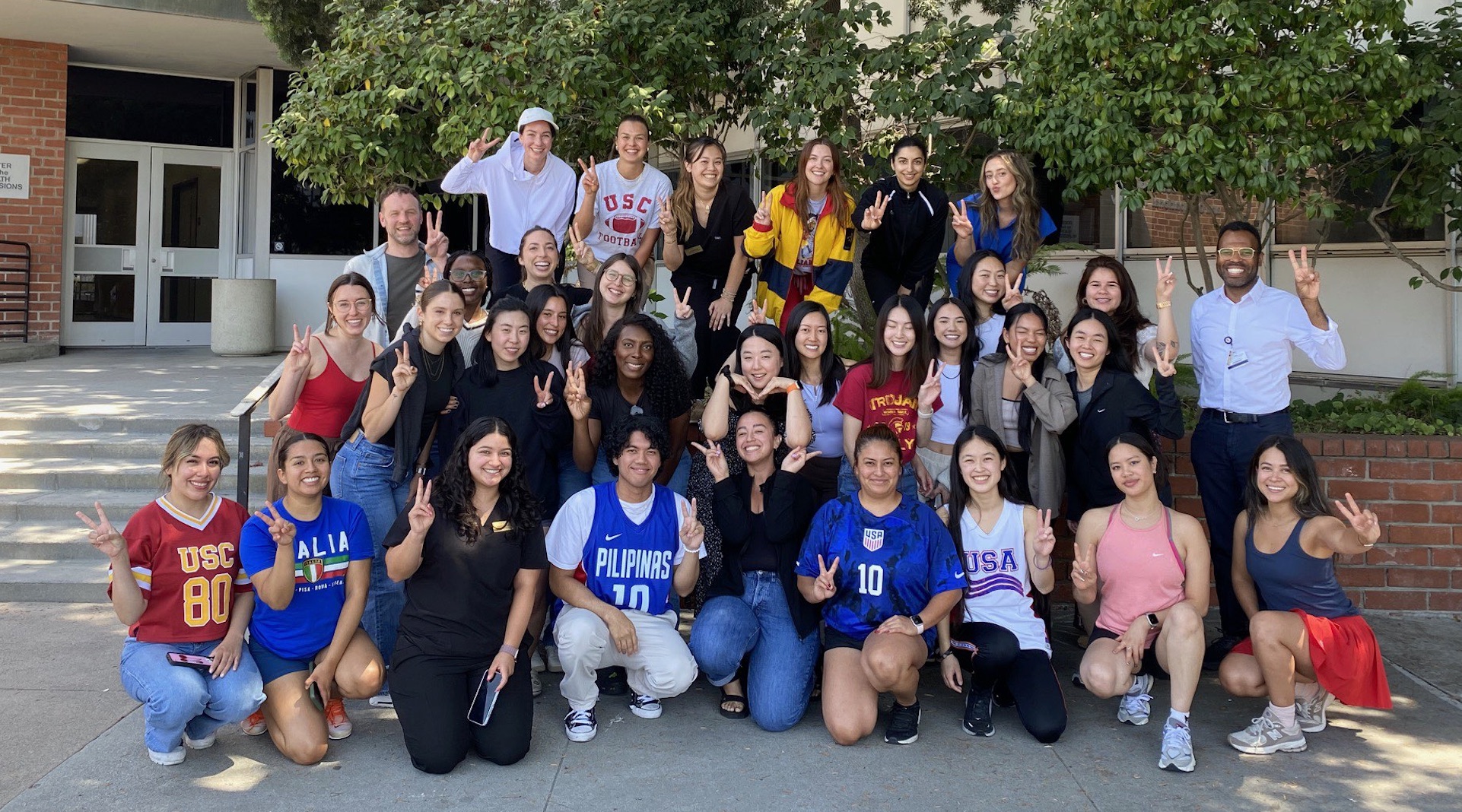
Summer ’24: Productive Aging and Geriatrics Immersion

Fall ’24: Adult Physical Rehabilitation Immersion
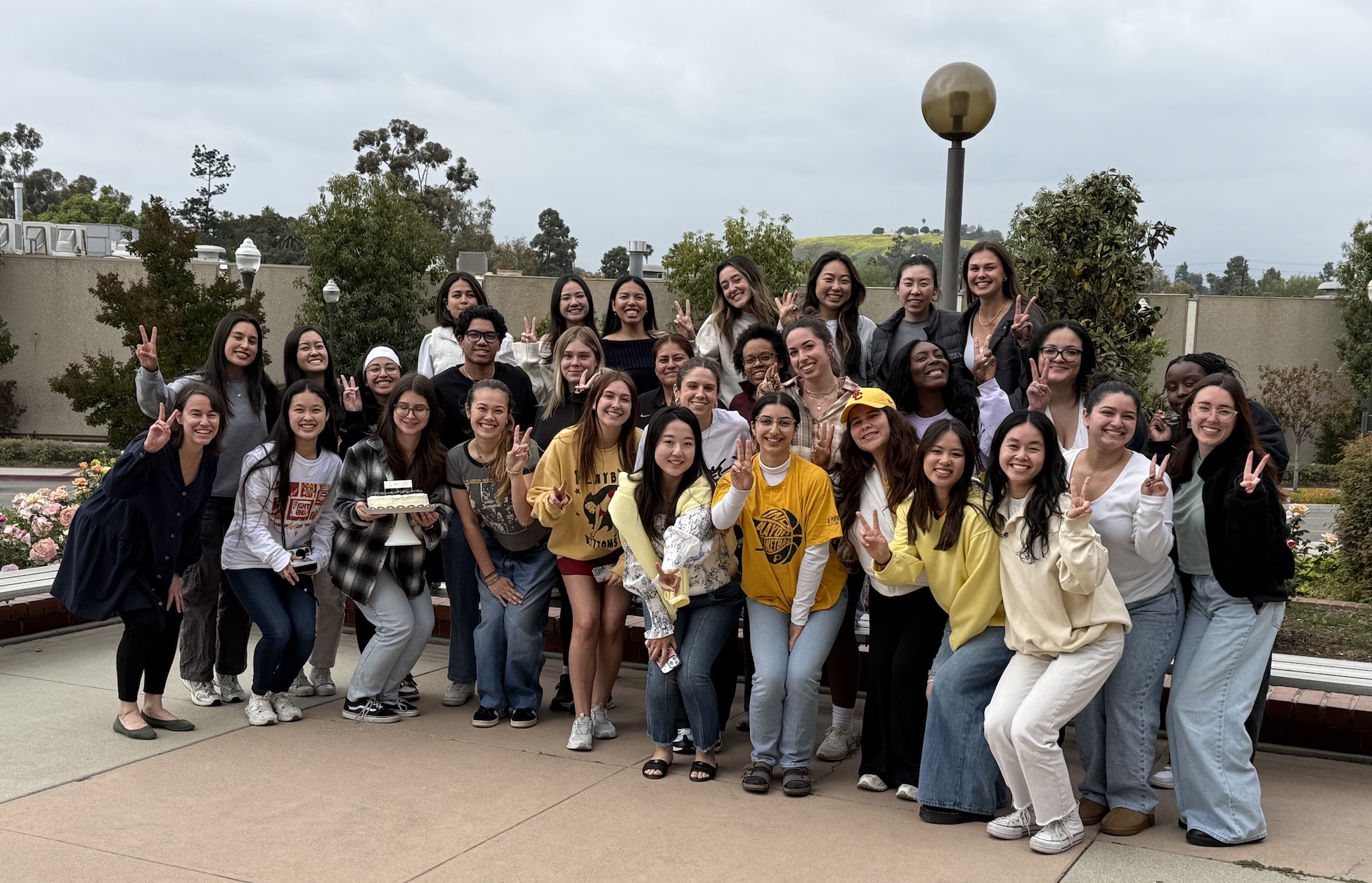
Spring ’25: Mental Health Immersion (and Last Day of Didactics!)
⋯
Social
Facebook Instagram LinkedIn TikTok YouTube