









Student Blog
Housing and Transportation

Location, Location, Location ⟩
January 17, 2017, by Kimmy
Housing and Transportation
When starting graduate school, housing is a big consideration. I have moved each year throughout my time at USC and have been fortunate enough to live by both the University Park Campus and the Health Sciences Campus. Everyone has different priorities, but for me, I specifically sought out places that came furnished, were located near campus, and created a welcoming environment for students.
The OT House is a convenient option full of future occupational therapists — what could be better?! Despite its name, it is an apartment building, not a house. It is located near UPC with a tram stop right outside. Students usually take the morning tram to commute to HSC, which makes it manageable to live without a car. A portion of the OT House is dedicated as a special interest housing community for occupational therapy students. The recreation room on the second floor is home to Engage, a student organization focused on engaging community youth in meaningful occupations. Because it is managed by USC Housing, the rental cycle aligns with the semester schedule of the OT program.
This year, I live in Currie Hall on HSC, which was just built last year. The facilities are new and the location is incredibly convenient; I can see the OT building from my balcony! Complete with a pool, hot tub, gym, and fire pit, Currie Hall is the place to be. Don’t worry parents — there is a study room, too, and it offers free printing! Aside from all the amenities, I especially appreciate the opportunity to live in a community full of health science students. Many of my OT classmates live just down the hall (or next door!), but I have also met students from other professional programs, as well. In fact, my roommates consist of an occupational therapy student, a medical student, and a gerontology student. We have learned from each other and become close friends as a result of living together.
These are just two student housing options, but there are surely more out there. If you have any questions, please do not hesitate to reach out to me or the other ambassadors!
⋯

Where Should I Live? Part 2: University Housing Edition ⟩
January 29, 2016, by Joe
Housing and Transportation
Earlier this week, Ariel wrote a great post about housing and her deciding factors when looking for a place to live. Her post is very thorough, so click that link to check it out. I’m chiming in to give the flip perspective as someone currently living in USC housing near the University Park Campus (UPC).
I’m originally from NY, but I’ve been living in LA since 2003, and pretty much lived all over it: West Hollywood, Silverlake, Downtown LA, and Monterey Park/San Gabriel Valley . . . and now back to USC housing. I don’t live in the OT house, but I live in another graduate student apartment building across the street from it. This gives me all the same benefits that Ariel mentioned (gotta love sharing books!), but I also get my own space in my one bedroom apartment. You can read up on more of the university housing options and amenities, such as internet, premium cable, etc, on the housing website. UPC is ~15 minute drive to the OT building (or take the USC shuttle, which is really convenient!), and is conveniently located next to several public transit options as well as freeways to connect to the other parts of the city.
I went to USC for undergrad, so I’m already very familiar with the campus and its resources. I first came back into USC housing last year as an RA (Resident Assistant); I really enjoyed doing the whole RA-thing with my sophomore kiddos, and the free housing and meal plan were a nice bonus. However, I decided to stay in USC housing for a few specific reasons:
#1 Easy Access to the University Park Campus
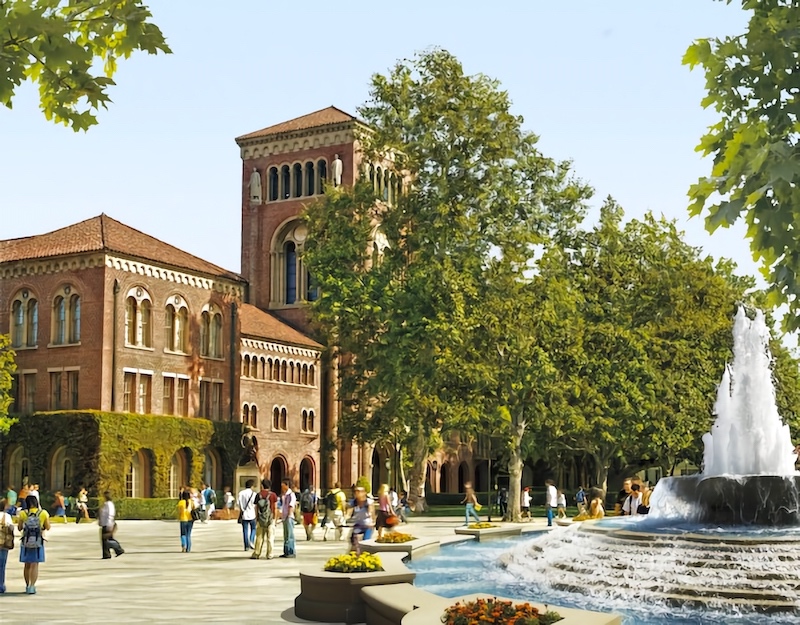
USC Unversity Park Campus
I love living close to the University Park Campus and all of its resources. There’s tons of art & cultural events, free movie screenings, sports matches, and all sorts of great events. I also volunteer on campus with the Office of Wellness & Health Promotion as a Wellness Advocate, facilitating meditation workshops; I also volunteer with the Lambda LGBT Alumni Association where I mentor undergraduate LGBT students in all areas of life, particularly professional development.
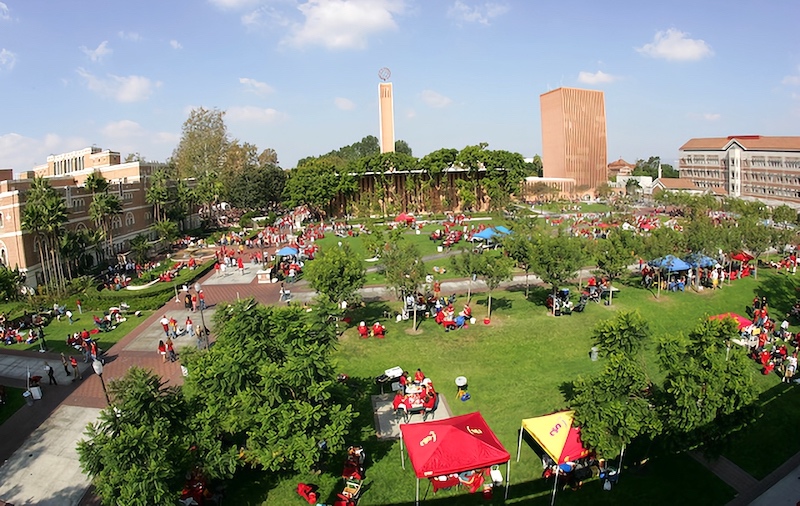
USC Students Tailgate for a Football Game
I just love the energy on this campus from all the different types of people (students, faculty, staff, etc), and the different disciplines/fields that people are a part of. Football tailgates and other social events are a great time, and we often walk over from the OT House en masse to the free events on campus. Through the Visions & Voices arts initiatives on-campus, I’ve seen spoken word performances, Ira Glass do a live podcast, live broadcasts of the Metropolitan Opera in NY, and seen free shows at the LA Philharmonic, Pantages Theater, and Ahmanson Theaters.

USC Pool
Oh, and I love swimming and the various athletic options at UPC. I’ve gone dancing with the salsa club, gone shooting with the archery club, and taken free yoga classes.
#2 Leasing Follows the Academic Calendar
This is a big bonus for me. Since I’m from out of town, I knew coming into the program that I would want to do my Level 2 Fieldwork experiences outside of LA. Since the USC apartments are tied to our academics, I don’t need to find subletters for the months that I’m out of town on fieldwork. They simply ran my lease August-May when I was in class, then let me out from May-August when I was at Level 2 Fieldwork. The same thing will happen this year, and for my OTD year, I don’t know where I’ll be because I haven’t confirmed a residency site/dates just yet . . . but whenever I do confirm it, the university will adjust my lease accordingly (whether that means staying shorter or longer).

#3 The Trojan Family

Trojan Football Game
USC students & alums form an incredible community known as the Trojan Family, and being near UPC is a great chance to feel a part of this larger Trojan network. Whether you’re near campus or out in LA, you’re a part of this amazing family alongside A. Jean Ayres, John Wayne, Shonda Rhimes, Neil Armstrong, over 400 Olympian athletes, among others. Make the most of your time at USC, and . . .
Fight On!
⋯

Where Should I Live?: OT House vs. Off Campus Housing ⟩
January 27, 2016, by Ariel
Housing and Transportation
When I was first admitted at USC for my masters in occupational therapy, my first thought was “I’m so friggin’ ecstatic!” My second thought: “Where should I live???”
As a bay-area native, I was looking at uprooting myself from my post-undergrad living situation (read: my parents’ basement) and relocating to sunny Los Angeles. The OT department offers a house (The OT House) for occupational therapy students to live in, if they so choose. Alternatively, I could find housing off campus on my own.
As a student ambassador, lots of newly admitted students ask me about what factors influenced me in making my own housing decision. Here are my thoughts:
Each housing situation comes with its own set of considerations. When making the decision, it’s important to think of which of these factors is most important to you.
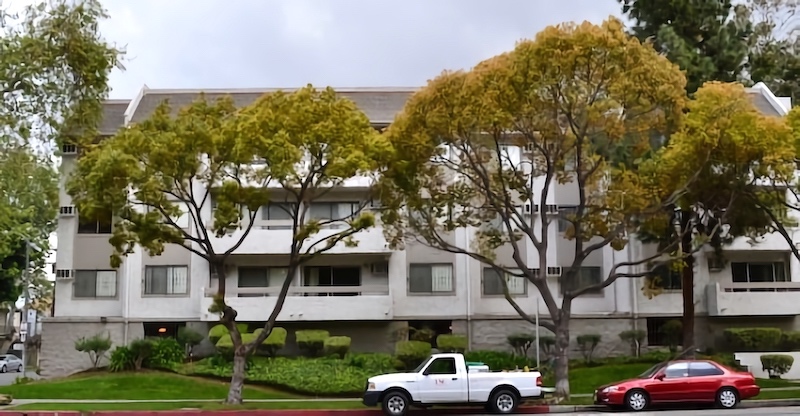
USC Centennial Apartments, where the OT House is located
OT House Considerations
- geared towards students, lease available by the semester (if desired)
- I wouldn’t have to worry about running around to open houses around LA to try and find the right spot/roommates
- built in OT study buddies!
- OT professor on my floor, who I could potentially make a great connection with
- facilities are nice considering the cost
- free shuttle that takes students to and from the health science campus (where we have almost all of our classes)
- opportunity to partake in weekly events with ENGAGE, a program that works with at-risk youth by giving them opportunities to participate in activities from arts and crafts to cooking to science experiments.
- right near the USC OT department’s Center for Occupation and Lifestyle Redesign (a beautiful Victorian house where we have department events and can study)
- close proximity to the USC main campus, which gives easier access to student life, campus events, screenings, performances, etc.
- a bit further from where we have classes every day
Off-Campus Housing Considerations
- flexibility in choosing which neighborhood I’d like to live in and who my roommates are
- (relative) flexibility in determining how much I would like to pay each month
- ability to live closer to the health science campus, where we have classes every day (or right next to the beach, if that’s your priority!)
- more homey environment/less of a dorm-like environment
Ultimately I made the decision to live in the Echo Park/Silverlake area; I really liked the feel of the neighborhood, found a spot with really great roommates (all USC alums!), and got incredibly cheap rent. I love it because I have autonomy, and I appreciate coming home to people who are not in our program, since we spend the majority of our days with our classmates! The apartment I chose is a 9-minute drive to the Health Science campus without traffic, and rarely more than 15 minutes even in heavy traffic.
In terms of actually finding housing, I didn’t have too much trouble finding a spot as soon as I started. I actually found a few fellow soon-to-be OT students through our class’s Facebook group and we all did some neighborhood-hunting together during the Admitted Students Reception weekend. The main neighborhoods I considered heavily (due to proximity to campus, cost, and “walkability”) were Pasadena, South Pasadena, Echo Park, Silverlake, Los Feliz, and Downtown LA. Friends of mine chose to live in areas like Culver City, Santa Monica, Venice, and Glendale. *Pro tip for incoming OT students*: Sometimes the graduating second year OT students post in the incoming class’s Facebook group because they’ll be leaving their apartments around the same time you guys will be moving in!
However you choose to approach the housing hunt, make sure you research the neighborhood and the opportunities available to you in each location. Talk to others who have gone through the same decision-making process, and don’t let yourself get too stressed out — we all found housing in the end!
⋯

Transportation In LA ⟩
November 1, 2014, by Bindi
Housing and Transportation Living in LA
Deciding where to live can be a confusing task, specifically when you’re new to USC and LA. The most important thing to take into account is transport and accessibility. Here are a few things to consider if you will be living at the OT House.
- USC has 2 campuses. Health Sciences Campus (HSC) and University Park Campus (UPC). For masters’ students all the classes except for field work and some elective courses will be held at HSC.
- OT house — Centennial Apartments is located on UPC.
- Students who don’t have a car in LA shouldn’t feel homebound because they don’t have a car. Make use of the free transport services available.
- The USC transport not only provides transport from residential areas around the campus to the campus but also inter campus (i.e., from UPC to HSC) with a stop at Union Station.
- They also have special services like the shuttles that go to LA Live every Friday and Saturday, and recently started an intercampus tram on the weekends as well.
- Campus cruisers — this is a free car service. If you are one of the many individuals who work, study or take classes at night, you don’t have to walk to your car or home alone. The USC Campus Cruiser Service offers either a walking or vehicle escort to your destination.
- Download the USC transportation app for cell phones. This allows you to track buses and cruisers in live time. It can save you a lot of time.
- There are many events hosted by the division and university. Do not hesitate to attend them because you don’t have a ride to the event. In my experience I have found everyone understands how difficult it is to get around LA without a car — so just ask people if you can carpool with them. Most will be more than happy to help.
This is LA, ensure your safety by maximizing use of the safe and free transport that USC offers!!
⋯

Application Season ⟩
October 13, 2014, by Leila
Admissions Community Housing and Transportation Life Hacks Videos
It’s been a while since I’ve placed my blogging lens on, but here I am! Our fall semester has made it to the midpoint and I’m sure most of you know application deadlines are fast approaching (at least for early decision). This past week I attended my first information session here at our division, but this time as a student ambassador! It’s crazy to think that nearly 2 years ago, I too, was a prospective student, nervous and excited to hear about occupational therapy at USC. I remember meeting Ricky, a student ambassador at the time, talking about his student experiences. For me, it was also refreshing to hear that he also had an undergraduate degree in business. At the time, I thought having a degree outside of the health sciences realm would hinder my application. Little did I know that the program welcomed (and continues to welcome) individuals with varying undergraduate degrees!
It was a great first time experience being on the other side at the information session, helping prospective students by answering questions and sharing my student experiences. I remember one individual asking me about my living situation and commute. For those of you that don’t know, I live in Chino, CA. It’s about 33 miles from the health science campus in Los Angeles, CA. I typically drive now due to my work hours, but some days I continue to take the metro. In fact, my first year in the program I primarily took the metro. For those of you considering our program but live or want to live in the surrounding LA area, there’s hope! I would recommend looking into public transportation. It definitely beats LA traffic!

LA city view from Metro
I thought it would be fun to make a mini video of my commute to LA Union Station.
For those of you thinking of OT school, in the application process of OT school or anywhere in between, I wanted to let you know to not give up! I know the process can be grueling at times, but you will get there. When I decided that I wanted to pursue OT, I didn’t even know where to begin! One note of advice I do have is to seek out support. Whether it’s through a family member, a friend, a professor, an OT student, an OT, a mentor, etc. Find someone that will support you through the process.
I remember meeting Bill Wong, a former OT student at USC and asking him to be my mentor! I literally found him through an OT blog post and emailed him asking if he could share his experiences at USC. It sounds a bit creepy, but he was more than willing to and luckily, he became my mentor in the process. (Make sure to do your due diligence on the person before connecting with him or her.) Bill and I still continue to meet on a routine basis, and it’s always great to share what is going on in both our lives.
Here’s an impromptu video Bill and I made this past Sunday. Enjoy!
Last but not least, I have been suffering some migraines and neck pain, most likely due to computer work strain. I went OT on myself and ergonomically optimized my workspace! 😀

⋯








 Subscribe | RSS