



Student Blog
Externships
ASBME Makeathon: USC interdisciplinary collaboration ⟩
February 13, 2020, by Kevin
Externships Getting Involved
This past weekend, I had the opportunity to attend the Associated Students of Biomedical Engineering (ASBME) Makeathon event as an occupational therapy mentor. The Makeathon is an energy-charge 30 hour hackathon event in which 12 teams compete to develop and prototype a medical device for a selected real-world population. Using a combination of programing, CAD design, and access to the USC fabrication lab, including the 3D printers, each team rapidly develops an innovative medical or therapeutic technology. A Makeathon or hackathon challenges teams to produce months worth of work in just several days, in addition to having the material constraint of using only the materials provided by ASBME. While this event is primarily for students in the USC Viterbi Biomedical Engineering program, the organizers took an interdisciplinary approach by incorporating mentors from the master’s and doctorate programs of the Chan Division of Occupational Science and Occupational Therapy and the Division of Biokinesiology and Physical Therapy.
This year, the teams were challenged to develop a rehabilitation device that promoted or enhanced physical therapy activity in a nonclinical setting for persons who are experiencing hand or wrist dysfunction post-stroke. Additionally, the device had to be intuitive and address one aspect of motor control including strength, dexterity, and joint extension. Due to my background in 3D modeling and education in occupational therapy, I jumped on the opportunity to take part in the Makeathon as a mentor for the teams.
From the perspective of occupational therapy, the OT students were able to provide valuable advice and suggestions to each team considering person, environment, and occupational of the potential user. During my mentorship time, I performed role plays to help the teams imagine the device in everyday use, provided anatomical explanations pertaining to post-stroke hand and wrist considerations, and advised on design aspects. The undergraduate biomedical engineering students were incredible! I’ve never seen such fast CAD design or Arduino programming. While the students were working furiously to produce their device, they took time to seek out the mentorship of the OT and PT students, which helped the teams understand the rehabilitation applications of their designs. Everything from electronic glove games to dexterity puzzles were made during the course of the competition.
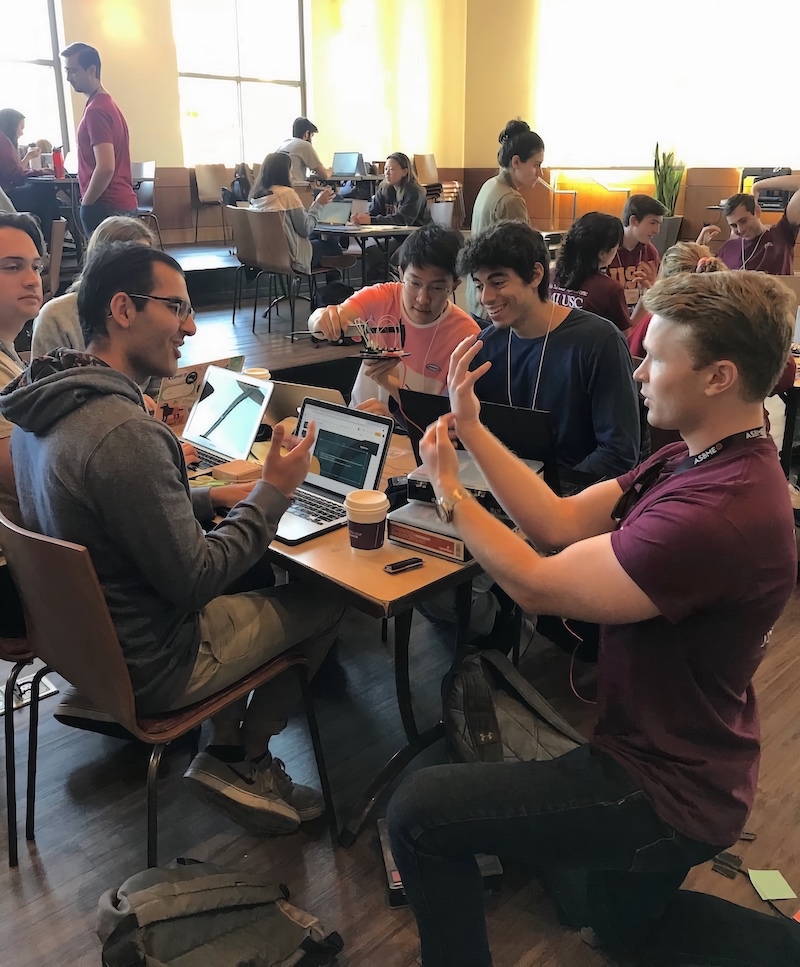
Explaining the extensor anatomy of the wrist and hand during mentorship.
Overall, it was amazing to see biomedical engineering, physical therapy, and occupational therapy students collaborating effectively to inspire truly creative innovation. Attending this event was a subtle reminder to the amazing minds and talent of the students at USC!
⋯
Ghana Part 2 — Facilitating OT and CBR Collaboration ⟩
April 8, 2019, by Joyce
Diversity Externships International
One of the coolest parts of this externship was the fact that we, USC students, were able to participate in one of the leader’s, Jenna Kobara, OTD project. As part of her OTD, Kobara is pushing for interprofessional collaboration between OT students/OTs and community based rehabilitation workers (CBRs). An equivalent of a CBR in the states are the Community Health Workers, many of whom work with spanish-speaking communities, promotores de salud, to support health education and prevention efforts. Similarly, in Ghana, CBRs venture out into the communities, identify individuals with disabilities, and work on educating and building rapport with the community to facilitate inclusivity throughout the village. The community in Ghana is not only the immediate family but also their neighbors!
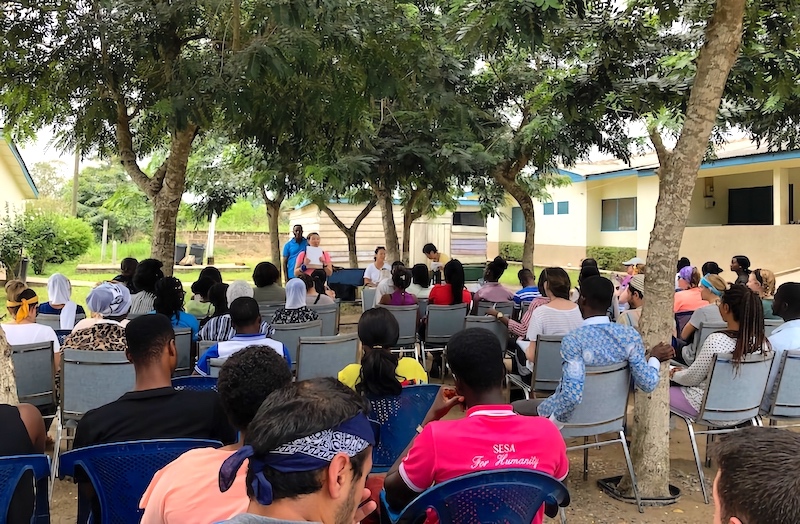
On the first day of this collaboration, USC students met with the Ghanaian OTs and the CBR students. I worked with my partner, Liliian, to facilitate a discussion about scope of practice and definitions around independence and therapy. Our job was not to lead the discussions but to open the doors for the Ghanaian students to participate and converse with one another. We were able to touch upon several points including the definition of independence, function, and ways for future collaborations.
After about 30 minutes of thoughtful conversation, we moved onto completing a task analysis of tie dying. For the CBR students, this was the first time engaging in task analysis.
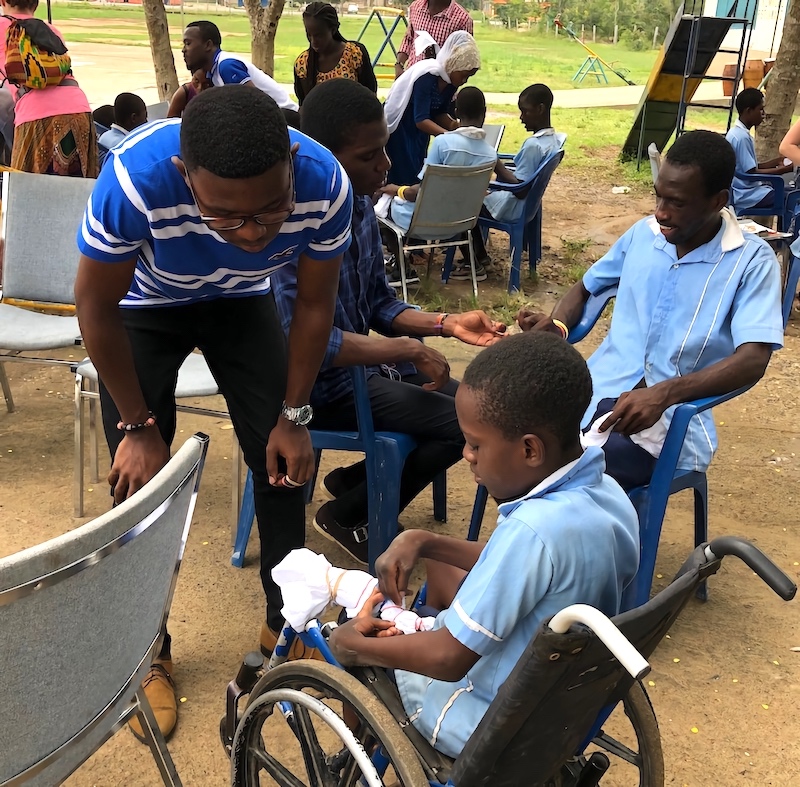
I realized that the Ghanaian students were grappling with this novice task of tie dying shirts! It was a new activity for both of them and I believe that while it was new, the students worked well together to task analyze the tying of the rubber bands around the t-shirts. After task-analyzing together, the MTC students came out to complete the activity with us! This was a great time for the Ghanaian OT and CBR students to interact with MTC students, not to mention, they were a lot more fluent in the local language of Fante so communication was so much smoother!
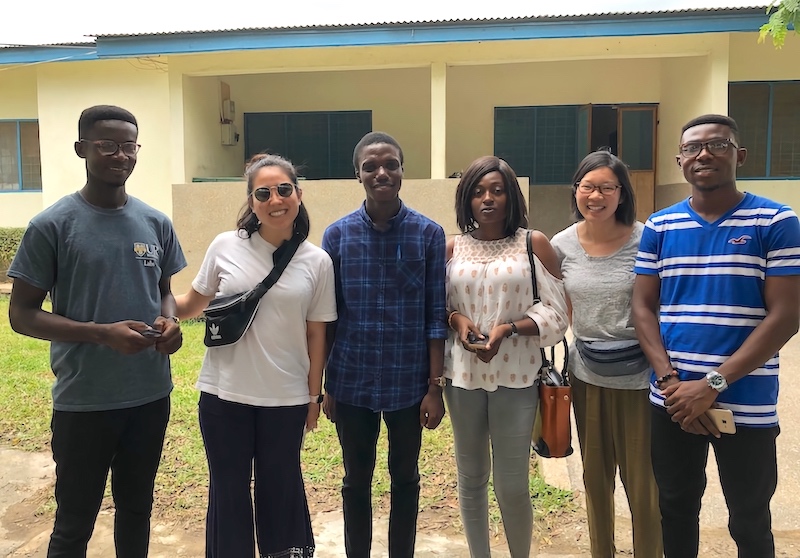
Seeing all of this unfold, I was in awe and have come to fully understood Bonnie’s mission, “To be out of a job”. Bonnie truly wants to plant the seed of collaboration between Ghanaian professionals to create the sustainability without the help of obrunis.
The next few days, my partner and I worked together with our matched CBR students in their specific community attachments to explore and learn about CBR work. As we engaged and problem solved with different individuals with various diagnosis (ie. CP, lower extremity pain), we made it a point to provide education that can carry with the CBRs for their future clients and to encourage the strength of collaborating with Ghanaian OTs.
It has been such a great experience to get to know our CBR students and how they have come to this profession. For some, it was not their first choice. In their univiersities, they may be placed into a major like occupational therapy or CBR. But even though it wasn’t their first choice to study this specific major, I have heard that many hearts were changed throughout their studies. It allowed students to change their perspectives on what the definition of disability, community integration, and function. I truly enjoyed and was inspired by the work of these students and the passion that they hold to increase awareness and acceptability of individuals with disabilities or illness into their communities. I even have pen-pals from Ghana to continue discussing about OT, CBR, scholarship, funding, NGOs through email. 😊
⋯
Refining My Leadership Skills — Externship In LA ⟩
April 3, 2019, by Melissa
Externships Living in LA
Hey everyone! I’m a bit late to the game, as I have yet to post about my externship experience, but this semester has just been so busy! Nonetheless, I wanted to talk to you guys about my decision to stay local for my externship, since the rest of the Ambassadors went abroad! I split my experience into 2 different opportunities, so read on for the specifics of each one!
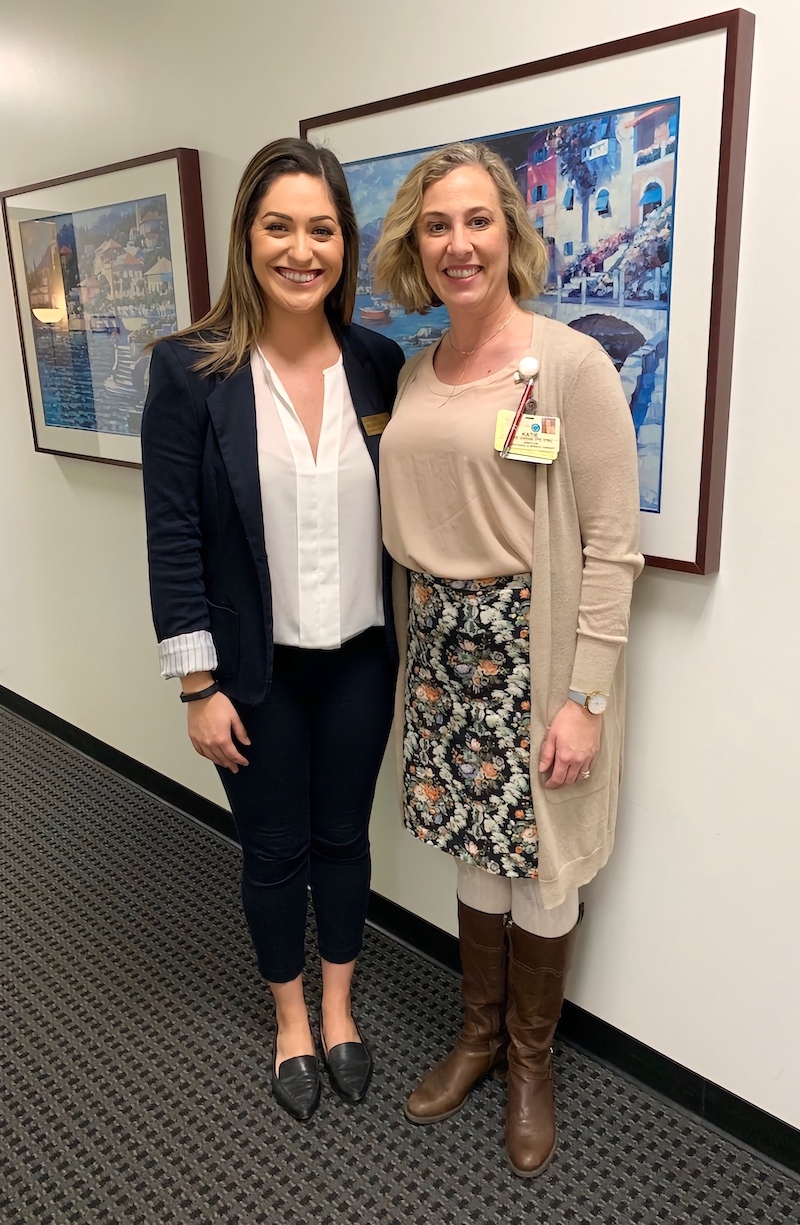
Shadowing Dr. Katie Jordan at the Chan Division of USC
Dr. Katie Jordan is one of the coolest and most inspiring people I’ve had the pleasure of meeting during my time at USC. She embodies the type of leader that I aspire to be one day, therefore I couldn’t pass up the opportunity to see how she manages to do it all. Before I go any further, I’m going to list out all of her roles (and I’ll probably miss some): she is a professor in our program, the Associate Chair of Clinical Occupational Therapy in the division, the Director of OT and Speech Therapy at Keck and Norris Hospitals, she works at AOTA on the Relative Value Scale Update Committee, and is the Co-Chair for OTAC’s Practice, Ethics, and Reimbursement Committee. She is also a mentor to residents going through the OTD program, as well as students like me that have an interest in advocacy. On top of all of that, she is an amazing mother and wife.
My interest in meeting with her started back when I was a first year in the program. Whenever I would meet with my mentor, Dr. Jordan’s name would inevitably come up as someone that I should get in touch with. For one reason or another, it never happened, therefore our leadership externship seemed like the perfect opportunity to do reach out and shadow her! I’m so glad that I did, because I learned so much during the short week I spent with her. I went to most of her meetings, got to listen to conference calls, and got to see what each of her roles really entail. It was amazing to see her transition in and out of each of her roles so flawlessly. No matter how crazy her schedule got, she always remained composed, which is something I admired. She speaks with authority but isn’t rude, and represents our profession really well. She is incredibly knowledgeable on all things OT — even on things we all wish weren’t a part of our jobs like dealing with billing and Medicare — and has a great ability of explaining things in a way that’s easy to understand.
Shadowing Dr. Jordan taught me about where we can go as OTs as far as leadership goes, but I also learned a lot about the intricacies of her roles, and what it’s like working with large groups of medical professionals that may have differing thoughts on various issues.
Shadowing Terri Nishimura, CEO of Pediatric Therapy Network
I met Terri Nishimura when she was part of a Leadership Panel for our Capstone course this Spring. During the panel, she was very vocal about our responsibility to advocate for our profession, and how becoming politically involved is also really important. As someone who has stayed away from politics for the last couple of years, this was hard for me to accept. However, she made a compelling argument. As the CEO of a non-profit organization, the services she’s able to provide and the funding for those services are all impacted by legislation. Although our state and national organizations do a great job of trying to keep up with all of the political changes that are occurring and advocating for our profession, it is still important for us to be involved as well.
She gave the example of how decades ago, she started a friendship with one of the councilmembers in Torrance (which is where PTN is located). Over the years, he kept advancing in the political world, until he became one of our state senators. There was a bill that was threatening the services OTs could bill for in pediatrics, so she reached out to him and asked that he not only not vote for that bill, but that he help to educate the other senators on the reasons why passing this bill would have negative implications for OT. He happily did so because of their established relationship, and fortunately that bill didn’t pass. She stressed that advocacy isn’t a one-and-done situation, but that we have to put in the time to develop strategic relationships. This story was really impactful for me, because I hadn’t given much thought to what we could do, therefore I was eager to learn more. I approached her after class to ask if she’d be willing to host me for the second half of my externship, and she happily accepted!
During my time with Terri, I got to learn a lot about what it’s like to be a CEO, as well as a leader in the pediatric community. I got to help Terri plan for a legislative reception for OTAC, where I got to meet with many OTs that hold leadership positions within OTAC! I learned who my local, state, and federal representatives are, and how to find that information if I ever need it. Before this experience, I felt like the world of politics was just something I did not want to get involved in. Even if I did, i felt like I wouldn’t know where to start. Thanks to Terri’s guidance, I now have a much better understanding of what we can do and how to do it.
Ultimately, there are pros and cons to going abroad and staying local for our externships. Going abroad can be expensive, but we get the opportunity to see what occupational therapy and healthcare look like in different countries! Staying in LA is not nearly as enticing as going abroad, but the connections you make are hopefully some that will last for a lifetime, and can help you when you’re venturing out into the real world as a new grad! In the end, the choice is up to you, but just keep in mind that there are plenty of wonderful opportunities no matter where you go.
⋯
Externship: Opportunity to Explore What I’ve been Interested ⟩
April 1, 2019, by Goeun
Externships
In the Leadership Capstone Course, I had a chance to participate in a two-week externship to learn communication and leadership skills. I went my leadership externship in the USC Davis School of Gerontology, National Resource Center on Supportive Housing & Home Modification, and Fall Prevention Center of Excellence. I chose the site as I’ve been interested in home modifications since I was in my country, Korea. I was working in a hospital as an occupational therapist and after patients were about to be discharged, they naturally planned to move to other hospitals, skilled nursing facilities, or rehabilitation centers. However, after their stay at other facilities, they need to go back to their homes anyway and I could not help patients to go through the process and build a bridge for them. That brought me interests in home modifications but since there hasn’t been any research or resources about it, I had less chance to explore.
Thankfully, now I’m here, and the USC Davis School of Gerontology, they are well-known for home modifications and fall prevention which is a key factor in home modifications. Moreover, from January, I’ve been taking the Executive Certificate in Home Modification Program from the USC Davis School of Gerontology, so I wanted to learn more from them.
During the externship, I did a lot of research regarding home modifications in general, assessment tools in home environments and fall prevention, health-related issues about Asian-Americans and home modifications related specifically. Also, I had an opportunity to attend a class, Housing, and Community Policies and Program. In that course, I visited an assisted living facility for older adults with dementia or other physical problems. The other thing that I did was interviewing and meeting various professions. I was able to interview gerontologists from different settings, an occupational therapist and a building contractor. By talking with them, I was able to listen to different perspectives and advocate what occupational therapy is especially for students who are not familiar with it. The good thing was that people that I interviewed already knew about occupational therapy and our roles as well. Lastly, I combined and synthesized what I have done and set goals in short-term and long-term.
It was a precious experience to learn more about what I’ve been wanting to know and I hope I can expand later in the future!
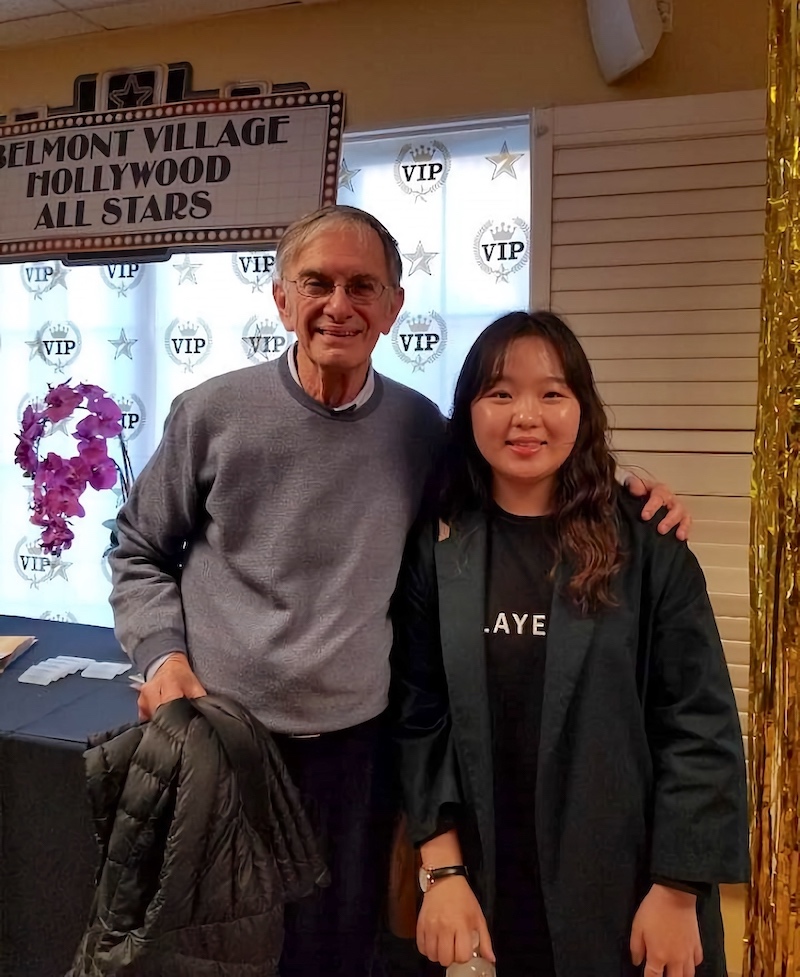
I took a picture with Dr. Pynoos who is a pioneer in home modifications.
⋯
Ghana Part 1 — Cultural Exposure ⟩
March 26, 2019, by Joyce
Diversity Externships International
Hello everybody! It feels weird blogging again because of the long hiatus but boy do I have things to share with you! As you probably have read about already, the second years were away on externships + spring break these past few weeks. While Jessica and Serena went to Australia, Melissa stayed local, I decided to go to Ghana.
I’m splitting this topic of externship into various posts because there are just so much that I want to highlight about this experience and I want to make sure to create the time and space that they deserve. To talk about my experience, I need to go a few years back to the beginning of it all . . .
Alumni and therapist, Bonnie Nakasuji has been coming to Ghana for two decades. In partnership with the Mephibosheth Training Center (MTC), a school and vocational training center for children with disabilities, Bonnie has garnered a close relationship to bring USC OT students. It was once a level 1 fieldwork opportunity now a leadership externship location.
So what was our purpose there? Firstly, Cultural Exposure.
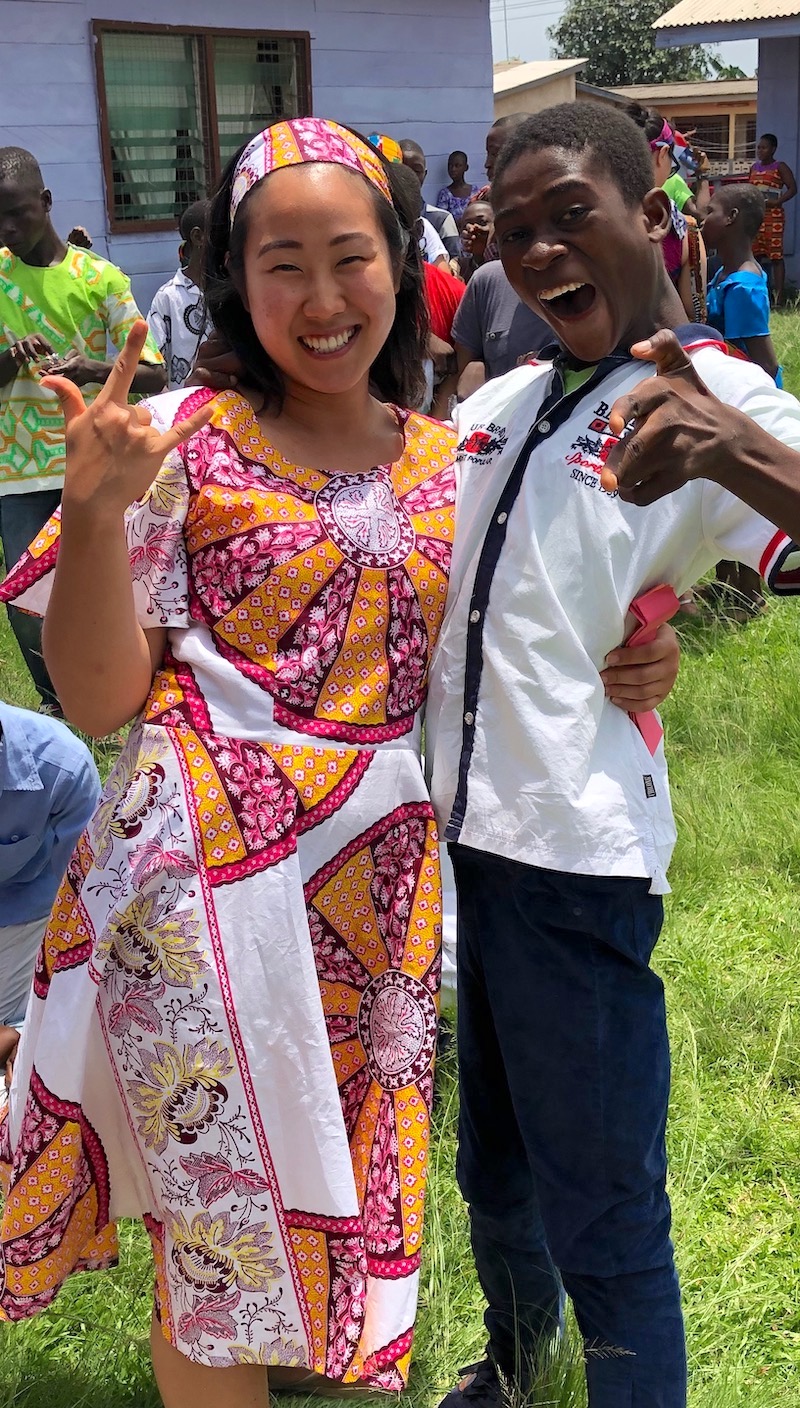
Bonnie as well as the other co-leading therapists, Jenna Kobara and Mariko Yamazaki, have taught us about the importance of sustainability and empowerment. We all have this righting reflex embedded within us, especially as future healthcare professionals, to fix things, whether that’s through offering advice or materials. Instead, the therapists encouraged us to be comfortable in the stillness of the uncomfortable. As Americans, regardless of whether we were Asian or Hispanic, etc. as Americans, we are all called “obrunis”, to which the term has evolved from meaning white person to a privileged, educated, rich person. It is our responsibility to acknowledge that privilege and the cultural differences when stepping into into another culture.
I strongly believe that short term trips like this are not served to drastically change a community, let alone a country’s way of life. Moreover, we as visitors are actually disruptive to this school’s daily routine. For two weeks, they had to accommodate the meals and living arrangement of a team of 40 Americans. I believe that this experience was meant for students to experience and become exposed to the different occupations in a different culture.
Bonnie gave a great example which made me reflect and think about how the things we do as Americans can make waves of effects that are often unseen. She told us how sometimes she feels uncomfortable bringing shoe donations to MTC. While it’s great that the students receive often new shoes to wear for free, we are disrupting the economic flow. Now these students and their families are not spending money at their local shoemakers and these shoemakers will feel the effects, challenging their ability to make money. In addition, how long can one pair of shoes sustain a child? It’s more powerful to work with individuals with what they have and where they are at, something that I have learned must be applied when working in a client-centered profession, meet your clients where they are at, not where you want them to be at!
When observing both the occupational therapists and physical therapists community consultations, I realized that they were very intentional in using assessments that could be understood regardless of culture and language barriers. They also provide education to the child, parent, caregiver, brother, sister, aunt, etc. so that this training and education can sustain the therapy even when they weren’t there.
In addition, I love how we as tourists were able to contribute to the economy. First, a sister of the principal of MTC, a seamstress came by MTC with her measuring tape and differently patterned fabrics. All students and therapists bought fabric and service in creating us individualized pieces. I was so excited for this part . . . to have a dress that will fit me all in the right places is something I have never experienced before!
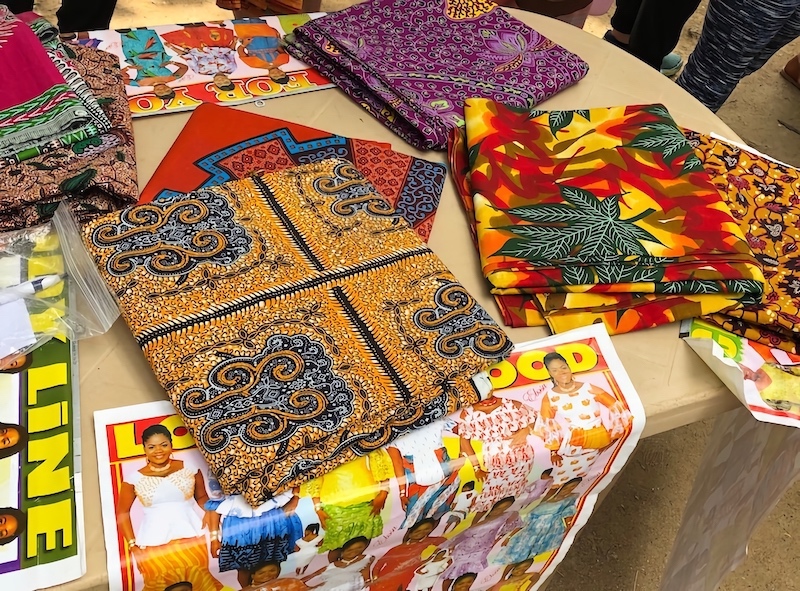
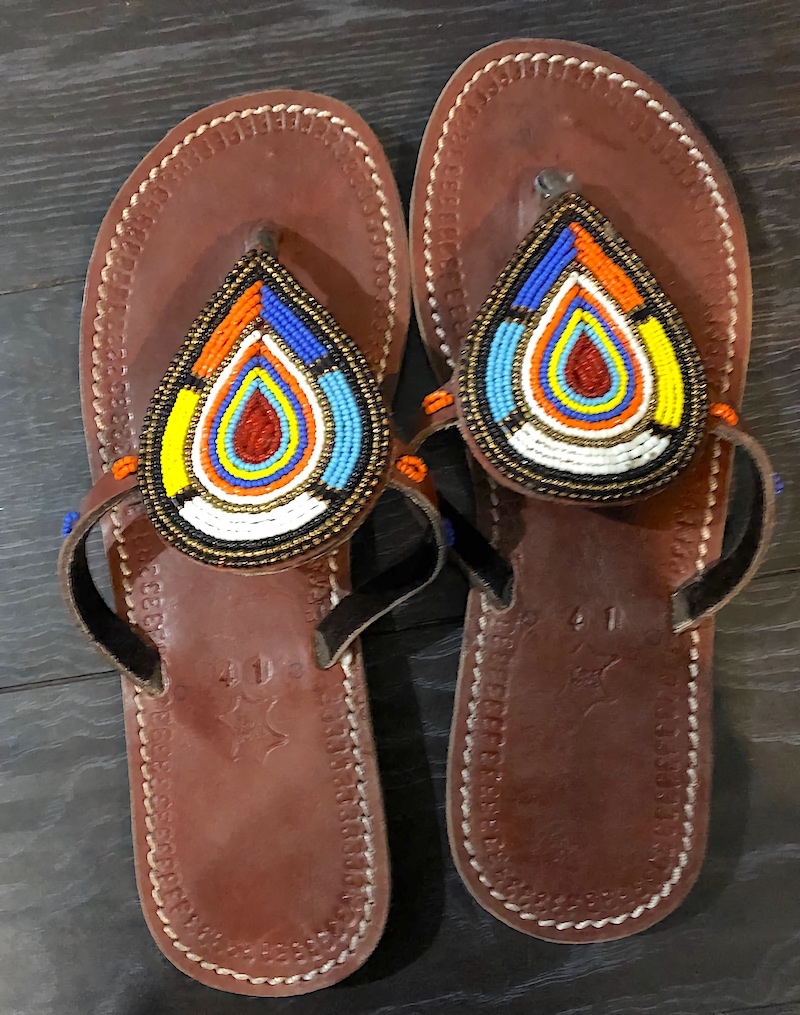
Secondly, at the end of our externship, we went shopping at the local crafts village. I bought some cute earrings and leather sandals. It was also fun to participate in their cultural norm of bargaining to which Bonnie added, “It would be rude to not bargain!” I had so much fun conversing with store owners, asking them where they got/made the items, learning their language, and bargaining for a lower price. What an experience!!
⋯
Social
Facebook Instagram LinkedIn TikTok YouTube