








Student Blog
Beginnings and Endings
Closing Time ⟩
May 4, 2021, by Liz
Beginnings and Endings Diversity What are OS/OT?
I knew this time was coming — final blog post and graduation! I cannot believe next week is graduation. These two years flew by so fast and I’ve seen myself grow so much. I’ve met lifelong friends, who can’t get rid of me now because they know far too much about me at this point. I am so excited to see where life takes us and all the amazing things we will do as OTs soon.
I never imagined getting a Master’s degree. If you took a poll at the schools I attended from elementary school to high school and asked “Which student in this classroom can you see in USC’s OT program one day?” it certainly wouldn’t have been me. I am grateful for all of my mentors from elementary school until now who encouraged me and believed in me when I didn’t. I am also thankful for my family, my amazing partner, and friends who’ve been there for me throughout this journey! I couldn’t have done it without you all.
Pictures speak volumes, so here are some of my favorites captured these past two years that make me happy. Prepare for photo dump!
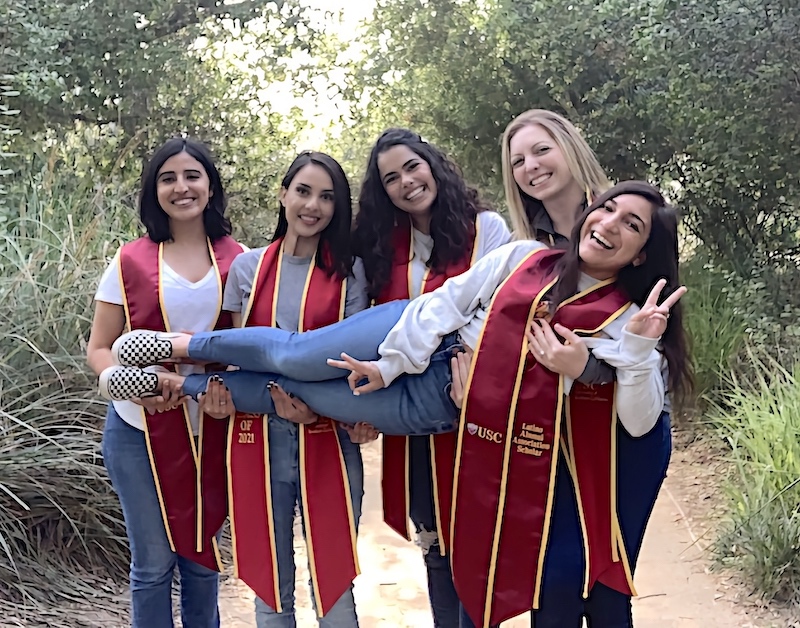
Pictured: the future’s greatest OTs and my best friends! From left to right — Stephanie Gomez-Rubalcava, Raquel Rios, Renee Reinberg, and Lorelei Ritter. We did it! We went from crying in the hot tub of our apartment complex after only knowing each other for one week our first summer to crying tears of laughter. Go us! We’ve shared so many beautiful memories together and I am beyond grateful for each and every one of you. Cheers to us!
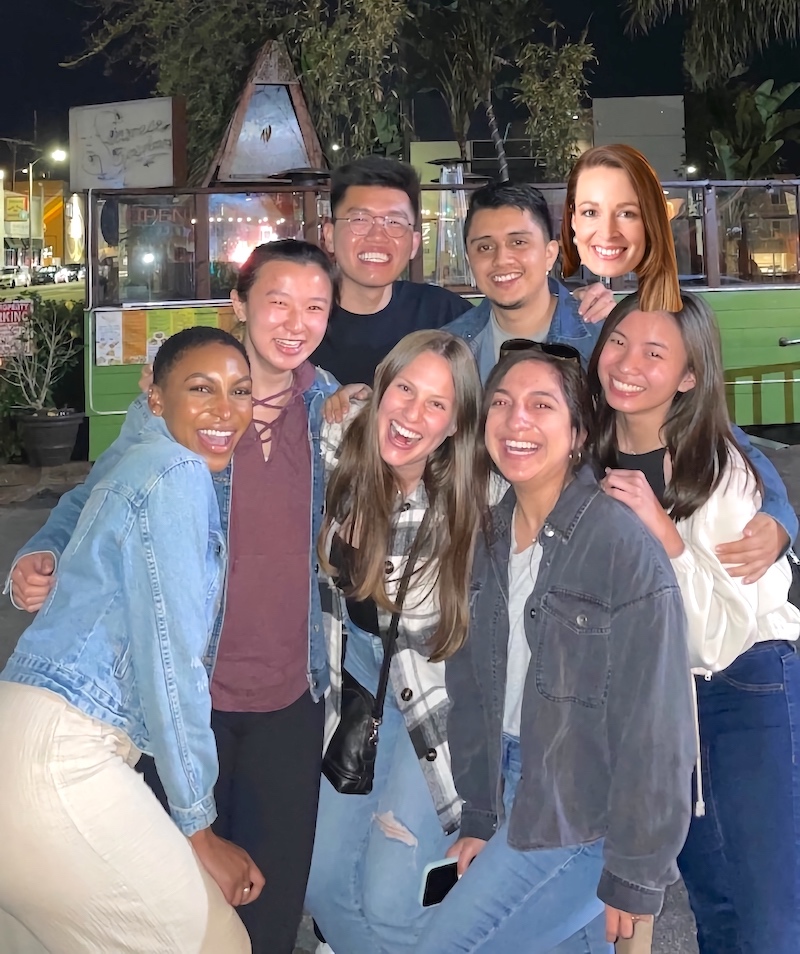
The greatest team in the world! Bethany, Calvin, Savi, Daniel, Yna, Lamoni — you are all such kind souls and I really wish we could just work together forever. Special thanks to the amazing Kim Kho — Kim, you are a gem. Ya’ll need to stand behind me on this one. Kim should honestly host a TED talk. You’ve pushed me to be myself, stay creative, and have always made our mental health a priority. A million times thank you! I will miss you all so much.
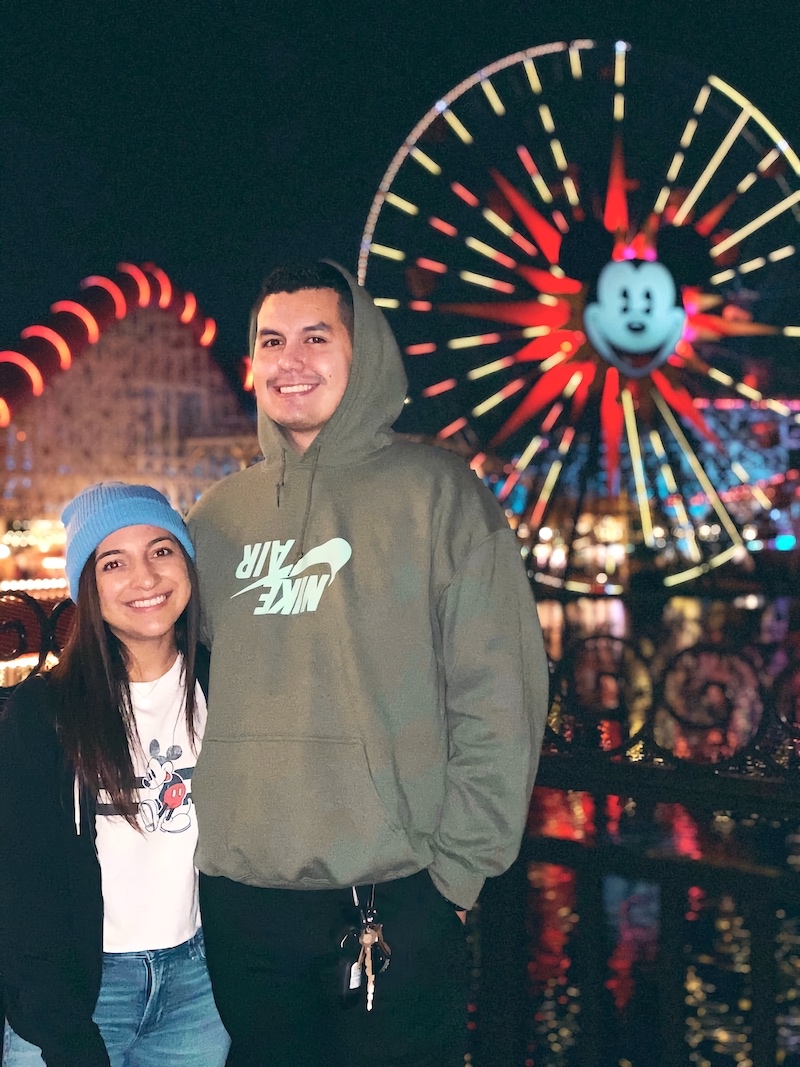
A FAQ I received this past year was “will I have time for a personal life?”. My answer is always, yes! Sometimes it’ll be a little challenging, but it’s very doable. Personal life consists of so many things — for me, it was making time to spend with my favorite person in the world. A very special shout out to a very special, patient, and goofball of a man my boyfriend, Josh. Thank you for being so supportive and working with my wild schedule!
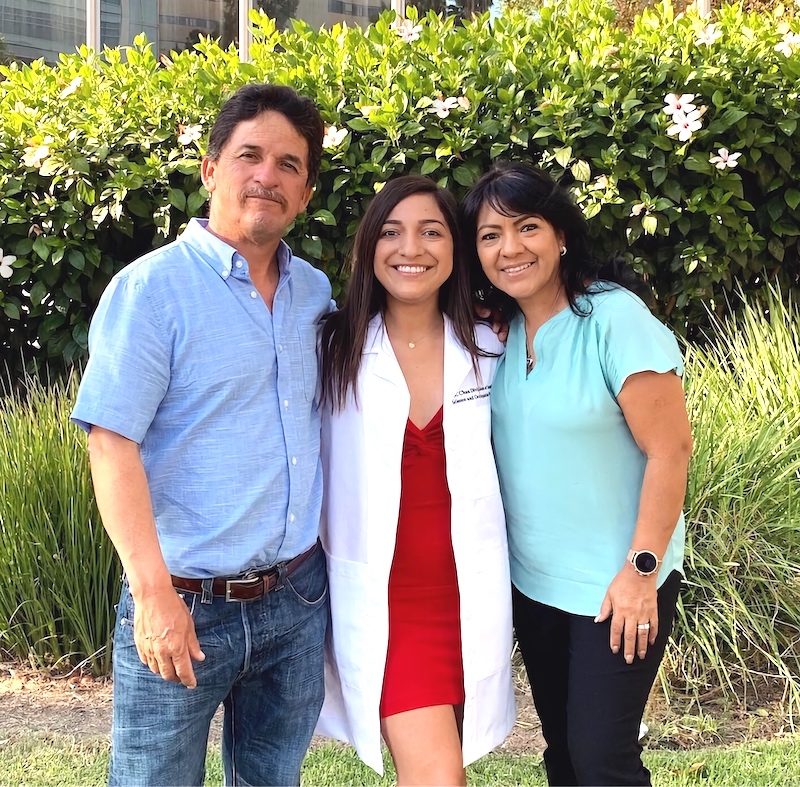
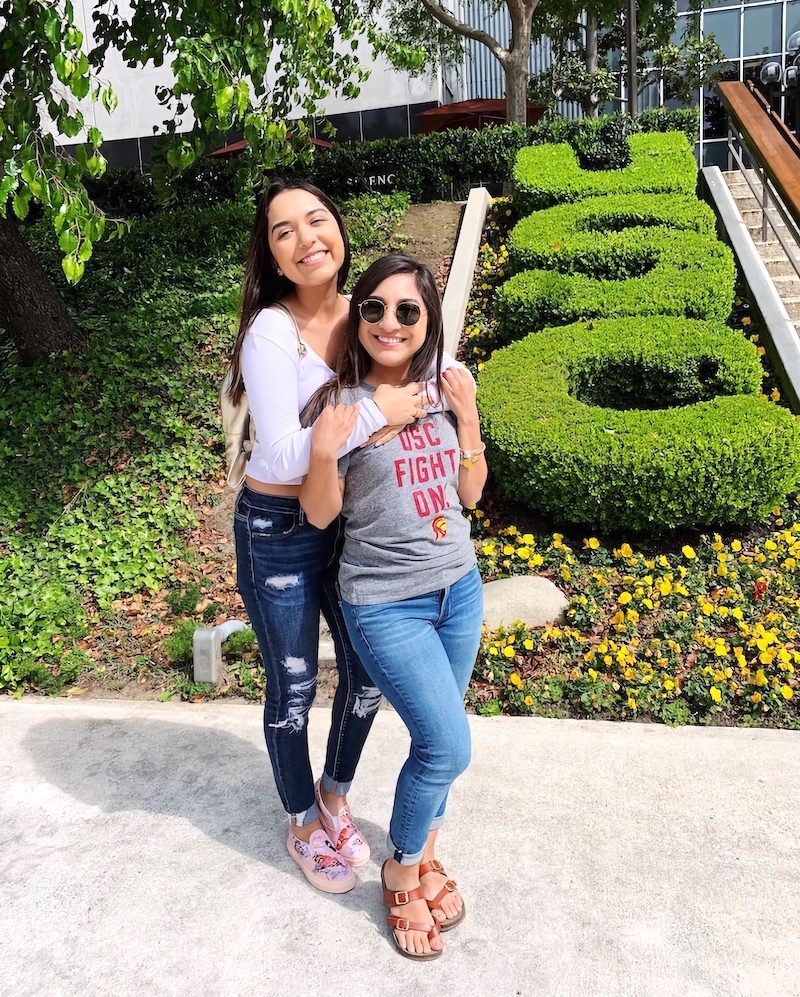
Pictured: my motivation for everything that I do! My mom, dad, and little sister. Which brings me to the point: anyone else agree it should be illegal for younger siblings to be taller? Anyway, thank you for shaping me into the woman that I am today. You came to this country with nothing, only to give me everything. You painted my wings, we did it.
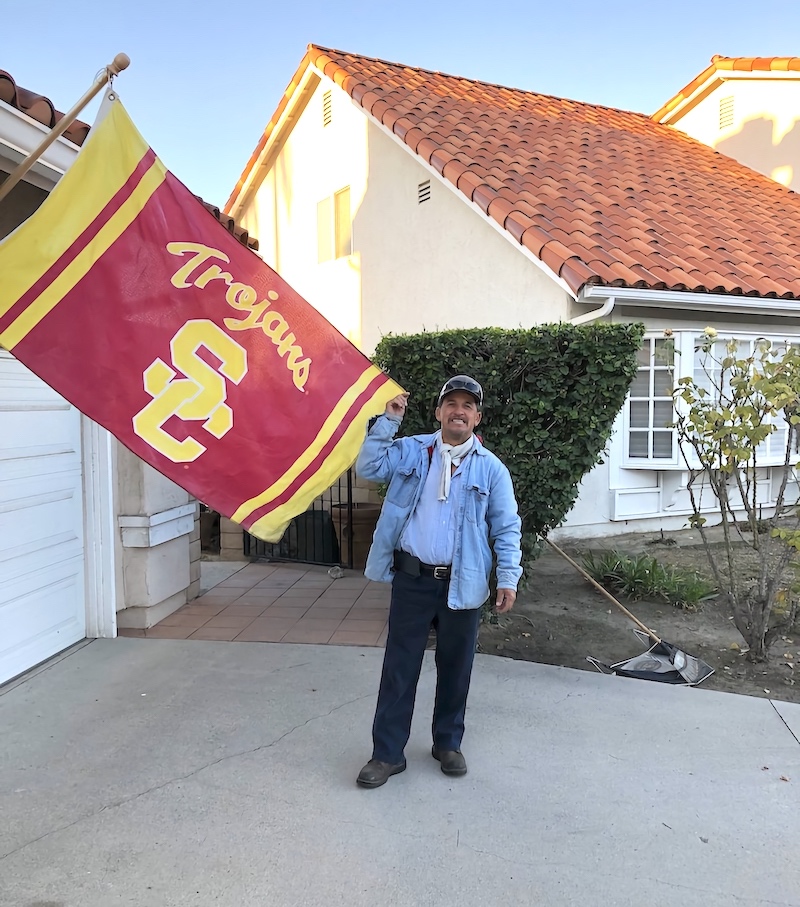
Bonus picture of my dad. He sent me this picture during my first week in the program — proudly posing at work with his boss’s USC flag. This picture keeps me going. You’ll have your own soon, pa!
Now, the terrifying, yet exciting question: What’s next?! After thinking long and hard, I decided not to go through with the OTD. Financially, it is not within my reach at this moment in time. And, I think it’s time I help my family. So, although I REALLY hope to teach some day, now’s not my time. But, I am hopeful that I will find my way back to reach this goal. For now, I am excited to help provide my parents with health insurance and lift some weight off their shoulders.
My fieldwork educator from the Spring mentioned he may have a position available for me after I get my license, so I will be staying in touch with him. As you all know, I had a blast! So, I am looking forward to going back and some day taking in a fieldwork student 😉 I am excited for what’s to come. And lastly, thank you to all the faculty at Chan whose made my experience truly unforgettable. Fight on!
⋯
Good Days on My Mind ⟩
May 3, 2021, by Calvin
Beginnings and Endings Diversity What are OS/OT?
Wow, time sure does fly by, huh? I shouldn’t be surprised at this point, but graduation happening next week still seems so crazy to me! Almost two years have gone by since I officially started this program and so much has happened since then. I’ve made amazing, life-long friends, overcome so many obstacles to get here, developed an even stronger love and passion for occupational therapy, and I’m happy! I’m happy with where I am today and I’m happy with the person that I’ve grown to become.
And, of course, I couldn’t have gotten this far without my support system — the people that have truly made my experience here special and made me feel like I belong.
To my friends: You know exactly who you are!!! Thank you for always being there for me and for making graduate school such an unforgettable experience. Thank you for the late-night talks, the vent sessions, the hangouts, the crying and the laughter, and the what-the-heck-am-I-going-to-do-in-the-future panic conversations 😅. Thank you for everything, and I can’t wait to celebrate with you all very very soon 😊!
To my ambassador team: We really put in the WORK this year and I’m so blessed to have been able to collaborate with all of you. I really wish we could’ve been together in person, but I’m grateful that we made it work out and even found time to hang out with each other recently! If it wasn’t for this student ambassador position, I feel like I wouldn’t have had the chance to talk with y’all as often, and for that, I am beyond grateful 😊. AND thank you, Kim Kho! You have always been such a supportive, caring, and understanding supervisor while having to juggle so much on your plate. You’ve really helped make my ambassador experience memorable and it’s been wonderful getting to know you! Also, big thank you to the Admissions Team, Dr. Mike McNulty, Bianca Ojeda and Paul Bailey — what would we do without all of you?!?!
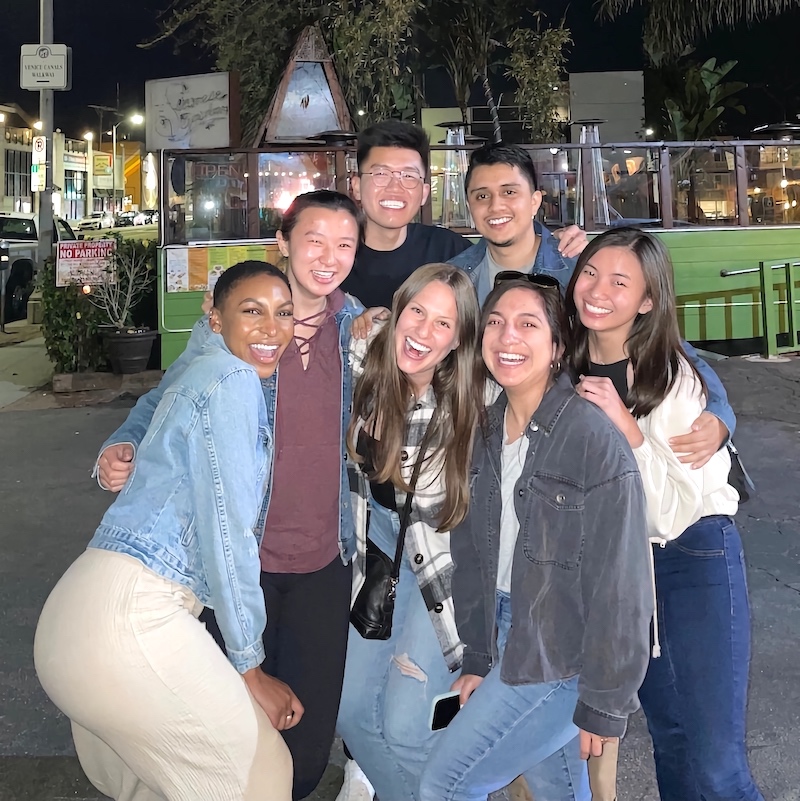
Name a more iconic team . . . I’ll wait 😤
To my mentors: I’m so thankful to all of you — faculty and student mentors alike. Graduate school was a scary thing to jump into, but because of your unwavering support, I was able to navigate it with more ease and develop that sense of confidence and belonging. I also really want to give a huge thank you to Dr. Daniel Park. Danny, you’re just the best! I’ll never forget the day when I first met you and was introduced to your kind and approachable personality. I was just a lost, new student that was interested in participating in Global Initiatives, and you welcomed me with open arms. I always feel like everything is going to be okay when I talk to you, and you’ve absolutely made a positive impact on my experience here. Thanks so much for your guidance, mentorship, and friendship, Danny!
To my family: I don’t think saying “thank you” is ever enough to express my gratitude to you. You’ve worked so hard to get to where you are and help me get to where I am — I’m just forever grateful for everything you’ve done for me. Although I rarely say it, I love you, and even though you still don’t really know what occupational therapy is 😂, you’ve been a huge part of my journey and I could not have done this without you. Thank you and love you!
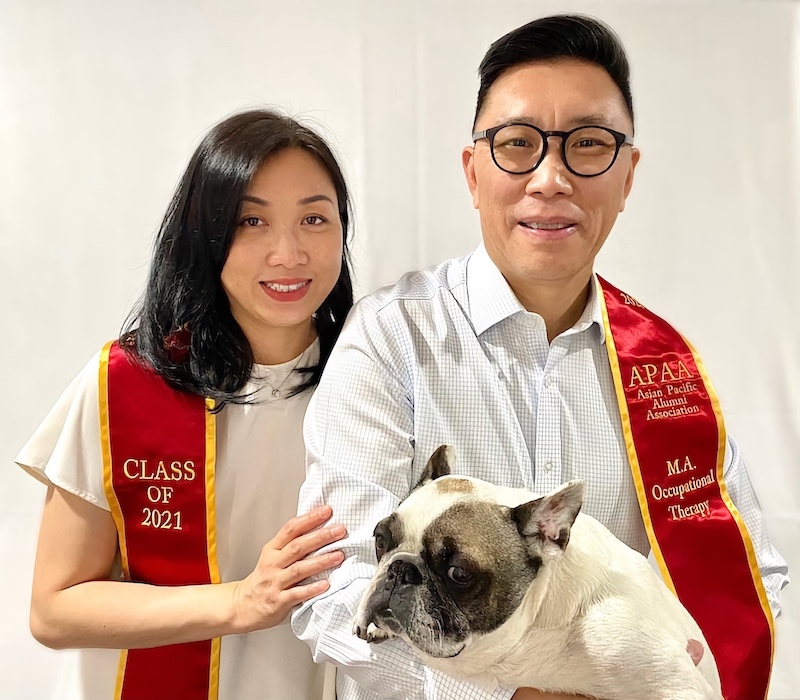
Mom, Dad, and Henry ❤️ 💛 ✌️
My time spent in the Master’s program has been incredibly meaningful, and I know that good days will continue to be on the horizon. However, this definitely isn’t goodbye yet haha! I’ll be sticking around for one more year to pursue the policy and administration track of the occupational therapy doctorate, completing my residency with the USC Chan Division China Initiative!
As sad as I am that this is the last time I’ll be writing these blogs, I’m super excited for this opportunity and I can’t wait to see where this journey takes me! Thank you to all of you for reading my blogs and watching my videos. It means so much to me and I hope that we can all cross paths someday. For now, stay well, take good care, and I’m wishing you all the best! Fight On!
⋯
Flashback To My First Year ⟩
July 24, 2020, by Calvin
Beginnings and Endings Community What are OS/OT?
I remember walking onto the Health Sciences Campus on my first day and being really nervous about how I was going to meet new people. I remember I was almost late because I underestimated traffic, but I ended up making it even though I was dripping in panic sweat haha . . . I remember the insane amount of times when we would all introduce ourselves because there were just so many people to meet! I remember taking classes in the G-37 Auditorium, a.k.a. the frozen tundra in the CHP building, where I could always rely on the A.C. to be blasting. I remember how accomplished we all felt when we finished up our first summer semester. I remember starting my first immersion in mental health, engaging in my first Level I Fieldwork, and just spending good times with friends in the program! I remember it all!
Okay, Calvin, we get it; you remember stuff! What’s your point? Well, in just one year, I was able to experience and learn so much about the profession, myself, others, and beyond. However, I would have never guessed that we would all be where we are right now. It’s been a relatively challenging past few months with everything going on, but reflecting on the past year has really helped me stay motivated. These memories remind me why I’m here, and I’d like to take you all on a trip down memory lane to share some with you!
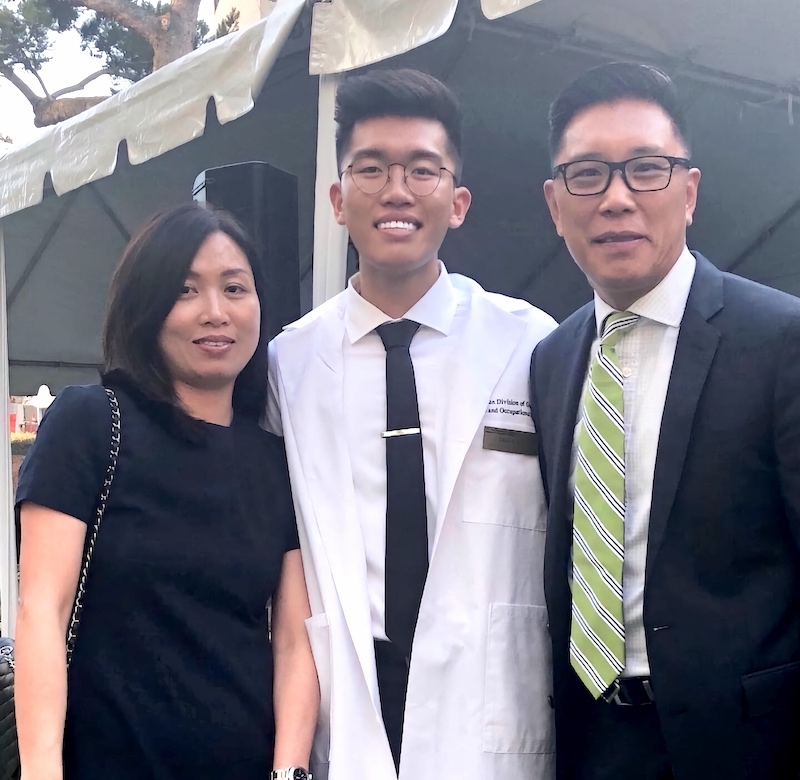
My parents and I at the USC Chan 2019 White Coat Ceremony.
The ones who make every impossible in my life, possible: my parents. They’ve always supported me in every endeavor and I’m forever grateful for them! Big love to my #1 fans!
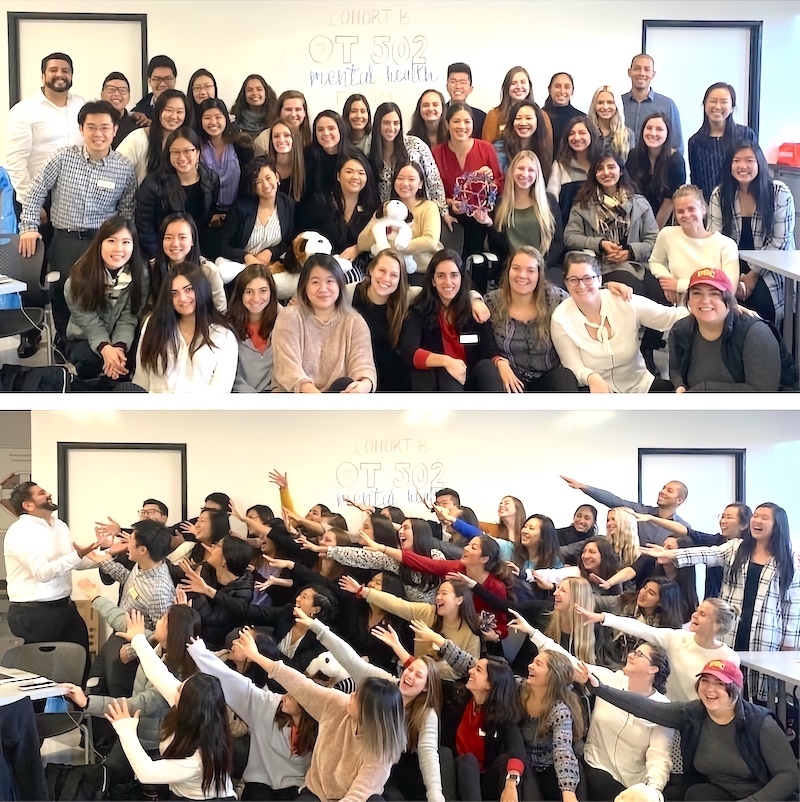
Top: Us acting natural! | Bottom: Us reaching towards Dr. Celso Delgado Jr. because these were our last few weeks with him in the mental health immersion 😢.
The best cohort, Cohort B(EST)!!! Sorry, I don’t make the rules ¯\_( ˘ ˘̯)_/¯.Huge shoutout to this phenomenal group of individuals! They are truly some of the most inspiring, funny, genuine, and authentic people I’ve ever met!
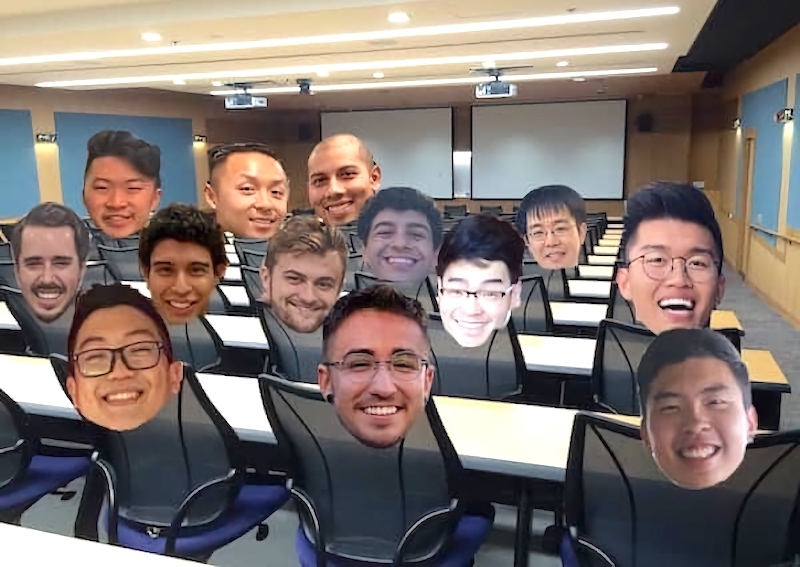
Just some BrOT Master’s students ~chilling out~ in the G-37 Auditorium! Photo credits: Christopher Chu MA ‘21.
All I can say is that I love this picture and this group of people LOL! By the way, you can actually see more of the division, virtually, thanks to the USC SMART-VR Virtual Reality Tour App that was co-created by Dr. Sook-Lei Liew!
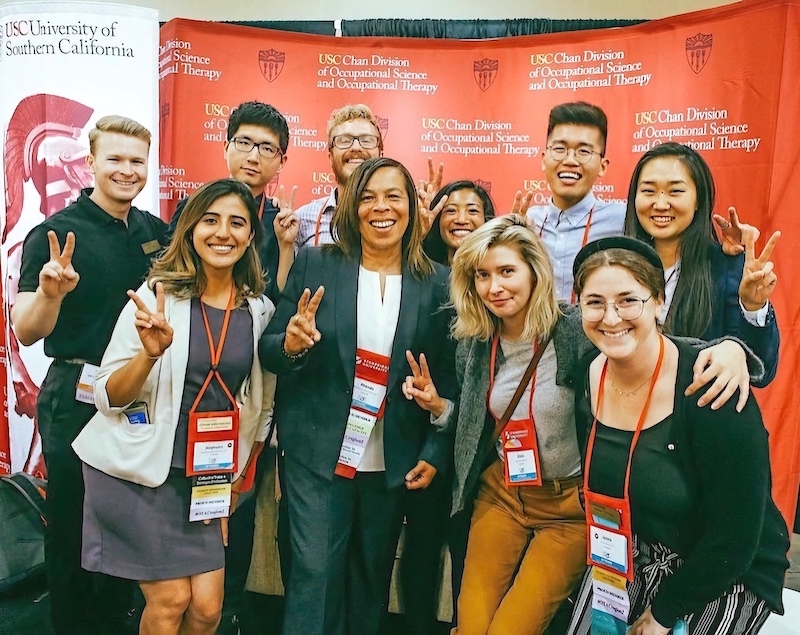
USC Chan students and alumni at the 43rd Annual OTAC Conference in Pasadena, CA.
This was taken at the 2019 Occupational Therapy Association of California (OTAC) Annual Conference. This was my first OT conference ever and it was such a great time connecting with others, attending a variety of presentations, and just being surrounded by so many OT leaders!
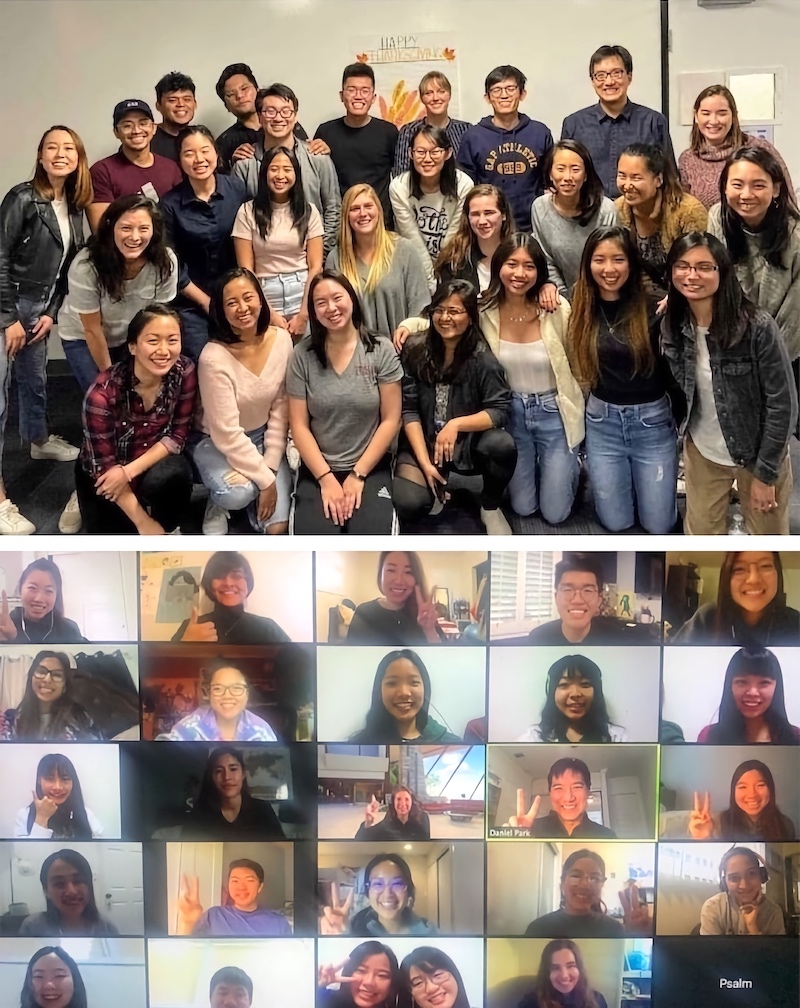
Top: Global Initiatives Thanksgiving Dinner with BS-MA students, MA-1 students, MA-2 students, OTD students, and faculty. | Bottom: A virtual Zoom meeting between the USC Chan community and students from Kaohsiung Medical University in Taiwan.
The Global Initiatives Team has always been so welcoming and they’ve provided multiple opportunities to learn and have dialogue about a variety of international topics. I’m incredibly thankful to Global Initiatives for fostering such a vibrant community and for making my first year experience an unforgettable one!
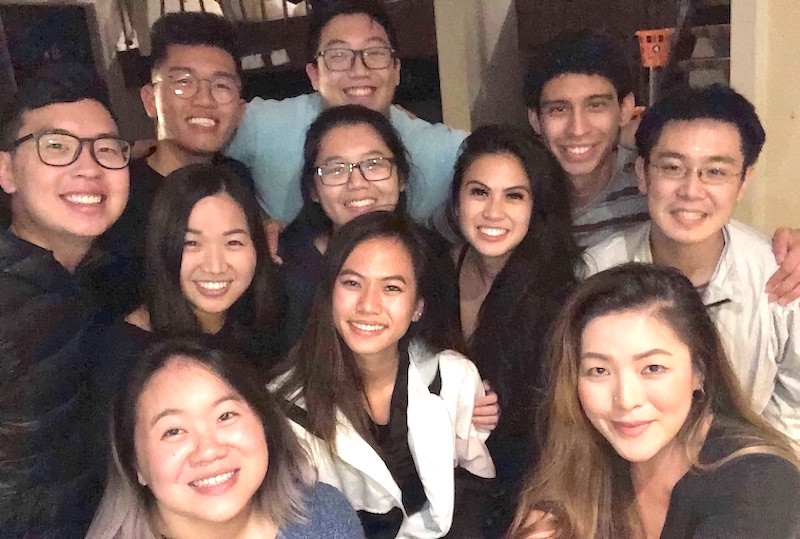
Spending some good time with my OT classmates outside of class 😊!
I hope that this gave you all a good glimpse into what my first year in the program was like. Life is very different right now, but that shouldn’t stop us from making new and lasting memories!
⋯
Before I Let Go . . . One Last Blog ⟩
May 14, 2019, by Serena
Beginnings and Endings Diversity Videos
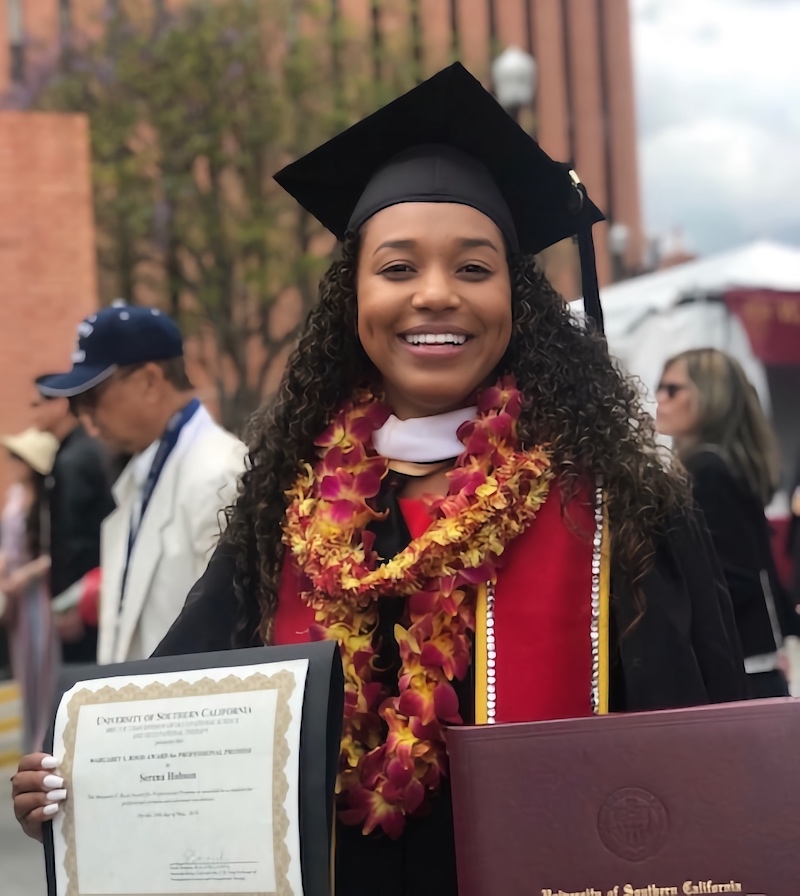
It is nearly unbelievable to think that my time in USC’s Occupational Therapy Master’s program is coming to an end. And Before I Let Go . . . I had to post one last time about my graduation ceremony and a surprise Beyoncé dance video that is near the end of the blog!
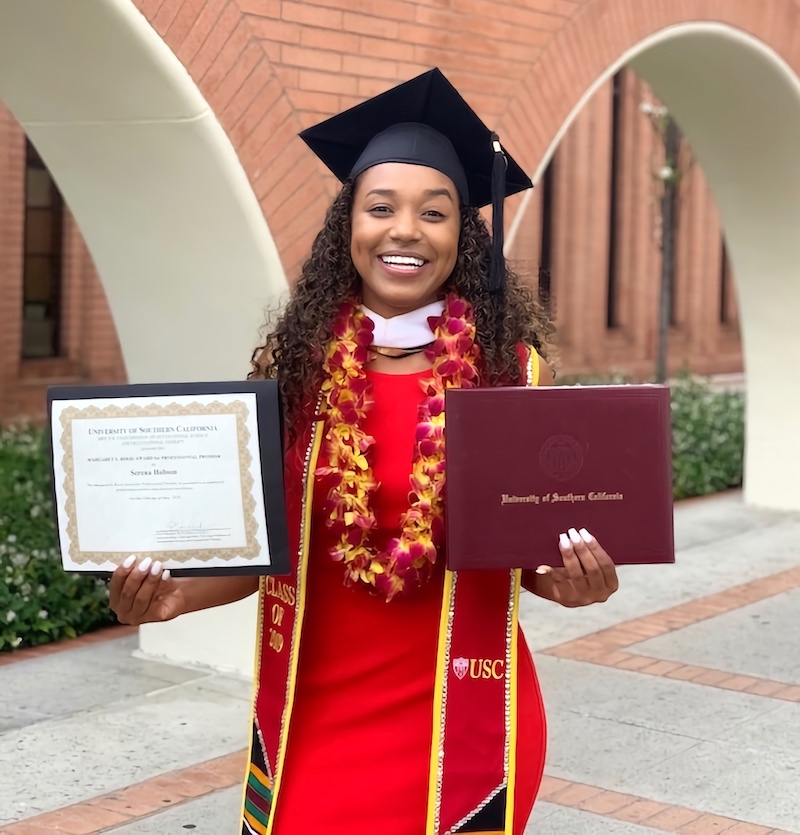
At USC’s Occupational Therapy Graduation ceremony in a feeling of utter bliss and joy after receiving my master’s degree and Award for Professional Promise and Personal Excellence
It is a bittersweet feeling to come to the end of a program that has given me so much! One of the most difficult parts is saying goodbye to the friends and mentors that I have made while in the program.
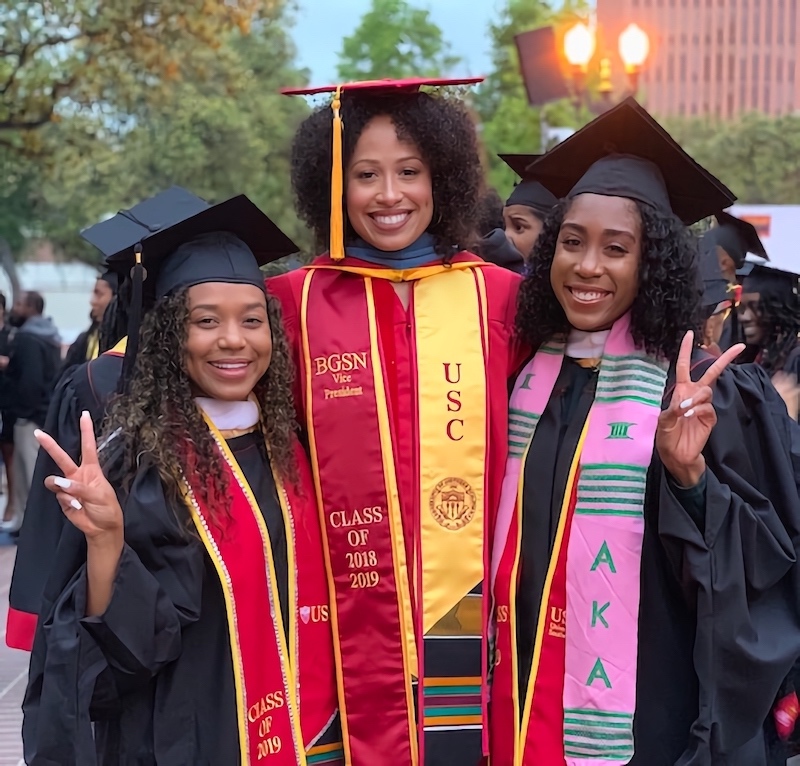
At USC’s Black Graduate ceremony with Miriam Brown and Natasha Strickland
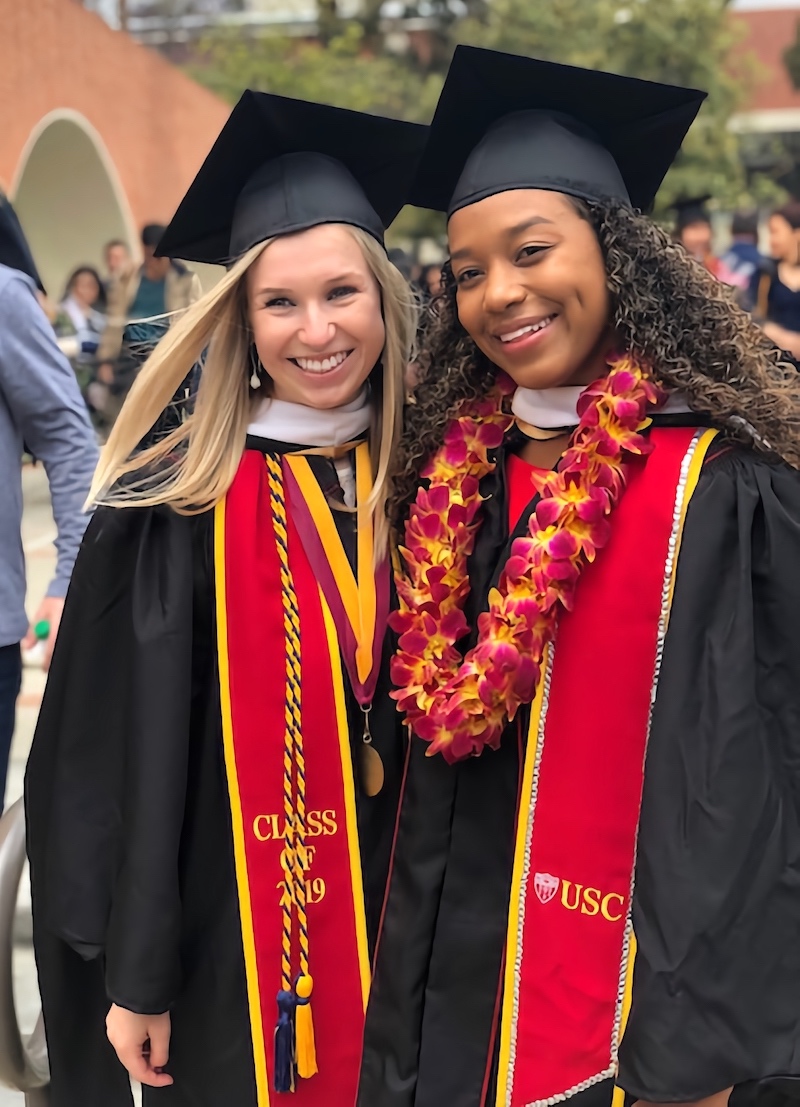
At USC’s Occupational Therapy Graduation ceremony with another student ambassador and friend, Jessica Pederson
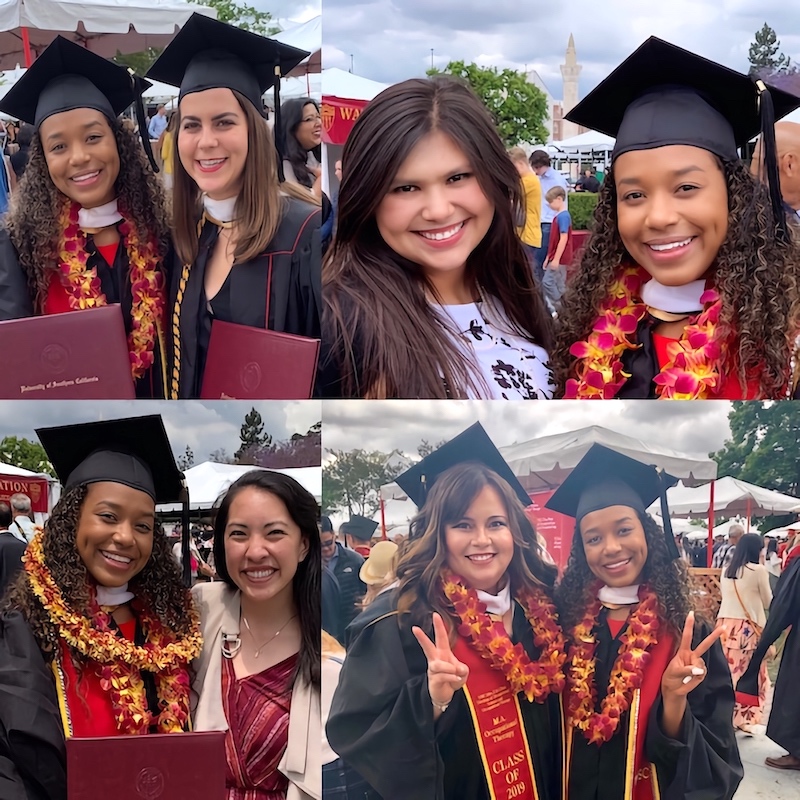
With a few of my friends and cousin at USC’s Occupational Therapy Graduation ceremony
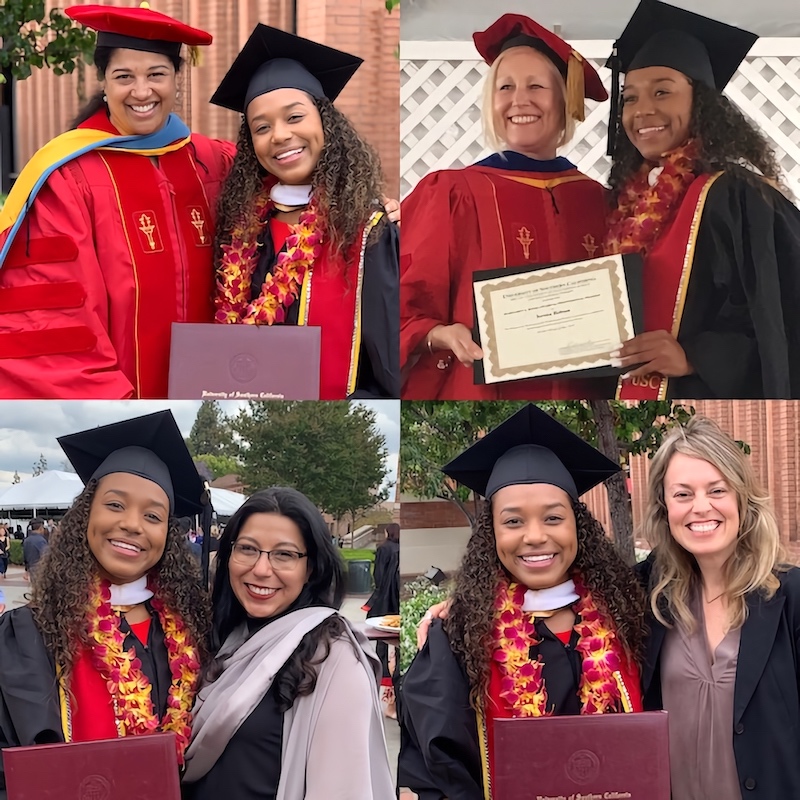
At USC’s Occupational Therapy Graduation ceremony with a few of my mentors (top to bottom, left to right): Dr. Stefanie Bodison, Dr. Julie McLaughlin Gray, Ms. Bianca Ojeda, and Dr. Camille Dieterle
I am thankful to have received a master’s degree but I am most grateful for the lifelong friendships I have formed and mentors I have gained while in the program. We have memories, pictures, and videos that we will cherish forever. In honor of graduation here is one of my favorite videos some of my friends and I put together with the help of our friend in USC’s School of Cinematic Arts.
Lastly, I would like to thank my family for supporting me during my OT and life’s journey. At a time of great accomplishments comes the need to remember how you achieved your successes. Without my family I would not be who I am or where I am today. As OTs we know that the community and social supports play a huge role in quality of life and health. My personal accomplishments will always and forever be my community’s accomplishments, my family’s accomplishments.
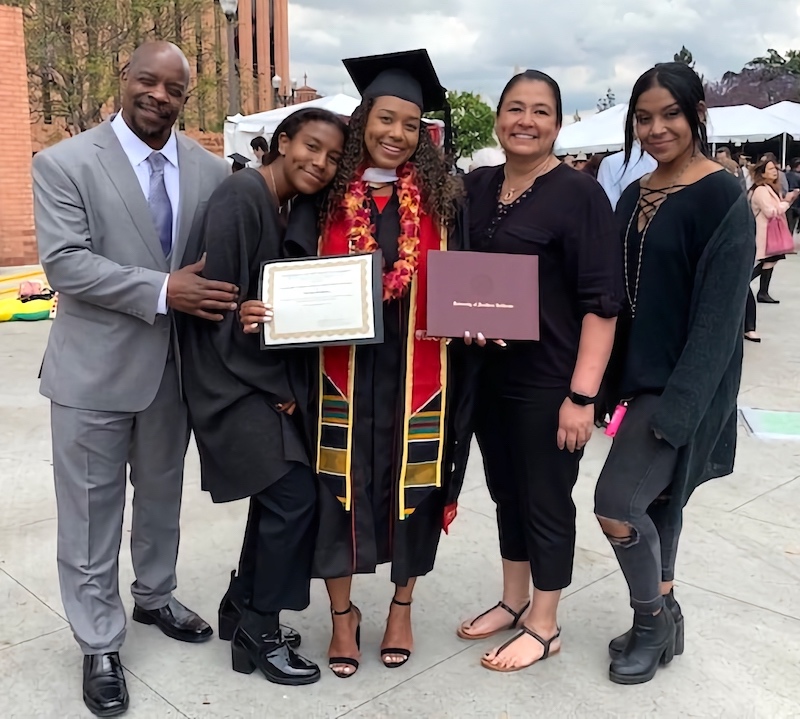
At USC’s Occupational Therapy Graduation ceremony with my family (left to right): my dad, baby sister, me, mom, and middle sister
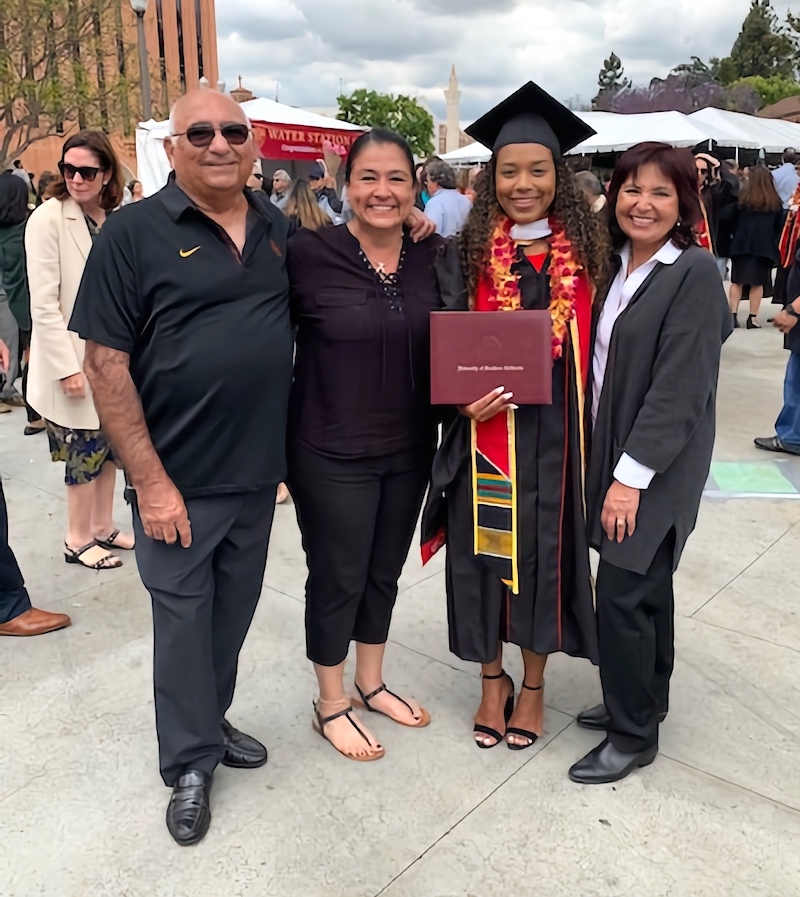
At USC’s Occupational Therapy Graduation ceremony with other family members (left to right): grandfather, mom, me, and aunt
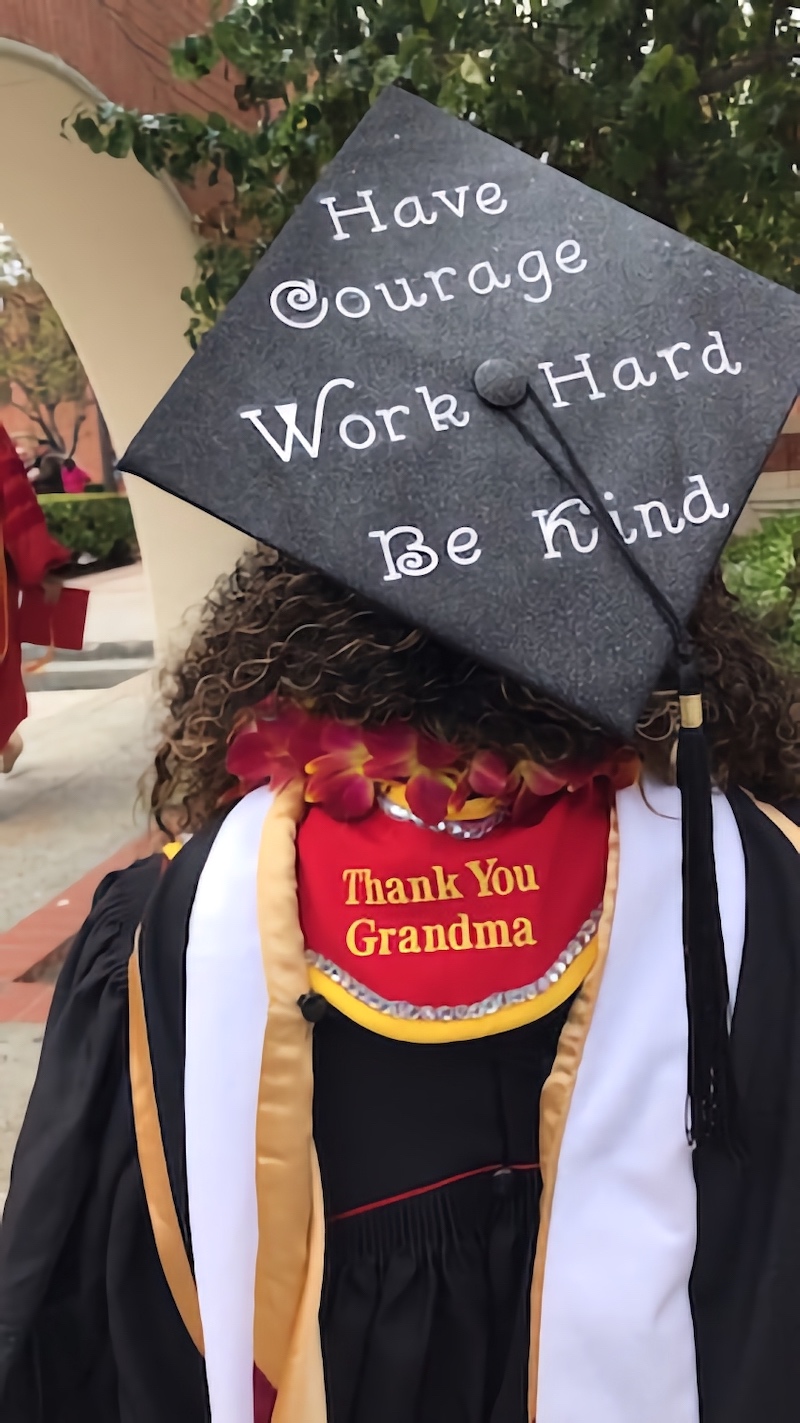
My graduation cap decorated by my mother in memory of my grandmother who instilled courage, exceptional work ethics, and kindness into my heart
Thankfully, I will be staying at USC for another year to complete my doctorate at USC’s Occupational Therapy Faculty Practice (OTFP). At the OTFP I will be pursuing my interests in health and wellness by receiving mentorship while delivering Lifestyle Redesign® interventions to promote healthier habits and routines.
Fight On!
⋯
Dr. Martinez Coming Soon ⟩
May 13, 2019, by Melissa
Beginnings and Endings Community Getting Involved
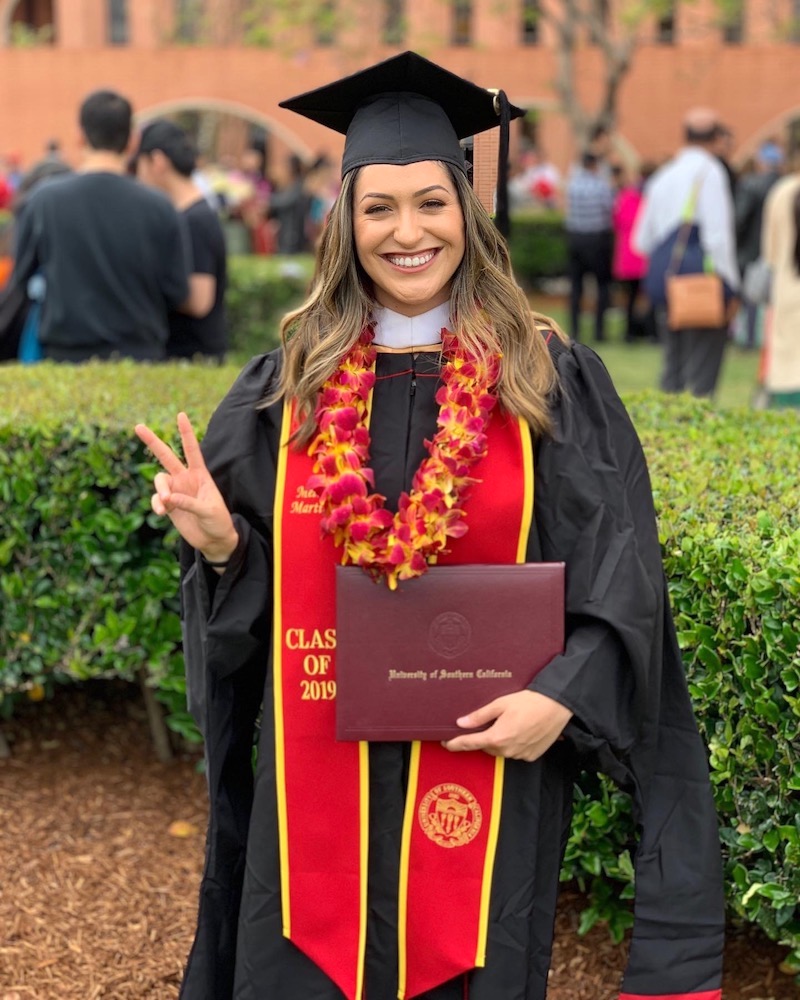
Goodbyes are never easy, and the last couple of weeks have been a constant reminder of that. With all the chaos that comes with the end of the year — finals, comps, graduation — I haven’t had much time to think about the fact that graduation marks the end of a very important chapter in my life. Now that I’ve had a chance to catch my breath, I feel some sadness that it’s all over, but also excited for what’s to come. I’m walking away with a deep appreciation for the friendships I have made, the opportunities I was given, and the experiences that have helped to shape the clinician that I will be someday soon.
It was always my dream to be a part of the USC Chan family, and I can easily say that the last couple of years have surpassed my expectations. It truly feels like it was just yesterday that I was anxiously starting the summer session with my new classmates, so it’s hard to believe that this part of my journey is nearing its end. I will be forever grateful to everyone in the division, who truly go above and beyond to ensure that we have a great experience in the program.
I had dreamed of becoming a Student Ambassador since I first got exposed to the position at an information session many years ago, so looking back on this past year fills me with overwhelming pride and emotion. I have sincerely enjoyed meeting and corresponding with so many incredible students from all over the world, and I’m grateful to have had the opportunity to share my passion for our program with others. I’m also thankful for the incredible Ambassador and Admissions teams that I had the honor of working with, for they made the last year fun and unforgettable.
Like I said before, goodbyes are never easy, but I find solace in the fact that I’ll still be at USC for a bit longer pursuing my OTD in Clinical Research with Dr. Sharon Cermak. So for now, it’s not a goodbye but instead an “I’ll see you soon.”
FIGHT ON!
⋯






 Subscribe | RSS