



Student Blog
Occupational Therapy, but Make it Dramatic ⟩
September 2, 2021, by Silvia
Admissions First-Gen What are OS/OT?
I’d be lying if I said I wasn’t dramatic but being dramatic is what got me here, kind of.
You see, the moment I decided I wanted to go to college in the first place was very movie-like. I was a junior in high school when my family drove to Tijuana, Baja California for a weekend trip. I sat in the back of our Yukon with my head leaning against the window staring into the distance, probably contemplating my life, when I saw it. There it was written on the building: “UCSD School of Medicine.” I don’t know if you believe in signs, but this was mine. I was destined to become a doctor.
When college application season came around, I had no idea what I was supposed to do — I didn’t even know what a major was (the first-generation in me was showing). One day I was randomly talking to a girl in my class about what school she was applying to and what “major” she had chosen. This is when I discovered kinesiology and loved everything about it. Naturally, I changed my mind and decided I wanted to be a physical therapist, which was fine right? After all, it was still a career in the medical field. So, there I went applying to Cal Poly SLO and declaring kinesiology as my major. I was really going to college you guys.
When I got to college, we had an orientation into the major. That’s when I first met Dr. Clark. Dr. Clark began his introduction by telling us that we were going to start off wanting to become physical therapists but would leave the program wanting to be occupational therapists. I didn’t believe him until I failed chemistry. Imagine this: I get into my dorm, log onto my student portal, check my grade, and begin crying as I slide down the door in slow motion thinking I’m going to be kicked out of the university for failing a class. I could have won an Emmy or an Oscar. After I got it together, I realized that I was fine, everything was fine, and I didn’t need chemistry in my life anyway. I decided to change my academic track to one that didn’t require me to take the organic chemistry series and that is how occupational therapy popped up once again.
The more I learned about occupational therapy through my own research and volunteering experiences, the more certain I became that it was what I wanted to do. Occupational therapy highlights the humanity of an individual and recognizes that they are more than a label or diagnosis. We help individuals identify what is meaningful to them and their lives and develop a holistic approach to meet their goals and needs. I’ve come to understand that it’s not about what I do (i.e., deliver medical services) but about how I do it (i.e., being client-centered) that draws me to this field.
So, be a little dramatic, for all you know you may stumble upon your dream career.
⋯
How Much Time Do You Have? ⟩
September 2, 2021, by Teresa
The most interesting thing I’ve experienced this past year is that the more I learn about occupational therapy, the more difficult it is for me to explain it to others. At least not in a minute-long elevator spiel. Rereading my admissions essays when applying to OT school, my definition of “occupation” is packed into a box, tied neatly with a bow on top. However, if presented today with the question of, “Why did you choose to pursue occupational therapy?”, I would return with another question, “How much time do you have?” How do you even begin to explain why and how much you love, what you believe to be, the most incredible profession to ever exist? Well, here’s my attempt.
My parents arrived in America without two pennies to rub together but have always emphasized to me and my older siblings how our existence on Earth means nothing without generosity, a sense of genuine responsibility in the well-being of others, and dedication to helping people. From these values, I witnessed my oldest brother pursue a career in public service and marry my sister-in-law, who became a (USC-bred!) Doctor of Pharmacy in oncology. My older brother became a physician assistant (now, associate) specializing in urgent care and cardiology after five long years of coming home in the middle of the night while he worked as an EMT. My older sister (also USC-bred!) now organizes various clinical research trials to get FDA approval for experimental interventions. As proud as I was of their achievements, I was concurrently experiencing inner turmoil — what is going to be my contribution to the world? How am I going to help people?
When I was eight years old, my grandpa suffered his first stroke. For the next sixteen years until his passing this past summer, he would experience several more and became more medically complex with each one. My interactions with him didn’t resemble the nuclear grandpa character I saw in books and movies as a child. Instead, they occurred within the walls of nursing facilities, in the gym we constructed in his garage for his exercises, in the supermarket when I learned to read nutrition labels at an early age so I could hold him accountable for his diet.
In high school, I always spent too much time on arts and crafts. If a class project required a poster presentation or I was campaigning for a student council position, you could find me surrounded by markers and covered in glitter and paint all weekend. Then my brother would barge into my room and say, “Why are you wasting your time on this? Go do some math or something.” (For reference, math has always stressed me out. I blame times tables.) But I didn’t care. This was my happy place. I felt in control, the possibilities were limitless, and my mind was at peace.
In college, I worked at the UCLA Lab School as a teaching assistant for second-graders. My supervisor often assigned me to provide specialized attention to students with learning disorders and developmental disabilities, noting that I had a great deal of patience and a keen sense of empathy which allowed me to match students’ needs. On a fateful day in 2017 where time and circumstance met, a parent suggested the magic words “occupational therapy” onto my wanting ears and changed the trajectory of my life forever. I never believed that a profession like this existed — one that challenges areas of myself which require growth yet puts all the best parts of me to use. The part of me that my parents taught to help others, that practices compassion toward grandfathers and second-graders alike, and all while embedding creativity into the therapeutic process.
⋯
OT was not my first choice … but I have no regrets ⟩
August 29, 2021, by Marvyn
Admissions International What are OS/OT?
Occupational therapy wasn’t my first choice. There. I said it. But hear me out:
Medicine was the only field of choice if you want to help people. At least, that’s what I was told growing up in the Philippines. I have plenty of family members who are successful physicians and well-known professionals in the field of health sciences, but occupational therapy was never part of that extensive list. I always knew that helping people was the impact I wanted to make in this world, and the only option at the time was to pursue medicine. But time and destiny have other plans.
It wasn’t until I was applying for university where I first heard about occupational therapy. It was a week before the deadline for applications, and I still haven’t decided on a program to apply to. I was rapidly going back and forth on the list of programs and stumbled on “BS in Occupational Therapy”. I can’t believe I overlooked this! Quickly, I did a Google search on the program and rapidly grew interested in OT. And the rest was history! I sent my application and went on to my journey to become an OT.
My journey to becoming an OT was not cookie-cutter. Saying it was challenging was an understatement. There were many set goals and aspirations that ended up being broken. Schedules and timelines were being shaken and delayed. The motivation was at an all-time low. But despite all that, time and destiny have their way of steering you in the right direction. I eventually became an OT Intern (fieldwork). I started to work with individuals and their families of all ages — pediatrics and development, adult physical rehabilitation and geriatrics, mental health, and community-based rehabilitation. I learned that this was my life’s purpose after all: to help people and make an impact in their lives as an occupational therapist. My initial notions of becoming a doctor have faded, and I knew that I have a greater purpose in the field of occupational therapy. From there, I steered full gear to become a licensed occupational therapist in the Philippines.
After working as a licensed OT for almost two years, I realized that there was more to the world of OT that I still don’t know. I joined an information session of the Post-Professional Master’s program at USC and understood that this was my next big step. Fast forward a couple of months and here I am writing this blog post for you to read. It was a scary, giant leap forward, considering that we are still in the middle of a pandemic. I truly appreciate the great help of Dr. Arameh Anvarizadeh and Dr. Danny Park with the Global Initiatives team in making this process the smoothest it can be despite the circumstances. I just started my journey here at USC, and I already have tons of stories to share. But I won’t make this blog post any longer, so keep a lookout for my next blog entries to tell you more about it.
If you have ever watched Marvel Studios’ Loki, the TV series, you can consider me as a “variant” of myself in the universe’s Sacred Timeline. There is a Marvyn in another universe who is a medical doctor, there’s another Marvyn who ended up being a pilot, and then there’s me: Marvyn the occupational therapist and a proud master’s student of the USC Chan Division of Occupational Science and Occupational Therapy. Things might not have turned out the way it was initially planned, and that’s the beauty of this whole thing! I am so glad to be where I am today, most especially in USC, and I can’t wait to see what comes next!
⋯
Into the Unknown: From Outer Space to OT ⟩
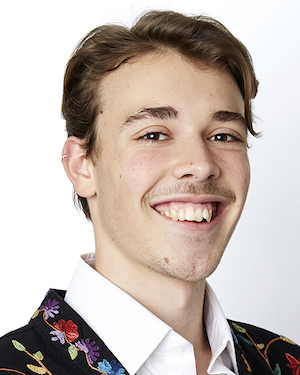
August 29, 2021, by Seth
I wanted to see the stars.
As a kid I went through all of the answers to the question: “What do you want to be when you grow up?” and I thought I had it all figured out. To be fair, it wasn’t always so clear. There was the time I wanted to be an archaeologist and then an architect, but eventually as I grew and matured I settled on something a bit more nuanced; not an astronaut, but an aeronautical engineer! And I was determined to make it happen. From that moment on, I decided to commit myself and dive right into my high school’s engineering program. Maybe if I had looked further down the alphabet, and by that I mean, anything past the letter “A,” I could’ve saved some time and some sleepless nights. You live and you learn.
But at this point you must be confused, right? You’re on the Chan Division of Occupational Science and Occupational Therapy student ambassador blog page and I’m here talking about space and high school. So what gives? What changed? To be honest, it was just by coincidence (followed by a lot of research). At that point in my life, I was so focused on building trebuchets and cardboard boats that I had light heartedly decided to interview for a week-long mock-government program for my U.S. History course. Everyone told me it would look good on an application so I applied and, you guessed it, I was waitlisted. Fortunately for me the event was being hosted at a local university so if anyone did not accept (and they didn’t) I was in!
I spent the week running for the mock-position of Ohio Attorney General. I ran my campaign, I took the Bar exam three times (and failed three times), and at the end of it all I ended up at the unemployment fair because I had lost the election. I ended up being appointed as the medical director of the Ohio Department of Mental Health and Addiction Services where I spent the remaining days writing legislation, devising programming, and discovering what my passions really were.
I came back from the week not just to my house, but to the drawing board. I had a vague idea of what I was looking for (you know, the standard “helping others” umbrella) so I hit the ground running. I ended up on the CollegeBoard’s major database, selected the “helping others’’ filter, and went digging … through all 1,800 different majors … one by one. Then I made a list of twenty, did some more research, and settled on two: Speech and Language Pathology and Occupational Therapy. At that point, the choice became obvious. I just couldn’t go into S/LP after not doing the home exercise program a S/LP gave me so many years ago, I’d be a hypocrite! So OT it was.
From there, I applied to USC’s BS-MA program (now the BS-OTD) and I haven’t looked back. I fell head over heels with the idea that we are what we do, how we do it, and why. That these meaningful activities can impact our health and our quality of life. But most importantly, as I’ve continued along on my journey through OT, I’ve come to realize that the real stars weren’t in the sky, they are the people we work with, each of them glowing brightly with the possibility of their future and I am so appreciative that I can help them find their shine all while finding my own at the same time.
⋯
What I learned during my time as a student ambassador ⟩
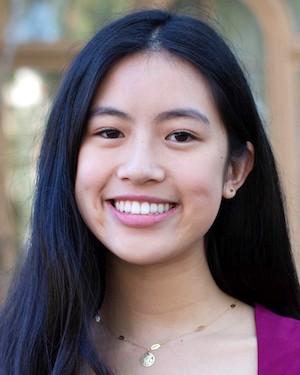
August 9, 2021, by Arianna
Beginnings and Endings Getting Involved
When I first started this job, I wasn’t sure I’d be able to handle all of the responsibilities that came with it. During the school year, there are typically 7 student ambassadors working at the same time. However, in the summer there is only one. I felt apprehensive going into this job but after a few weeks of work, I was pleasantly surprised with how comfortable I was in this position. For my last blog as the summer student ambassador, I thought I’d let any prospective student ambassadors know how this job helped me with my personal growth and what the position entails!
Information Sessions
One of the first tasks I had was hosting an information session for the Entry-Level OTD program with Dr. Anvarizadeh. I ended up doing 6 info sessions throughout the summer! At these info sessions, I presented a few slides and answered questions in the chat. Speaking about a program that doesn’t exist was a little intimidating, but Dr. Anvarizadeh, Dr, Nxumalo, and Dr. Bennett set great examples and their positive feedback helped me overcome any lingering feelings of imposter syndrome!
These information sessions helped me develop my public speaking skills and after a few info sessions, I noticed that I sounded more natural. Being completely honest, I did have notes that I referred to as I spoke, but doing info sessions taught me how to sound like I wasn’t reading a script. Eventually, I was able to host a BS-OTD info session by myself and I didn’t have to use any notes! To be fair, the BS-OTD program is extremely similar to the BS-MA program so most of the information was easy for me to explain.
Social Media
If you weren’t aware, I have been managing the social media accounts for the past 13 weeks. I enjoyed this responsibility because it allowed me to express my creative side! I also want to say a quick thank you to all the students who sent me pictures to post on our accounts. From your arts and crafts to Neuro PJ Day, the photos you’ve shared added so much vibrancy to our accounts! Managing social media accounts involves deciding what to post and when, designing the graphics for each post, and reposting all the wonderful posts we’re tagged in!
Handling the social media accounts taught me how to analyze trends! I noticed that our most popular posts celebrate the joys and accomplishments of the USC Chan Family. I hope that we continue to share these events with you all and I’m sure there will be an abundance of occasions to post about in the upcoming school year!
Meeting with prospective students
Out of all the different responsibilities I had, this one was my favorite. Meeting with prospective students involves setting up a one-to-one Zoom meeting and answering any questions one may have.
This aspect of my job was my favorite because I got to be an advocate for our program and I was able to share my experiences with potential future Trojans. I think this was the one task that I didn’t learn a whole lot from, which is not a bad thing! The meetings I had with prospective students flowed so naturally. I didn’t get nervous when I talked to them, and there was never any awkward silence because I can talk about Chan for hours and hours!
Admissions Projects
Working on projects for the admissions team was probably the area I was most inexperienced in. These projects involved collecting and organizing data so that our admissions team could use it in the future.
The most obvious skill I gained from working on admissions projects was how to use spreadsheets. I had almost no experience with spreadsheets when I started my job as a student ambassador. However, after 13 weeks of admissions projects, I’ve learned many tricks that I hope to use in the future!
Blogging
Last but not least, blogging was part of my job as a summer student ambassador. The student ambassadors have full control over what they write about, which makes it more of a therapeutic activity instead of work. We can give advice to students, talk about our favorite occupations, and even document a vacation (which I did)!
Blogging taught me how to write in different styles. The first blog I wrote was written with a slightly formal tone. However, I quickly realized that blogs are supposed to be fun to read! The audience does not want to feel like they are reading out of a textbook. Therefore, I let down all my walls and started writing with a more personal voice. Doing this made the writing process so much easier. I just let the words flow straight from my mind to the computer without worrying about how professional I sounded.
Well I guess this is the end of my blogging series! I enjoyed testing out my writing skills over these past 13 weeks and I hope some of the advice I wrote was helpful to many! Thank you all for reading and if there are any prospective student ambassadors reading this, I hope you learned a little more about the position!
⋯
Social
Facebook Instagram LinkedIn TikTok YouTube